
On February 17, the Press Club of India in New Delhi hosted the release of “Umar Khalid and His World,” a book put together by his friends, supporters and fellow travellers, honouring his convictions and his belief in the secular idea of Hindu-Muslim unity. But the occasion quickly became something more than a book launch. It turned into a gathering of solidarity for a man who has been sitting in Tihar jail since September 13, 2020 – over six years now, without a single day of trial. You cannot even describe him as an undertrial.
Denial of bail for six years running is, perhaps, unparalleled and unprecedented, resulting in an endless wait for justice. Sensing that no case can be made in a court of law against Khalid, the process has been turned into a punishment harsher than any sentence itself. Punishment after conviction has been replaced by making the process itself the punishment — because the prosecution isn’t sure it can prove any charges.
In jurisprudence, bail is the norm and jail is the exception. That principle has been stood on its head. Prolonged pre-trial detention raises serious questions about the fairness of the investigation and the judicial process itself. Long incarceration alone should be sufficient ground for granting bail. Keeping someone in a high-security jail indefinitely cannot, and should not, become the new normal.

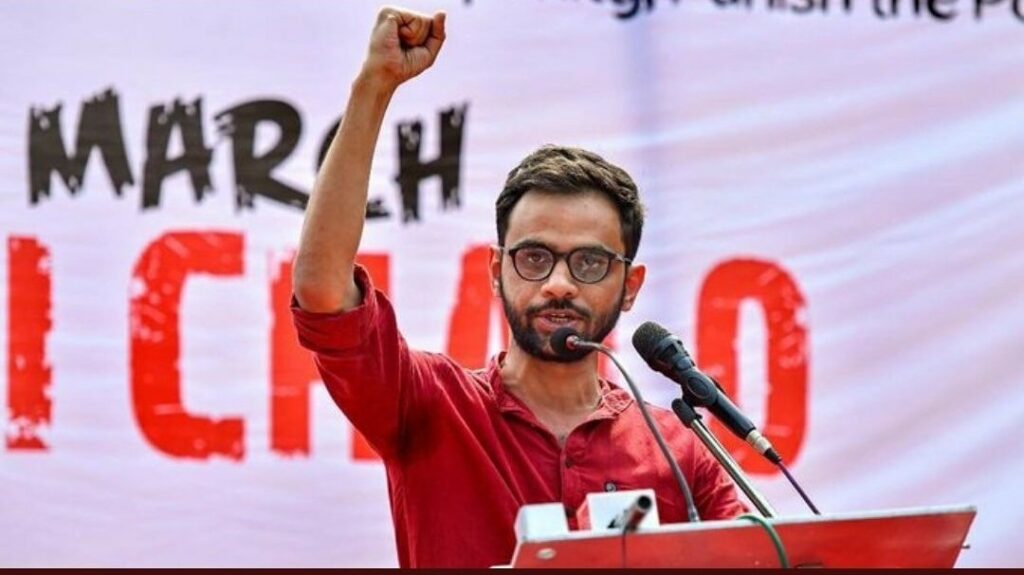
What exactly was Umar Khalid’s crime?
Khalid holds a PhD from the Jawaharlal Nehru University (JNU) and is the son of a deeply respected leader, Syed Qasim Rasool Ilyas, the spokesperson of the Muslim Personal Law Board. Linking him to terrorism is a sad commentary – not just on law-enforcement agencies, but on the larger judicial establishment in the country.
The saga of his bail struggle began in the lower courts and, after exhausting all avenues, moved to the Delhi High Court and finally to the Supreme Court during the tenure of Chief Justice DY Chandrachud. After each adjournment, the bail petition went to a different bench. After 14 adjournments over 11 months, the defence team was compelled to withdraw the bail application entirely.
Then, on January 5, 2026, bail applications by Khalid and another activist, Sharjeel Imam, were turned down again by the Supreme Court. Five other associates – Gulfisha Fatima, Meeran Haider, Shifa-ur-Rehman, Mohammad Saleem Khan and Shadab Ahmed – were granted bail, though with stringent conditions.

What is the crime of Umar Khalid? During the democratic protests against the Citizenship (Amendment) Act (CAA) in Delhi’s Shaheen Bagh from December 2019 to February 2020, he called upon people to come out onto the streets. That statement was twisted into a call to organise violence, linking it to the Delhi riots of February 2020 and projecting Khalid as the mastermind.
Even so, the Delhi Police could have pressed ahead with the trial to establish his guilt and secure a conviction. Assuming the charges are admissible, nothing has prevented them from doing so over the past six years. Far from securing a conviction, the trial has not even commenced.
The charges invoked for his detention range from the draconian Unlawful Activities (Prevention) Act (UAPA), the Arms Act, and Indian Police Code (IPC) provisions covering rioting with a deadly weapon, murder, attempted murder, promoting religious enmity, unlawful activities, terrorist acts, raising funds for terrorist acts, sedition and conspiracy.
Most anti-terror laws provide a timeframe, ranging from 90 to 180 days, for the commencement of trial from the date of arrest. Even that window was considered draconian. Six years in jail with no trial in sight leaves all such earlier fears about anti-terror laws far behind.
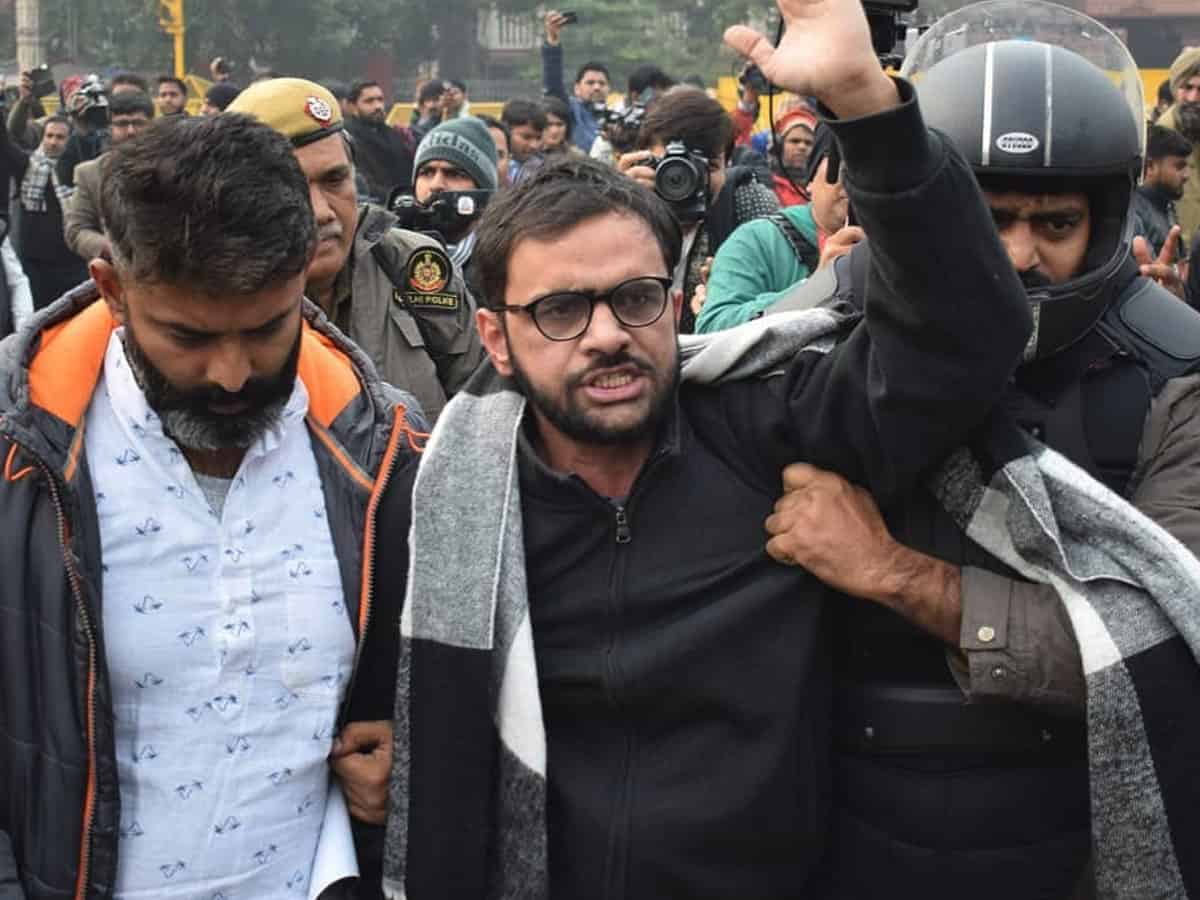
UAPA, the death of democracy
UAPA was first brought in by Prime Minister Indira Gandhi in 1967 to deal with secessionist trends, with national unity as her stated goal. To counter terrorism in Punjab backed by Pakistan, Prime Minister Rajiv Gandhi enacted the Terrorist and Disruptive Activities (Prevention) Act (TADA), which remained in force from 1985 to 1995. Its abuse became apparent in the way Mumbai Police invoked it after the March 12, 1993, blasts, including the arrest of actor Sanjay Dutt.
Then prime minister PV Narasimha Rao considered repealing TADA after its widespread misuse, but held back because the Rajiv Gandhi assassination case was still underway and repeal might have complicated it. All those involved in the plot were awarded capital punishment. Yet, strangely, the Atal Bihari Vajpayee government from 1998 to 2004 declined to carry out the confirmed death sentences. It was a most ghastly case of foreign nationals stealthily entering India to carry out a brazen assassination, cracked largely thanks to photographs that miraculously survived in Haribabu’s camera.
The then Union law minister Arun Jaitley was a strong advocate for a tough anti-terror regime and piloted the Prevention of Terrorism Act (POTA). When the Congress-led United Progressive Alliance (UPA) came to power in 2004, Sonia Gandhi ensured POTA’s repeal – a strong signal to civil society that such draconian laws had no place in a civilised society. But that was largely undone by Union home minister P Chidambaram, who amended UAPA after the 26/11 Mumbai attacks, quietly restoring POTA’s most stringent provisions into the new law. A 2019 amendment made UAPA more lethal still.
Zero tolerance for terrorism is not just an expression. It must be demonstrated through prevention and early conviction – not by enacting ever-harsher laws in the name of tackling terror. In the end, such laws are used against people like Umar Khalid, not against real terrorists. The solution is not only ensuring his bail, urgent and paramount as that is, but repealing the paranoid laws that turn democracy into something resembling a totalitarian regime.
The problem of Khalid is, in truth, the problem of contemporary Indian politics.
 |
|