


The estimated cost of the war with Iran has reached USD 25 billion, with most of the spending directed towards munitions, according to the Pentagon’s top financial official, who told lawmakers on Wednesday, April 29.
During a House Armed Services Committee hearing, acting undersecretary of war for finances Jules Hurst III said additional funds had been used for military operations and replacing equipment.
The developments come on Wednesday, the 61st day of the US-Israeli war on Iran and the 22nd day of the ceasefire, as diplomatic efforts continue alongside mounting economic pressure and regional instability.


Latest updates here
Trump says US will keep Iran blockade until deal
US President Donald Trump said the United States will maintain its blockade on Iran until a nuclear agreement is reached, saying the measure is more effective than military strikes.
In remarks to Channel 12, Trump said Iran was under severe pressure from the blockade and seeking a deal, adding that its energy infrastructure could face growing strain if oil exports remain restricted.
Iran-India ministers discuss ceasefire
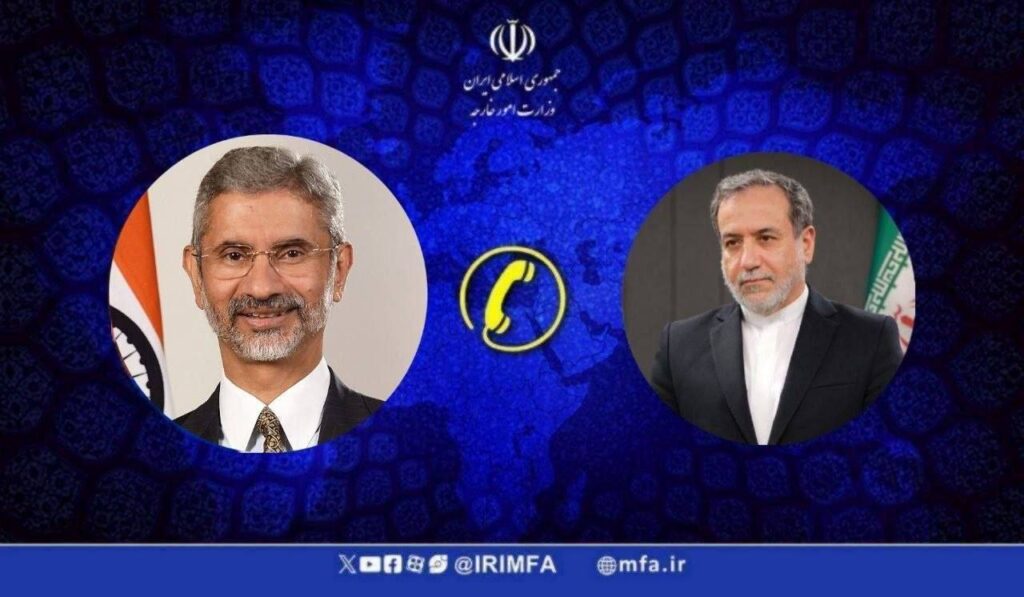
Iranian Foreign Minister Seyed Abbas Araghchi and India’s External Affairs Minister (EAM) S Jaishankar discussed the latest ceasefire developments, bilateral ties and regional issues during a phone call on Wednesday.

According to the Iranian embassy, the two sides also exchanged views on wider international matters and agreed to remain engaged amid continuing tensions.
Trump warns Iran on nuclear deal
US President Donald Trump said Iran was failing to move forward on a non-nuclear agreement and warned Tehran to act quickly.
In a post on Truth Social, he said Iran had been unable to “get their act together” and did not know how to sign a non-nuclear deal.

Latest updates here
Araghchi meets Red Cross chief in Tehran
Iranian Foreign Minister Seyyed Abbas Araghchi met Mirjana Spoljaric Egger, president of the International Committee of the Red Cross, in Tehran on Wednesday during her official visit.
Their discussions took place against the backdrop of continued regional tensions and were expected to address humanitarian issues and the effects of conflict on civilians.
US warns banks over Iran oil trade sanctions
Bloomberg reported that the US has warned banks they could face secondary sanctions if they support Chinese private refiners buying Iranian oil, increasing pressure on Tehran ahead of an upcoming leaders’ meeting. The move may also add fresh strain to ties with Beijing.
The Treasury Department said financial institutions aiding Iran-linked trade risk penalties and urged stronger due diligence, especially involving refineries in China’s Shandong province. Last week, Washington sanctioned Hengli Petrochemical, one of China’s largest private refiners.
UN says Iran executed 21 since war began
Iran has executed at least 21 people and arrested more than 4,000 since the start of the West Asia war, the United Nations said, criticising what it described as the country’s harsh treatment of its people, AFP reported.
The UN rights office said that since US-Israeli strikes triggered the conflict in late February, nine people were executed over the January 2026 protests, 10 for alleged links to opposition groups and two on espionage charges.
IAEA says Iran uranium likely remains at Isfahan site
Most of Iran’s highly enriched uranium is likely still stored at the Isfahan nuclear complex, which was hit in last year’s airstrikes and faced lighter attacks during this year’s US-Israeli war, UN nuclear watchdog chief Rafael Grossi told The Associated Press.
Grossi said the International Atomic Energy Agency had reviewed satellite images of the latest strikes and continued to receive information. He added that the agency believed a large share of Iran’s enriched uranium had been kept at Isfahan since the 12-day war began in June last year.

Qatar urges Hormuz stability amid deadlock
Amid a diplomatic deadlock between United States and Iran, Qatar has called for preserving maritime stability in the Persian Gulf and warned against politicising the Strait of Hormuz.
According to Al Jazeera, Qatari Foreign Ministry spokesman Majed al-Ansari said during a weekly press briefing that the Strait of Hormuz must not be used as a “bargaining chip” while peace negotiations remain stalled.
IRGC Navy warns US of ‘surprise tactics’
The Islamic Revolutionary Guard Corps Navy has issued a sharp warning to the United States, saying it is prepared to use unconventional methods if regional tensions escalate further.
According to Press TV, Mohammad Akbarzadeh, deputy for political affairs of the IRGC Navy, said the maritime force had “surprise tactics” in store for Washington if it made any new miscalculation.
Israel says three Hezbollah fighters killed in south Lebanon
The Israeli military has released an updated assessment of its recent offensive in southern Lebanon, saying its forces killed three Hezbollah fighters during operations in the border region.
The military also said its units struck Hezbollah infrastructure across southern Lebanon as part of a broader campaign aimed at dismantling the group’s operational sites and military capabilities.
Iran lodges UN complaint over vessel seizures
Amid intensifying maritime tensions, Iran has lodged a formal complaint with the United Nations, accusing the United States of engaging in “piracy” following the seizure of Iranian vessels.
According to Tasnim News Agency, the protest was outlined in a letter sent by Iran’s UN envoy Amir Saeid Iravani to UN Secretary-General António Guterres and the Security Council.
The envoy said Washington’s justification for the maritime interceptions had no basis under international law. He added that reliance on domestic measures could not justify what he described as an unlawful act carried out through the use of force.
Pentagon chief to testify before Congress
US Defence Secretary Pete Hegseth is set to deliver his first congressional testimony on the Middle East conflict on Wednesday, as diplomatic efforts to end the war continue to falter.
India condemns shipping attacks
“Commercial shipping must not be the target of military attacks, and such attempts are deplorable,” India’s Deputy Permanent Representative to the United Nations, Yojna Patel, told the UN Security Council on Tuesday.
Patel said attacks on civilian vessels, threats to crew members and obstruction of maritime trade in the Strait of Hormuz were unacceptable.
She added that uninterrupted movement through the route was vital for India’s trade links and energy supply chains, with direct implications for economic and energy security.
Patel said nearly 10 million Indians live and work in the Gulf region, making their safety and well-being a key priority.
Patel urged dialogue and diplomacy to reduce tensions, saying stability in the Middle East remained important for India.
“The Middle East is our proximate neighbourhood, and we have significant stakes in the security and stability of the region,” she said.
Iran reopens six airports
Iran has resumed operations at six airports as flight services begin a phased expansion, according to state media.
IRNA said airports in Mehrabad, Mashhad, Shiraz, Zahedan, Gorgan and Urmia are now operational, while Kerman, Yazd and Birjand are expected to reopen next. It added that domestic and international flights will gradually increase as airspace conditions improve.
Britain summons Iran ambassador over posts
Britain has summoned Iran’s ambassador after the Iranian embassy posted social media messages urging citizens to “give their lives” for the country.
The Foreign Office called the remarks unacceptable, while Middle East Minister Hamish Falconer warned the embassy to stop any messages that could be viewed as inciting violence in Britain or elsewhere.
Iran leader in stable health, official says
Iran’s Supreme Leader Mojtaba Khamenei is in good health and stable condition, his deputy representative in India said, dismissing circulating rumours.

Dr Mohammad Hossein Ziyaeenia said recent communication confirmed the leader was “fine” and in a good situation, adding that reports of health problems were not authentic.
Israel says drone intercepted in south Lebanon
Israel’s Channel 12 reported that the military intercepted a drone in southern Lebanon.
The Israeli army later said it had brought down a suspicious aerial target in an area where its troops were operating in southern Lebanon.
Iran says talks ordered by supreme leader
Tasnim News Agency reported that a deputy head of Iran’s parliamentary National Security Committee said negotiations were being held under orders from Supreme Leader Mojtaba Khamenei.
The official added that Parliament Speaker Mohammad Baqer Qalibaf was personally overseeing the talks.
Iran blames US for any Hormuz disruption
Iran’s mission to the United Nations in New York said on X that any disruption to maritime transport in the Persian Gulf and the Strait of Hormuz, and any resulting consequences, would lie with the US.
The mission also said Iran is not a party to the 1982 UN Convention on the Law of the Sea and is therefore not bound by its treaty-based provisions.
US sanctions 35 over Iran shadow banking network
The United States has imposed sanctions on 35 entities and individuals accused of involvement in Iran’s shadow banking system, saying the network helped move tens of billions of dollars through sanctions evasion channels and supported terrorism financing.
The Treasury Department also warned that any company making transit or “toll” payments to the Iranian government or the Islamic Revolutionary Guard Corps for passage through the Strait of Hormuz could face severe sanctions.
King Charles backs bar on Iran nuclear bomb, says Trump
Reuters reported that US President Donald Trump said on Wednesday that King Charles III agrees Iran cannot obtain a nuclear bomb.
Trump made the remarks during the British monarch’s state visit to the United States.
Amnesty condemns Israel over Lebanon damage
Amnesty International condemned Israel’s continued targeting of civilian infrastructure in Lebanon, citing footage showing Israeli forces destroying solar panels in the south.
In a post on X, the rights group said earlier calls for investigations into similar attacks as possible war crimes had gone unanswered.
It added that since the latest ceasefire, residents of border villages in southern Lebanon had continued to witness damage to homes, land and infrastructure, and called on Israel to halt the destruction of civilian property.
US Marines board vessel in Arabian Sea
US Marines boarded a commercial ship in the Arabian Sea, over suspicions it was attempting to breach the American blockade of Iranian ports, the US military said.
Central Command said the M/V Blue Star III was released after a search confirmed it would not call at any Iranian port.
The command added that 39 vessels had so far been redirected to ensure compliance with the blockade.
War costs two million jobs in Iran
The Wall Street Journal (WSJ), citing preliminary estimates from an Iranian Labour Ministry official, reported that the war directly cost about one million people their jobs, with another one million affected indirectly.
Iran military says war footing continues
Iran Army spokesperson Amir Akraminia said the country remains on a war footing and military targets and equipment plans have been updated, state broadcaster IRIB reported.
He added that the Strait of Hormuz is under joint control, with the western sector managed by the IRGC and the eastern side by the regular army.
Iran prepares revised proposal
CNN, quoting informed sources, said Iran is expected to submit a revised proposal to mediators in Pakistan within days after consulting senior leadership.
Reuters, citing US officials and a source familiar with the matter, reported that American intelligence agencies are assessing how Tehran may respond if Trump declares a unilateral victory in the conflict.
The Wall Street Journal (WSJ) reported that Trump has instructed aides to prepare for a long-term blockade aimed at tightening pressure on Iranian ports, shipping routes and oil exports.
The newspaper said Washington believes restrictions linked to the Strait of Hormuz are putting severe strain on Iran’s economy and making crude storage increasingly difficult.
The report added that Trump remains unwilling to drop his demand that Iran suspend uranium enrichment for at least 20 years.
US expands pressure campaign
US Treasury Secretary Scott Bessent said sanctions had been imposed on 35 Iranian entities and individuals accused of operating within Tehran’s shadow banking system.
He said the network serves as a financial lifeline for Iran’s armed forces and enables activities that fuel violence across the Middle East.
Bessent added that US measures had deprived Iran of tens of billions of dollars in revenue, while inflation had risen sharply and the national currency had weakened.
He also said Kharg Island, Iran’s main oil export terminal, was nearing maximum storage capacity, which could force production cuts.
Iran complains to UN
Iran’s ambassador to the United Nations, Amir Saeed Iravani, sent a letter to Secretary-General Antonio Guterres rejecting what he described as American maritime piracy against Iranian vessels.
He said the US would bear responsibility for the consequences of detaining Iranian ships and called on the UN Security Council to secure the immediate release of vessels, cargoes and seized assets.
In a separate statement, Iravani urged the council to compel Israel to fully comply with the Lebanon ceasefire, halt attacks and withdraw its forces.
Gulf states reject Hormuz threats
Leaders of Gulf nations rejected what they described as Iran’s illegal actions to threaten shipping, close the Strait of Hormuz or charge fees for safe passage.
The statement followed a Gulf Cooperation Council (GCC) summit in Saudi Arabia chaired by Crown Prince Mohammed bin Salman and attended by leaders from Qatar, Bahrain, Kuwait and the United Arab Emirates (UAE)
The bloc called for restoring full freedom of navigation, expanding military coordination, launching joint infrastructure projects and creating a ballistic missile early warning system.
Bahrain calls for dialogue
Bahrain Foreign Minister Abdullatif bin Rashid Al-Zayani said the international community should move beyond crisis management and seek lasting solutions through constructive dialogue.
He said this should include Iranian compliance with principles of good neighbourliness, respect for sovereignty, freedom of navigation and international law, while also halting its nuclear, missile and drone programmes.
Lebanon condemns Israeli strike
Lebanese President Joseph Aoun and Prime Minister Nawaf Salam condemned an Israeli strike that killed civil defence workers in the south.
Salam said the attack in Majdal Zoun, which targeted personnel carrying out humanitarian duties, constituted a new war crime and a flagrant violation of international humanitarian law.
He said the Lebanese government would intensify efforts in international forums to pressure Israel into ending repeated ceasefire violations.
Lebanon’s Health Ministry said at least five people were killed, including three paramedics trapped beneath rubble after an earlier strike.
Israel escalates operations
Israel intensified air strikes and artillery shelling in southern Lebanon despite the temporary ceasefire.
Israeli Defence Minister Yisrael Katz said the military had been instructed to destroy what he described as terrorist infrastructure in the security zone up to the yellow line.

