Hyderabad: Quite often in all sports, winning or losing is in the mind. If a player wins one match, he gets fired up and confident in the next match. Conversely, losing can have an adverse effect on the mind. One loss may make the player determined to lift his game for the next match. But a series of losses may bring about a negative mental complex. The player may develop a defeatist attitude and resign himself to his fate. He may become unable to fight back strongly.
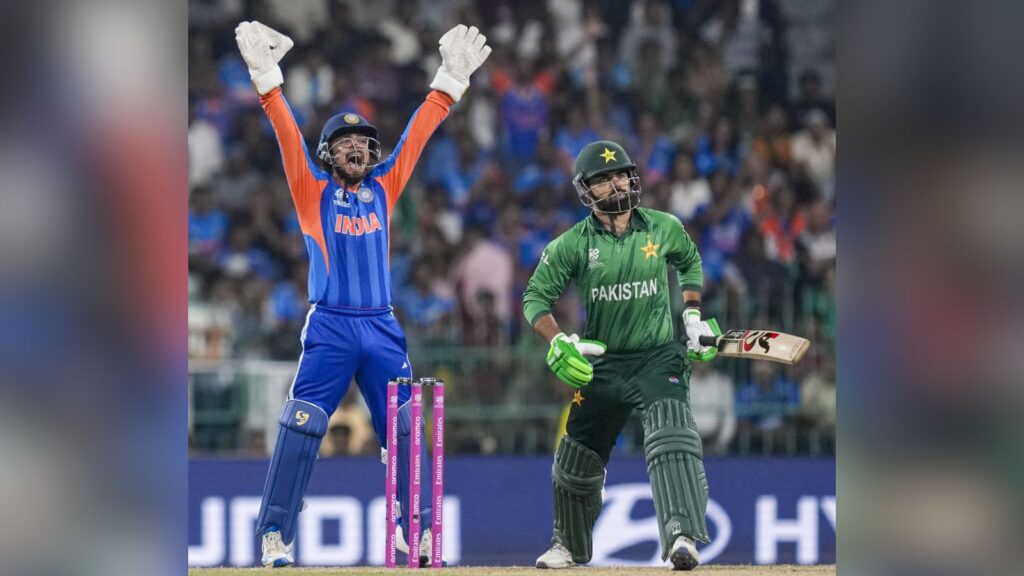
This seems to be the case whenever India and Pakistan clash on the cricket field. India is riding the crest of a wave. Nothing can go wrong with it. On the other hand, Pakistan can rarely get its act together. In total, India and Pakistan have clashed 17 times in the T20 format. India has won 14 times and Pakistan only 3 times. In T20 internationals, India’s world ranking is No.1, while Pakistan is 6th.
For a long time, Pakistan’s team has lacked the mental qualities and confidence that are needed to win. Once a team enters that zone, it is difficult to pull out of it and begin climbing again towards the top.

Coach Mike Hesson’s remarks

After yet another defeat to India in the recent T20 World Cup contest, Pakistan’s white-ball coach, New Zealander Mike Hesson, admitted that such was indeed the case. He told the media: “When opponents apply pressure, the key question is whether you stick to your fundamentals or drift away from them. We have international-level players but under stress, they abandon their plans. Today, the pressure pushed us off course,” Hesson explained.
Moreover, the political jingoism that accompanies every India-Pak clash nowadays puts players under even more pressure. All pre-planned tactics and schemes may go for a toss once players allow themselves to be overcome by their emotions.
Statistics tell a story
Pakistan began on the wrong note. The decision to bowl first after winning the toss, on a slow turner of a pitch, was a mistake. Statistics tell an important story here. At the Premadasa Stadium, every chasing team (in recent times) has lost. It has become a trend that has to be noted. Yet Pakistan decided to put India in to bat. On this ground, 6 times India has crossed 150 and out of those, five times it has won.

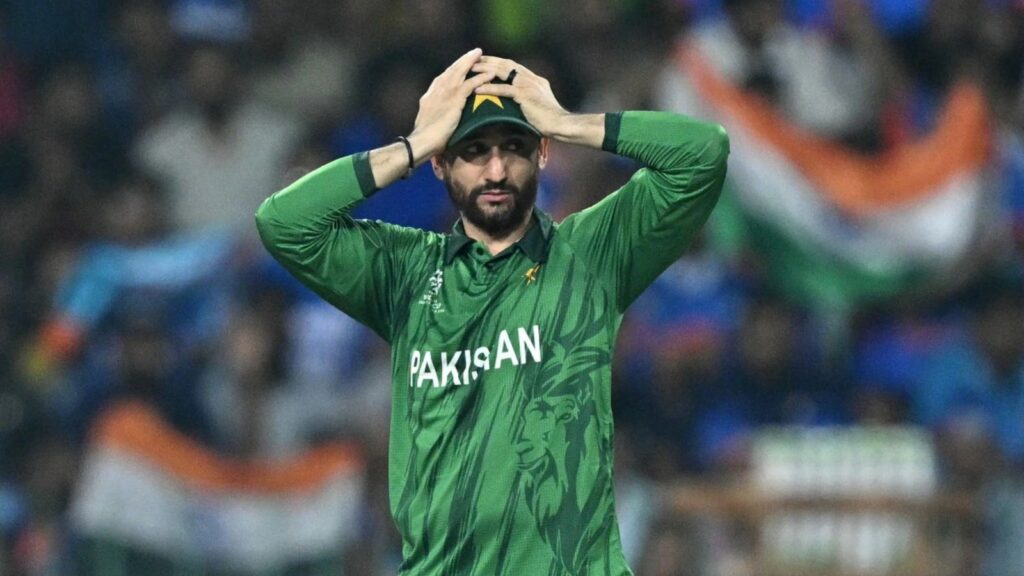
Pakistan captain Salman Ali Agha defended his decision to bowl first by saying that it was based on the ‘tacky’ nature of the pitch, the turn available on the surface, and the fact that he had good spinners in his team. But the spinners failed to do what the captain expected. Only Saim Ayub picked up 3 wickets, but the rest were ineffective.
From India’s viewpoint, it was a relief to be asked to bat first. Although the explosive Abhishek Sharma was dismissed very quickly, Ishan Kishan (77 from 40 balls) destroyed the Pakistan attack and laid the foundation for India’s commanding total of 175 for 7. On this pitch, it was a good total, but one felt that if Rinku Singh had been promoted, India’s total could have been even higher.
Tariq was not well utilised
Pakistan made a blunder by bringing Usman Tariq late into the attack. According to coach Hesson, Tariq is at his best when the batters are in the mood to hit out. So he should have been given more opportunities early on against Ishan Kishan.
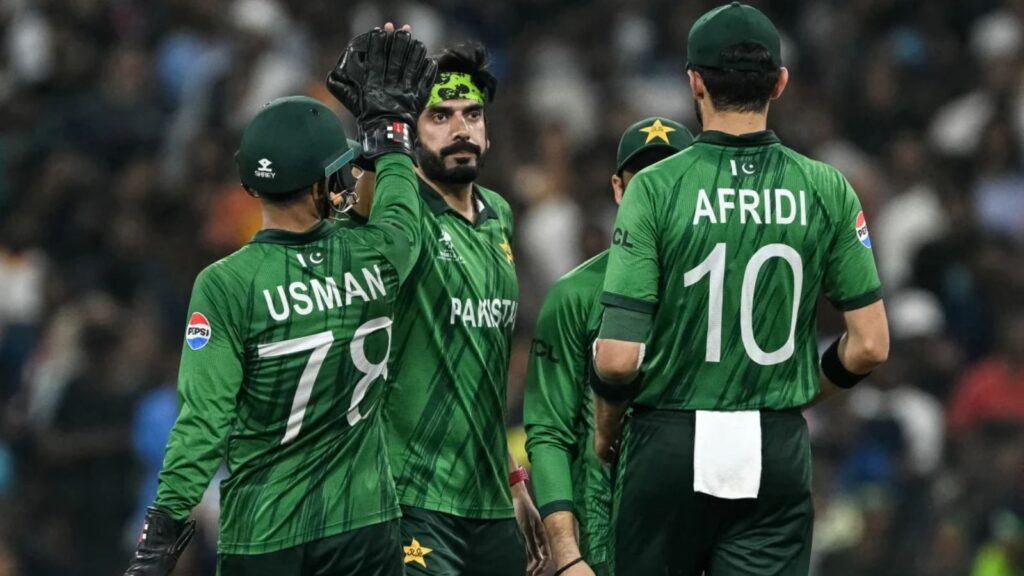
But Hesson said that he had great faith in Abrar Ahmed and Shadab Khan. Unfortunately, the plan did not work out. Eventually, Tariq had a good analysis of 4-0-24-1, but by then it was too late. As for Shaheen Afridi, the less said the better. The bowler was horribly out of form and got belted for 31 runs in 2 overs. He seems to have lost the promise that he had shown early in his career.
When Pakistan batted, its top and middle order batters played as if they were playing a street game rather than a global tournament against a tough opponent. They tried to hit Jasprit Bumrah and Hardik Pandya out of the action and paid the penalty. Thereafter, they had no Plan B. Thus, they invited disaster upon themselves.
Self-inflicted collapse
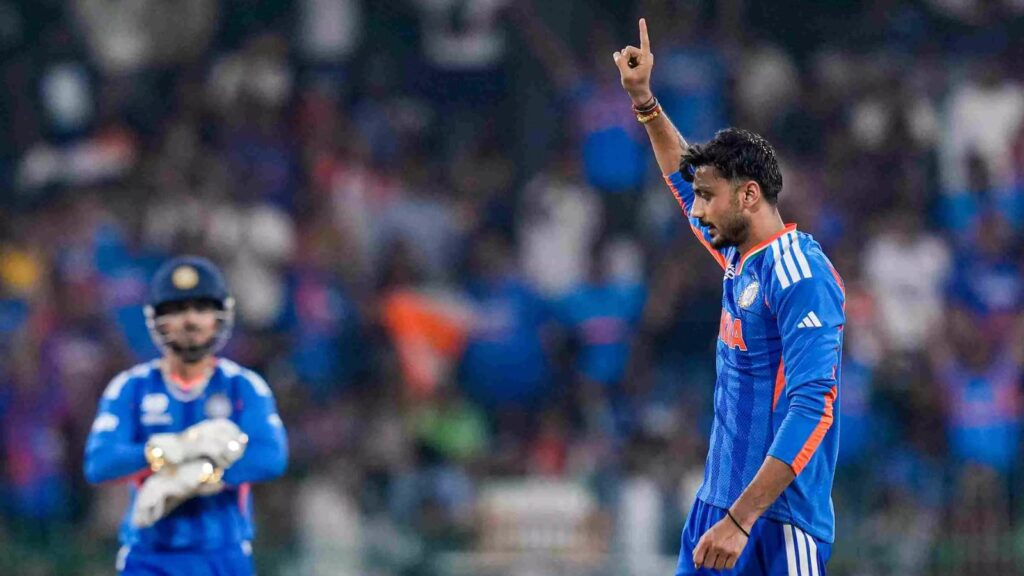
Reckless strokes (such as Babar Azam’s failed slog sweep against Axar Patel) and ignoring the match situation turned the whole effort into a self-inflicted collapse. The top four batsmen, namely Shahibzada Farhan, Saim Ayub, Salman Ali Agha and Babar Azam, totalled a mere 15 runs. There itself, it was obvious that the match was over. India had won.
To chase down 175 on this surface, Pakistan needed to do well in the powerplay segment. But the powerplay section saw Pakistan at 38 for 4 as compared to India’s 52 for 1. Pakistan’s main weapons had misfired, and it did not have the reserve arsenal to do any further damage.
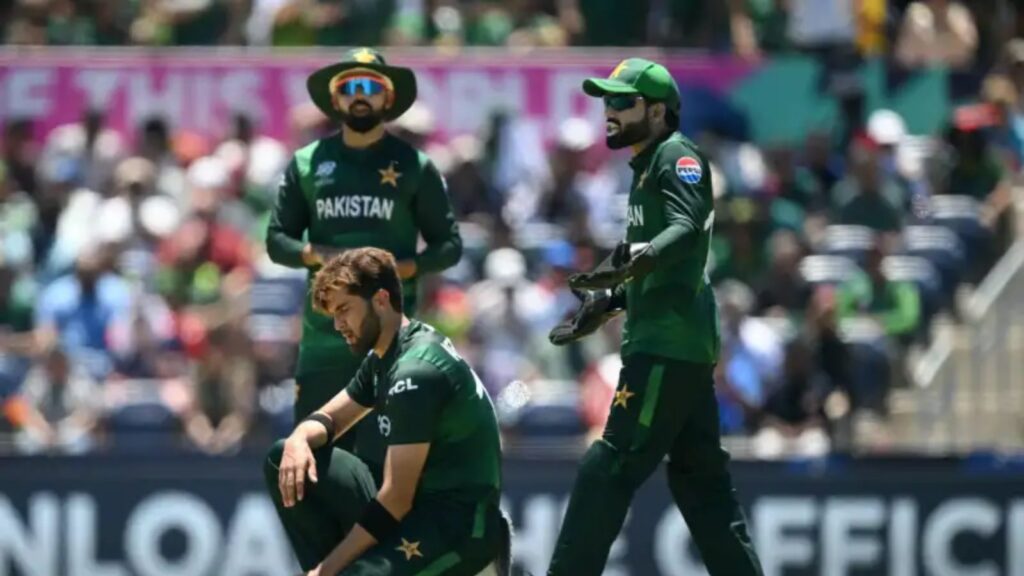
Pakistan’s defeat was a big one – among the biggest in the history of T20Is against India. After this result, the team in green has slipped to third place in the table, with their net run rate dropping to -0.403. They now must win their final league match against Namibia to qualify for the Super 8s. But the bigger question is – when will they recover from their bruises and develop stronger morale and fighting spirit?
What is the solution for Pak?
Former players like Waqar Younis, Rameez Raja, Aaqib Javed and Shoaib Akhtar have called for a large-scale revamp to improve the situation. Former Indian captain Sourav Ganguly too lamented the fact that this Pakistan is not what he had seen in his heyday. Aaqib Javed, who is now a selector, feels that first, Pakistan will have to spot and develop talent at the lower levels. Particularly in the 8 to 10-year-old age group. Pakistan is still following traditional development methods, although the game has changed drastically now with T20 being the dominant format.
It is obvious that right now, Pakistan does not have batsmen of quality who can adapt to the demands of T20 cricket. The limited-overs game is designed for batsmen. In T20 cricket, a bowler can bowl only four overs. But a batter can do much more.
Again, let us examine the relevant statistics in this context. Pakistan’s most successful batter in T20I is Babar Azam with a strike rate of 128.18, followed by Mohammed Rizwan (125.37). Contrast this with India. The top strike rate belongs to Abhishek Sharma (193.29), then Suryakumar Yadav (164.30), Rohit Sharma (140.89) and Virat Kohli (137.04).
So the need for Pakistan is to find excellent T20 batters. But it will require a completely impartial approach. Without politics and favouritism. India too has problems of favouritism within its setup. But to some extent, India is better off than its neighbour. Can Pakistan take the plunge and cleanse itself of the grime of politics and partiality? That is a million-dollar question. But unless this is done, Pakistan will continue to suffer and lose every battle, especially when playing against India.
 |
|