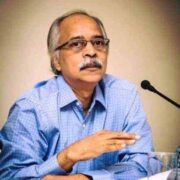

Legendary rice breeder, 2011 Padma Shree awardee and a renowned agriculture scientist, Dr EA Siddiq, passed away on Thursday night, January 22, in Hyderabad at the ripe age of 88.
In a distinguished career spanning over half a century, Siddiq won international acclaim for his contributions to the rice crop. He was honoured with the prestigious Norman Borlaug Award in 1995.
Within the Indian agriculture system, Siddiq rose to the position of Deputy Director General (Crop Science), Indian Council of Agricultural Research (ICAR). He was a PhD student of Bharat Ratna and one of the doyens of India’s Green Revolution, Dr MS Swaminathan.



Born in Ilayangudi, Tamil Nadu, on July 15, 1937, Siddiq studied BSc from St Joseph’s College, Tiruchirapalli, and an MSc in 1964 and a PhD in 1968 from the Indian Agricultural Research Institute (IARI) in New Delhi.
Beginning his career as a cytogeneticist at IARI in 1968, he rose to become a Rice Expert with the International Rice Research Institute in the Philippines (1983–1986), and Project Director of the Directorate of Rice Research in Hyderabad (1987–1994). Then, he was promoted to Deputy Director General (DDG), ICAR, in New Delhi till 1998.
He settled down in Hyderabad after retiring from the ICAR. He continued his research and association with rice scientists internationally and the agriculture community till his 80th year.

He served as the National Professor at ICAR (1997–2002), followed by stints with the University of Hyderabad and Professor Jayashankar Telangana State Agricultural University (PJTSAU).
Big strides in DRR
Siddiq’s association with Hyderabad began when he was posted as the Project Director of the Directorate of Rice Research during the late 1980s. He had by then done a stint at the International Rice Research Institute (IRRI), Manila in Philippines.
Under his leadership, the DRR made big strides. Several national meetings for selecting the latest varieties of rice were held, and new research initiatives were launched. Recognising his contributions, the Agriculture Ministry promoted him to the DDG rank in the ICAR to share crop research with a focus on rice.
I had the privilege of meeting him and interacting about the immense contributions of the Directorate of Rice Research (DRR), Hyderabad, and his own during his tenure in ICAR headquarters in New Delhi (1994-1998) to drive rice research, including hybrid rice varieties.
His research in high-yielding, semi-dwarf varieties of rice and the release of the first semi-dwarf, Pusa Basmati-1, variety in 1989 are widely recognised. Siddiq was also instrumental in giving a push to hybrid rice research in the country.
I particularly remember the International Rice Hybrid Conference he hosted in Hyderabad, which was attended by renowned hybrid rice scientists from China. The DRR pioneered research work in developing indigenous hybrid rice varieties, too.
Dr Siddiq specialised in genetics, plant breeding and biotechnology of rice with emphasis on improvement and production to ensure India’s food security and raise export potential.
His research focused on developing high-yielding, semi-dwarf rice varieties adapted to diverse agro-ecologies. The Pusa Basmati-1 also addressed low productivity and lodging issues in traditional tall basmati types, boosting cultivation and exports from regions like Punjab, Haryana and western Uttar Pradesh.
Siddiq played an important role in the collaborative project between the Indian Institute of Rice Research (IIRR) and the CSIR-CCMB, Hyderabad, in developing an improved Samba Masuri variety. The bacterial blight-resistant rice variety with a low glycaemic index, suitable for diabetics, was released for cultivation in several states like Telangana, Andhra Pradesh and Karnataka.
Siddiq published several scientific papers, popularised agriculture and was a distinguished Fellow of the National Academy of Agricultural Sciences (NAAS), the Indian National Science Academy (INSA) and the National Academy of Sciences, India (FNASc).
Recalling his association, Dr Shaik N Meera, Director, ICAR Agriculture Technology Application Research Institute in Hyderabad, said, “Siddiq’s career was defined by academic excellence and transformative leadership. From earning his PhD in cytogenetics under the legendary Dr MS Swaminathan to his tenure as Deputy Director General (Crop Science), ICAR, his influence on India’s crop science ecosystem was profound and enduring. His pioneering contributions to rice genetics and breeding played a critical role in enhancing productivity, food security, and farmer livelihoods.”
Siddiq was a familiar figure in the scientific circles of Hyderabad, actively taking part in the popularisation of agriculture, mentoring students and promoting professional bodies in agriculture and science at the local and national levels.
In his passing, the Indian scientific community, especially in agriculture, has lost a scientist of great repute.
 |
|