

New Delhi: Union Home Secretary Govind Mohan has tendered an unconditional and unqualified apology to the Supreme Court in a contempt case linked to the alleged violation of the top court’s direction that there be no “complete prohibition” on Metro and train services in Delhi during the October 10 protest called by the Cockroach Janta Party (CJP).
Delhi Police Commissioner Anurag Kumar has also apologised unconditionally in a separate affidavit. He maintained that there was no wilful or deliberate breach of the court’s October 9 directions.
The CJP had called the protest to demand the resignation of Chief Election Commissioner (CEC) Gyanesh Kumar over alleged electoral irregularities.


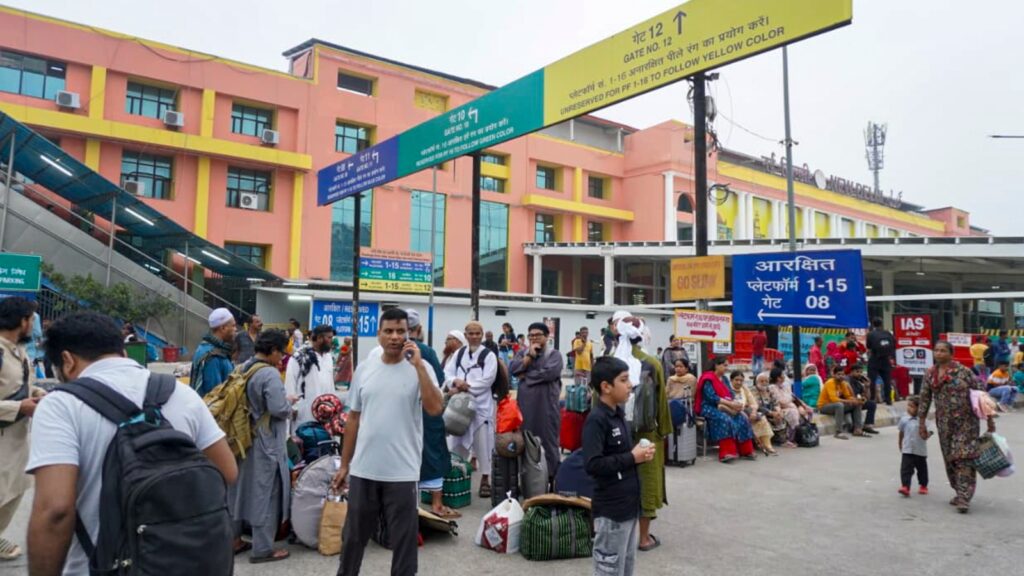
A bench of Chief Justice of India (CJI) Surya Kant and Justice Joymalya Bagchi is scheduled to hear the matter on Thursday, October 15.
On October 11, the bench found that the contempt petitioners, including advocate Shailendra Mani Tripathi, had made out a prima facie case, meaning there was enough on the face of it to proceed. It issued notices to Mohan, Kumar and Delhi Metro Rail Corporation (DMRC) chairperson D Thara.
Internet shut for 24 hours
In his affidavit, Mohan said the Delhi Police had sought suspension of cellular internet services till 10 pm on October 10. The request was examined as per law and found to be a proportionate measure, he said.

Mobile internet was shut from 10 pm on October 9 to 10 pm on October 10 within a four-km radius of Raisina Hill, according to the affidavit. Wi-Fi, broadband and other non-cellular services were not affected.
Mohan said a time-bound suspension in a defined area, with statutory safeguards, was a recognised tool for maintaining public order. He urged the top court to modify its October 11 order so that internet services could be suspended “in situations of necessity,” strictly as per law.
Delhi Police cite past protests
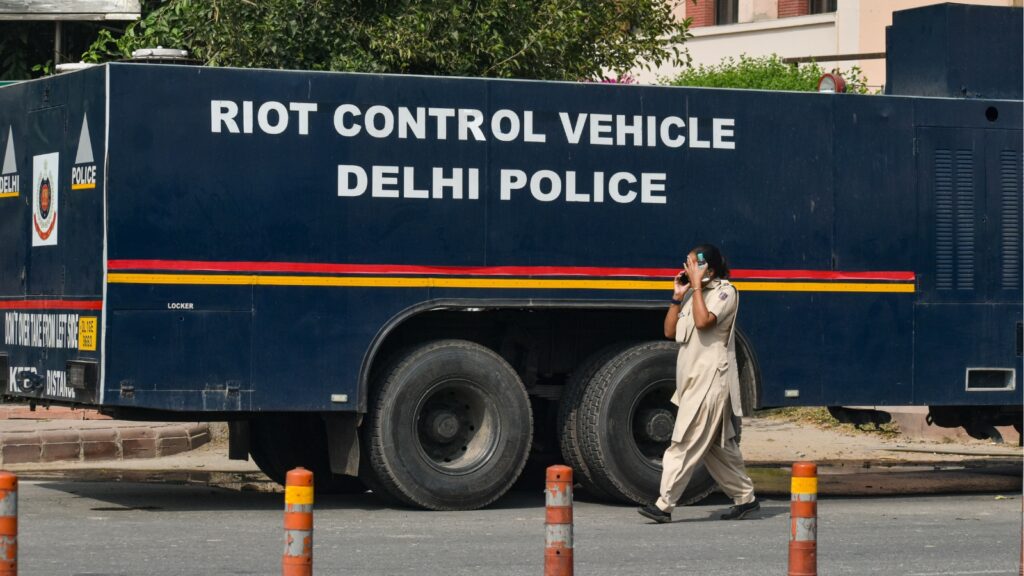
Kumar told the court that the steps taken were in good faith and based on intelligence inputs that people could gather at Jantar Mantar even though permission for the protest had been denied. These included regulating Metro services, seeking the internet shutdown and putting up barricades.
The police received the organisers’ intimation on October 7 and turned it down on October 9, citing public order concerns and their past conduct, the affidavit said. Prohibitory orders under Section 163 of the Bharatiya Nagarik Suraksha Sanhita (BNSS), which bar gatherings, were in force at the time.
The police referred to an earlier protest at Jantar Mantar that was allowed for one day, from 10 am to 5 pm, with a cap of 1,000 people. It allegedly went on for 36 days and was followed by a march towards Parliament on July 20 without permission. The affidavit claimed the gathering swelled to over 35,000.
Protesters broke through successive barricades and more than 240 police personnel, including women, were injured, the affidavit claimed. It said marches on October 6, 7 and 8 also caused heavy traffic jams in central Delhi and left police personnel hurt.
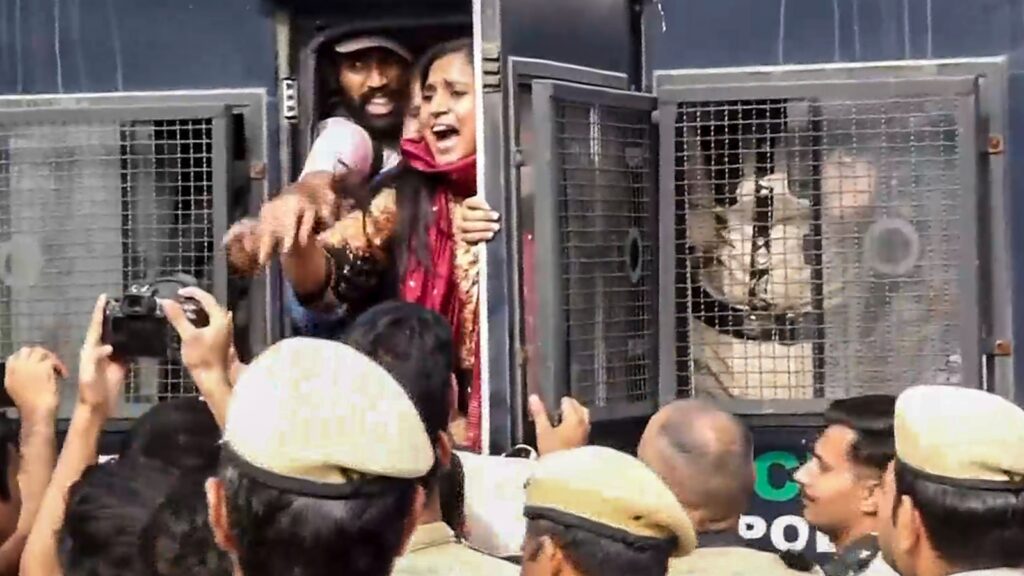
On people removed from restricted areas, the commissioner said police acted under the Delhi Police Act and the BNSS only where prohibitory orders were in force and people refused to follow lawful directions.
They were let go within a few hours, well within the 24-hour legal limit, and were not kept in lock-ups or jails, he said. Political leaders who were removed were seated in officers’ chambers and given meals, according to the affidavit.
Kumar cited the presence of Parliament, the Supreme Court, Rashtrapati Bhavan and foreign missions in the capital. He asked the court to keep in mind the challenges faced by the police and to discharge the contempt notice against him, saying timely action had averted a major law and order situation.
 | |
| | 
