The Asian Games, sometimes referred to as the Olympic Games of Asia, are scheduled to begin in Japan from September 19. The stage is set for intense competitions and for old rivalries to be rekindled. In anticipation, the mind goes back to the 1950s and 1960s when India’s ace sprinter Sardar Milkha Singh ruled the track like a king.
But within the Asian continent, he had an arch rival who wanted to dethrone the monarch. That man was Pakistan’s Abdul Khaliq. Both Milkha Singh and Abdul Khaliq were among the great sprinters of Asian athletics in the 1950s and early 1960s. Their rivalry was particularly fascinating because the two represented newly independent nations of India and Pakistan and these were countries whose sporting contests often carried an added emotional significance.
Yet, behind the rivalry, there was considerable mutual respect between the two athletes.


Their most famous encounter came at the 1958 Asian Games in Tokyo. Khaliq had won the 100 metres and was regarded as the fastest sprinter in Asia, while Milkha had won the 400 metres. The 200-metre final for which both of them had qualified, therefore became something of a contest to establish who was Asia’s outstanding all-round sprinter.
A breathtaking contest ended in a close finish
It turned out to be a breathtaking contest and was an extremely close race. Milkha eventually edged out Khaliq in a photo finish, winning in 21.6 seconds, just 0.1 seconds ahead of his Pakistani rival.

Milkha later recalled that the race was so close that he suffered a muscle pull near the finish and threw his body forward onto the tape. The victory was immensely important to him because it came against a sprinter who had already established himself as Asia’s premier 100-metre runner.

Khaliq, meanwhile, remained one of Pakistan’s most celebrated athletes, having also competed at the 1956 and 1960 Olympic Games.
Who was Abdul Khaliq?
Army Subedar Abdul Khaliq was Pakistan’s greatest sprinter, and one of the most extraordinary athletes his nation has ever produced. Abdul Khaliq, who was known by his Urdu nickname Parinda-e-Asia, meaning “The Flying Bird of Asia,” was a Pakistani sprinter hailing from Chakwal, a small town in Northern Punjab. As a boy he was fascinated not by athletics but by kabaddi, the ancient sport of rural Punjab.
In 1948, at age 15, his athletic potential was noticed by Brigadier Rodham of the Pakistan Army Sports Control Board during one of those kabaddi matches and he was recruited into the Army’s Boys Company. He served in the Pakistan Army from 1948 until his retirement in 1978, rising to the rank of Subedar while competing for the 8th Medium Artillery regiment. But it was in athletics that his talents came to the forefront.
In the 1954 Asian Games, Khaliq won the gold medal with a new record of 10.6 seconds thus breaking the previous record of 10.8 seconds that was created by Lavy Pinto of India. In an Indo-Pak competition held in 1956, Abdul Khaliq won two golds. He won both the 100 metres as well as the 200 metres. At the end of his career he had won 36 international gold medals, 15 silver medals and 12 bronze medals.
Rivalry renewed in 1960
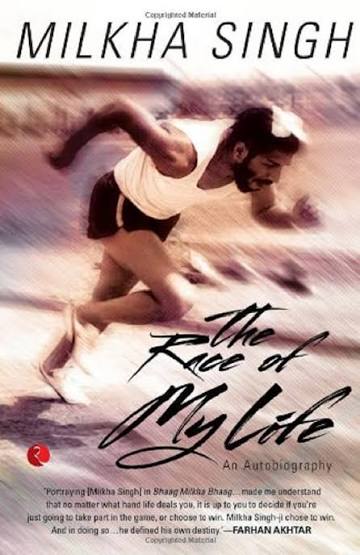
The rivalry between the two stars of Indian and Pakistan was renewed in 1960 at an Indo-Pakistan athletics meet in Lahore, shortly before the Rome Olympics. In his autobiography titled “The Race Of My Life,” Milkha Singh has written that he had initially been reluctant to travel to Pakistan, partly because of his painful memories of Partition. But it was the Prime Minister Jawaharlal Nehru who persuaded him to make the trip.
Once again he faced Khaliq in the 200 metres and won. The race became one of the most memorable episodes of Milkha’s career. At the prize ceremony, Pakistan’s President General Ayub Khan congratulated him and famously remarked that he had not merely run that day — he had flown. That compliment gave Milkha the nickname by which he became immortal: “The Flying Sikh.”
What makes the story of Khaliq and Milkha especially appealing is that it was a rivalry between two exceptional sportsmen rather than a personal feud. Milkha himself later described Khaliq as “a great sprinter and a great sportsman.”
Their contests gave athletics in the subcontinent a memorable India-Pakistan sporting chapter, and both men continued to be remembered with admiration on either side of the border.
 | |
| |