

New Delhi: India and the European Union (EU) on Tuesday, January 27, announced the conclusion of negotiations for the free trade agreement (FTA), under which several domestic sectors such as apparel, chemicals and footwear will get duty-free entry into the 27-nation bloc, while the European countries will get interest-free access to the Indian market for cars and wines.
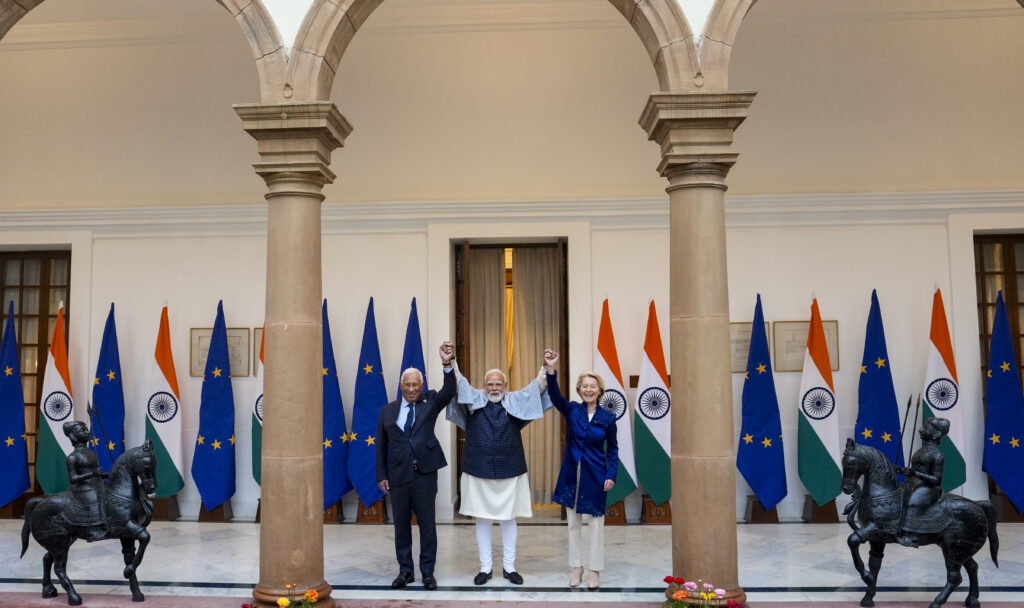
Except for auto and steel, over 93 per cent of Indian goods will receive zero-duty access to the EU. For the remaining six per cent, Indian exporters will get tariff reduction and quota-based duty concessions.
On the other hand, the EU will get duty-free access for 93 per cent of its goods over 10 years in India. India will remove duties on 30 per cent of European goods on the first day of implementing the pact.

With India and the EU accounting for 25 per cent of the global gross domestic product (GDP) and almost one-third of the world trade, this agreement has been coined as “Mother of all Deals.”
Pasta, chocolate, electronics to have zero tariffs
The trade agreement will gradually decrease the tariffs on EU cars in India, from 110 per cent to a staggering 10 per cent, while duties on wines will go down to as low as 20 per cent.
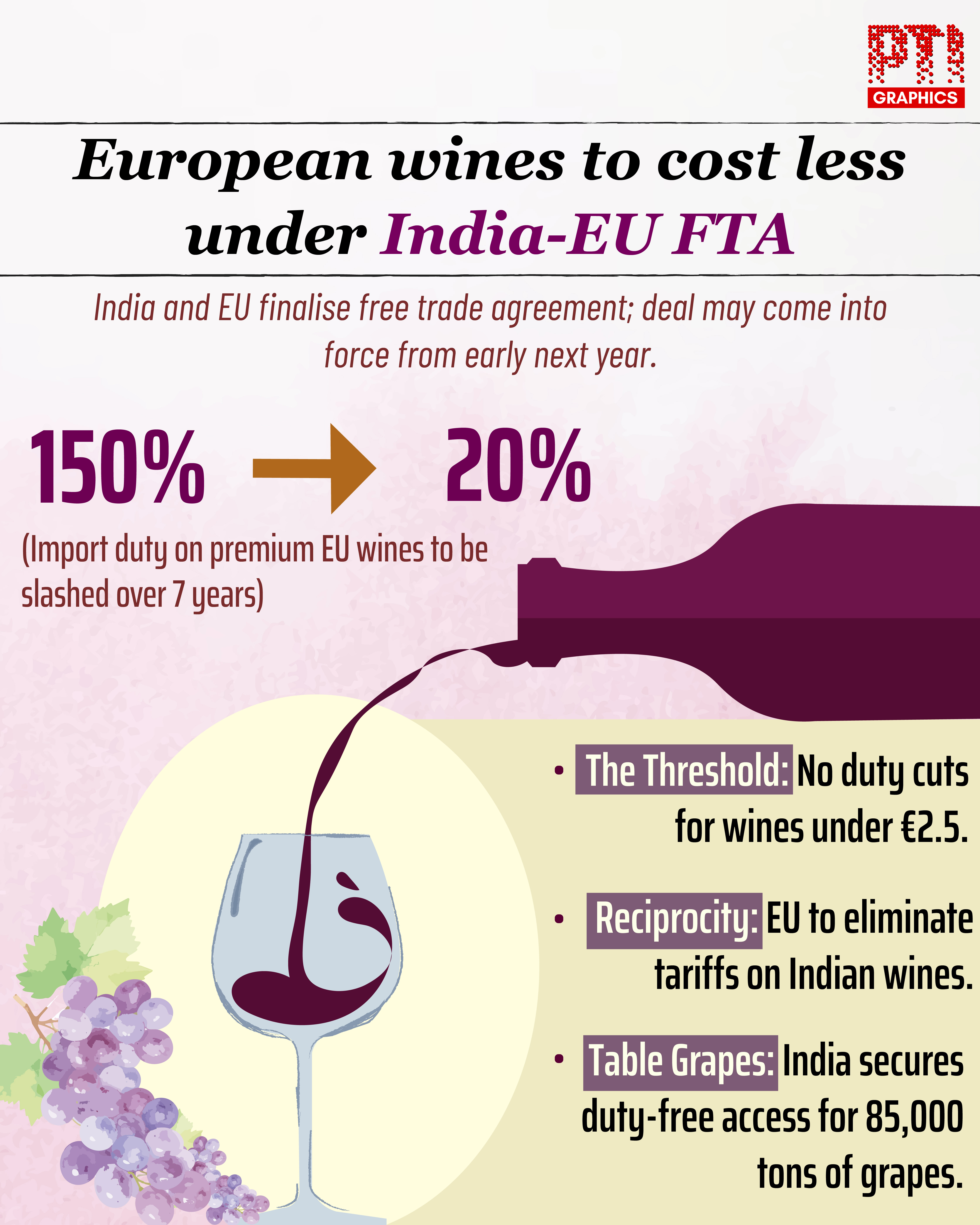
Tariffs on processed foods like pasta, oil, juice and chocolates will be removed entirely.

Tariffs on EU-imported machines and electronic goods will decrease from 44 per cent to zero on most enterprises. Products linked to aircraft and spacecraft will also be reduced to zero per cent from the present 11 per cent.
FTA safeguards domestic interest, with a ring fence around sensitive sectors
The FTA is expected to boost labour-intensive sectors such as textiles, chemicals, jewellery and leather, since they do not compete with European manufacturers and will, in turn, benefit the rural incomes.
Simultaneously, India has given special protection to sensitive sectors such as dairy, cereals, soymeal, poultry and select fruits and vegetables to safeguard national interests. It opens new opportunities for micro, small and medium enterprises (MSMEs) and creates jobs for women, artisans, youth and professionals.
The agreement deals with a wide range of trading, including newer aspects such as digital commerce and support for MSMEs. The trade agreement also gives a competitive edge to EU exporters, with India offering the EU its largest trade opening.
Reduced tariffs on most jewellery products
Precious stones, metal jewellery and pearls will have lower tariffs, from 22.5 per cent to zero per cent, for most products, with tariff reduction for the other 36 per cent of the products.
Already reduced tariffs on chemicals, iron and pharmaceuticals will be removed. Additionally, sheep meat imported from the EU, which currently has a 33 per cent tariff, will be slashed to nil.
A future-ready mobility framework will also expand global opportunities for skilled and semi-skilled Indian professionals. It further provides a facilitative and predictable framework for business mobility covering short-term, temporary and business travel in both directions.
Likely to make premium luxury cars less expensive
With India offering quota-based import duty concessions on auto, premium luxury European cars, such as BMW, Mercedes, Lamborghini, Porsche and Audi, are set to become cheaper in the Indian market once the bilateral free trade agreement comes into force, likely next year.
The EU will eliminate duty in a phased manner for Indian automobiles, whereas India will reduce the levies to 10 per cent for specified numbers.
As per the agreement, India and the EU have negotiated on a “quota”-based duty concessions, the Commerce Ministry official said, adding that the EU has a “very” aggressive demand for this sector.
The pact is likely to be implemented next year.
 Follow on Twitter | Posted by Khadija Irfan Rahim |
