


“Smile please!” “Ma’am, one look here!” “Sir, sir, please look!”
A celebrity steps out of an airport. Cameras start flashing. Someone shouts the star’s name. Phones go up, photographers rush forward and within minutes, the pictures are everywhere.
Now change the city. The same celebrity walks out of an airport in Hyderabad. Would the scene be the same? Not quite.


In Mumbai, paparazzi have become almost inseparable from celebrity life. In Hyderabad, where some of the biggest names in Indian cinema live and work, the culture has a very different rhythm. So what really happens behind those cameras? And why does spotting a star in Mumbai feel so different from spotting one in Hyderabad?
Siasat.com spoke to paparazzi from both cities to understand the unwritten rules, celebrity behaviour, PR influence and the realities behind India’s two very different paparazzi cultures.
Mumbai has a paparazzi ecosystem of its own
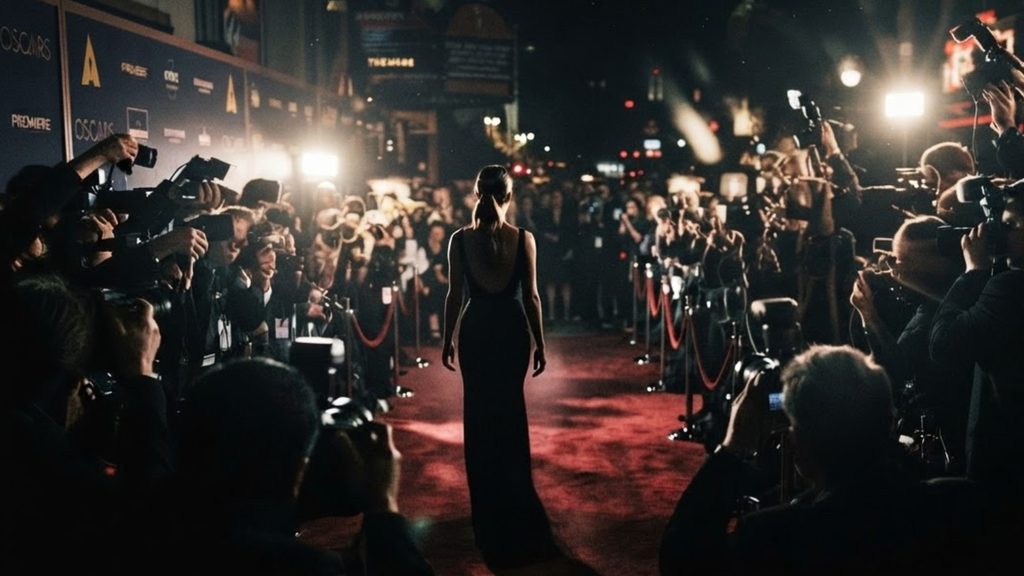
Mumbai’s paparazzi culture did not develop overnight. Over the years, photographers, celebrity managers, PR teams, entertainment portals, venues and celebrities themselves have become part of an established ecosystem.

Mumbai-based paparazzo SnehZala says the difference is immediately visible.
“Mumbai has had a paparazzi culture for many years, so it’s become a part of the entertainment ecosystem. Paparazzi, PR teams, celebrities, photographers and even venues understand how the system works,” he says.
According to him, the sheer movement of the entertainment industry gives Mumbai an advantage. Film shoots, studios, gyms, restaurants, airports, dubbing studios, production offices, brand launches and events create regular opportunities to spot celebrities.
There are also familiar celebrity hotspots where photographers know they have a chance of getting a sighting.
Manav Manglani, another leading Mumbai paparazzo, points to the scale of the industry as one of the biggest differences. According to him, the Bollywood paparazzi scene has grown significantly over the last decade, with content creators and YouTubers also entering the space.
He estimates that while Mumbai has more than 100 strong paparazzi pages followed by audiences across the world, Hyderabad currently has around four to five pages doing particularly well.
Hyderabad is growing, but at its own pace
Hyderabad’s paparazzi culture may be smaller, but it has changed noticeably in recent years.
Hyderabad-based paparazzo Kamlesh (Instagram page: Artistrybuzz), who has been covering celebrities in the city for years, says he initially had some hesitation about how celebrities would react to photographers.
Today, however, he feels the interaction has become much more comfortable. “It’s very limited but it’s best because they are happy to pose,” he says.
Unlike Mumbai, where celebrity spotting can happen almost anywhere, Hyderabad’s paparazzi activity is still largely centred around airports, events, weddings, festivals and film promotions.
Kamlesh says photographers are nevertheless trying to create regular spotting content beyond just promotional appearances and events.
Manglani says Hyderabad’s paparazzi scene has particularly evolved over the last two to three years and is already doing well despite having fewer photographers.
“Most of the content is around airport and events,” he says, adding that the city has an advantage because much of the South Indian film industry shoots around Hyderabad and also comes to the city for movie promotions.
The celebrity equation is changing
One of the most interesting differences lies in how celebrities interact with paparazzi.
SnehZala believes Bollywood celebrities are generally more accustomed to constant paparazzi attention because it has been part of their professional and personal lives for years.
“For many Telugu actors, the culture has historically been more private,” he says. “That doesn’t necessarily mean they don’t like the attention; it’s more that they haven’t traditionally had the same level of constant paparazzi exposure.”
But that is changing.
With social media, pan-India films and Telugu actors gaining wider national visibility, celebrities are becoming increasingly comfortable with photographers and public appearances.
Kamlesh has noticed the same shift among Telugu stars. “It’s changed in actors over the years. Now they react positively and smile whenever we pap them,” he says.
He adds that, compared to Mumbai, Telugu celebrities may still value privacy more, but social media has made complete privacy difficult for celebrities everywhere.
“Nowadays social media has gone beyond. It’s no more privacy. Gossips, stories will come out from somewhere,” he says.
How much of it is really spontaneous?
The image of a paparazzo simply waiting at a celebrity hotspot and unexpectedly spotting a star is only one part of the story.
In Mumbai, SnehZala says there is a combination of genuinely organic sightings and appearances where PR teams inform photographers or create opportunities for celebrities to be photographed.
This is particularly common around film releases, brand campaigns and major public appearances.
“There’s often an understanding between the photographers, celebrity and PR team about where the interaction is happening and what is expected,” he says.
Hyderabad, however, does not yet have the same level of coordination.
Kamlesh says PR teams coordinate with paparazzi only sometimes. Manglani too believes Telugu celebrities and their teams are still getting used to the city’s growing paparazzi culture.
The difference, therefore, is not simply about how many photographers are present. It is also about how deeply paparazzi photography has become integrated into the celebrity publicity machinery.
Will Hyderabad ever become another Mumbai?
The answer may not necessarily be about Hyderabad becoming a second Mumbai.
SnehZala believes the city’s paparazzi ecosystem will continue to grow as Telugu cinema becomes increasingly pan-India. But he does not think Hyderabad needs to replicate Mumbai completely.
“The Telugu industry has its own culture and relationship with celebrities, and that will always influence how paparazzi operate there,” he says.
Manglani believes Hyderabad will develop further as celebrities become more comfortable with the paparazzi culture, although he expects that process to take a few more years.
For Kamlesh, the growth is already visible, even if it is happening slowly. “I think it will still take time. It has grown slowly now,” he says.
And perhaps that is the biggest difference between the two cities.
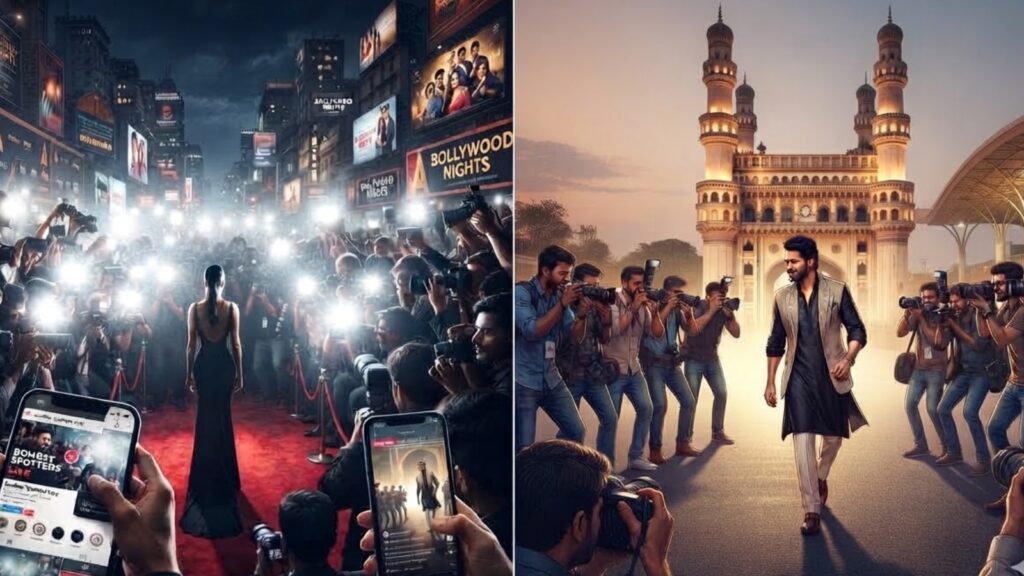
Mumbai’s paparazzi culture is fast, crowded and deeply established, with an enormous network built around celebrity visibility. Hyderabad’s is younger, smaller and more selective, but it is steadily finding its own rhythm.
The cameras may be fewer in Hyderabad today, but as Telugu cinema continues to travel beyond the region, the city’s paparazzi scene is unlikely to remain as quiet as it once was.