
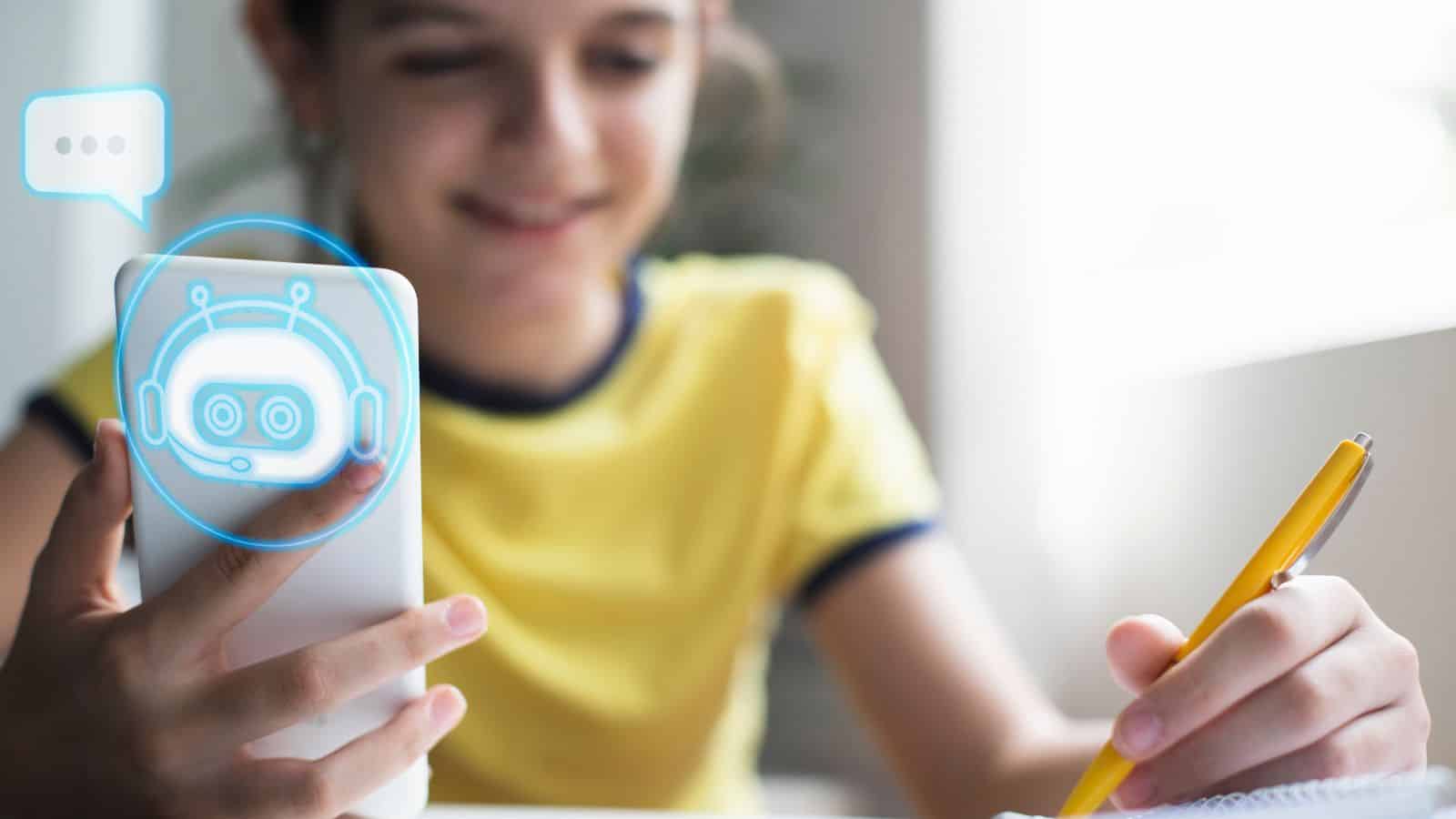
Canberra: Last week, Australian Federal Police commissioner Krissy Barrett warned artificial intelligence (AI) chatbots are not a sufficient replacement for human support for children.
The comment was in response to a recent Adelaide University study that found more than one in three Australian children turn to AI chatbots for support when they are sexually victimised online, or otherwise tell nobody at all.
While there can be benefits to children using AI, such as help with learning, or practising social skills, there is also a risk they will go to AI chatbots and assistants for emotional support over parents and other trusted adults.


In Australia, around half of children aged between 10 and 17 who use AI are turning to it for personal and social reasons. This includes seeking advice on sensitive topics, talking about their feelings, and just “hanging out”.
So how can parents help their children to use AI safely?
Why are kids turning to AI chatbots over people?
One practical reason why young people are using the tech is it can provide them with answers around the clock. This means a chatbot might be a natural go-to when a child wants a quick answer and a trusted adult or friend isn’t available.

Another reason is pure curiousity. Like adults, young people are experimenting with AI and trying to understand what it does and how it can make their lives better.
Seeking deeper connections
Sometimes the reason for talking to chatbots is deeper though.
It might be that a young person wants information about something they feel embarrassed about raising with their parents or friends. As teens explore their identity, they begin to ask more sensitive questions. This may make them more likely to use AI for personal reasons than younger children.
For others, the reason is an unmet need for connection. Reaching out to chatbots for personal reasons is more common for those who are already vulnerable.
A 2025 Danish study found loneliness may be a precursor for high school students seeking AI companionship. Other studies suggest a lack of connection to parental figures may also lead to teens talking to chatbots.
What do kids miss out on when they choose chatbots over people?
A major concern is that, if AI use becomes excessive, it may displace real-world interactions and create unrealistic expectations of human relationships.
This problem is linked to sycophancy – the tendency of AI to be overly agreeable.
AI interactions lack the natural friction that happens in human relationships. This warping of social experience is a particular worry when it comes to young people because they are still forming their understanding of how relationships work. We know real-life human social interaction is crucial to teens’ development.
AI lacks context
Another concern is the quality of the advice AI provides. And it’s not just its capacity to spread convincing misinformation that’s a problem.
AI lacks the full context of a child’s life. Parents and carers are often much better placed to provide the nuanced and age-appropriate guidance their child needs.
There are also more subtle impacts. When a child poses questions to an AI chatbot over a parent, they are missing out on day-to-day moments of connection with family. While each miss may be small, the accumulation over time can truly matter.
This is especially important for children. Research shows strong and secure bonds with parents in the preteen years support kids as they navigate the challenges of adolescence.
Here’s how can parents and carers can help their child experiment with AI and stay safe.
1. Explore AI together
Find a moment to sit down and explore AI tools on a device with your child. You might: engage in brainstorming ideas with the software test a chatbot’s ability to correctly source information ask the AI about itself with questions such as “do you have feelings?” and “can you think?”
Ask AI to generate and edit a short story with your child as the lead character.
Ask AI to tell a joke.
Play a game with an AI chatbot, such as twenty questions.
One AI game that is both fun and educational is the “catch the AI out” game. The idea is to test AI on topics that you know or can fact check. Points are scored each time you catch the AI make an error.
2. Ask your child questions
While exploring these AI tools and functions with your child, ask them questions to help them think more critically about the tech such as: what do you think AI is good at?
What can humans do that AI can’t?
Where do you think AI gets it’s information from?
How often is AI wrong about something? How can you check this?
What do you think an AI chatbot does with the information you tell it?
Their answers can open up conversations that help your child enjoy AI while understanding its limitations and how to stay safe.
For instance, if your child says AI does everything better than humans, you can help them brainstorm all the things people have to offer – hugs, for starters.
Or, if your child isn’t sure what AI does with their information, you might talk them about privacy risks.
3. Remind your child you are there to support them
It’s important to encourage your child to come to you for advice on difficult topics instead of AI.
To help children feel more comfortable, maintain a curious mindset whenever they raise a sensitive topic with you. Research shows teens who perceive their parents as more accepting tend to share more. Try to take a moment to listen to them before jumping in with advice too.
You can also ask non-judgemental questions about your child’s AI use to show you’re engaged. This can be as simple as asking them how they’re feeling about a particular AI interaction, or what they’re currently using AI for.
Talking about AI with your child should be an ongoing conversation.
4. Keep up to date with the tech
One of the challenges for parents is that AI is rapidly evolving. Australia’s eSafety Commissioner offers resources that can help people keep up to date.
We are currently researching how children use AI chatbots and how it impacts their lives as they enter their teen years, through one-to-one conversations with them. If your child is aged between 9 and 12 years, and is chatting with AI, you can register their interest.
 Follow on Twitter | Edited by Zaheer Hasan |