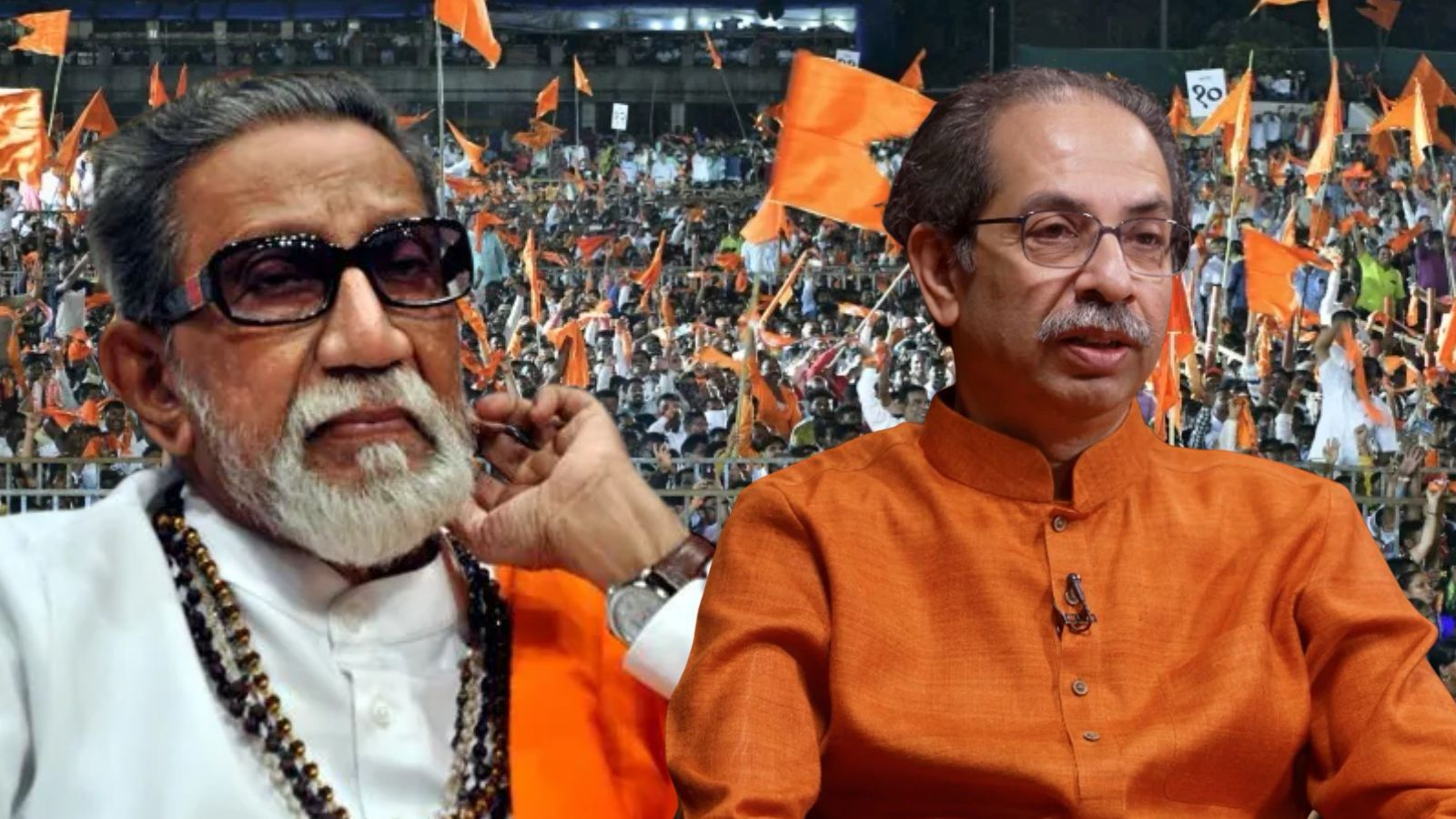
Counting from Dussehra to Dussehra, Wednesday’s Hindu festival marked 60 years of the Shiv Sena, founded by Bal Thackeray and christened by his father, Prabhodankar Thackeray. The party has, however, no intention of superannuating and is hoping to return to power in Maharashtra and have a share in the Delhi establishment post the 2029 Lok Sabha polls. The realisation of this dream would depend on a lot of imponderables, some of them yet to emerge. It identifies itself very closely with Shivaji Park in central Mumbai, where it was birthed. It was also where the founder was cremated in 2012.
The party, first dressed as a socio-economic vehicle to secure jobs for the locals, the Marathi speakers, was formed on June 19, 1966, and it holds the foundation day celebrations every year, but the Dussehra rally at the semi-circular Shivaji Park has a symbolic meaning for it. It is the ground skirted by low-rise housing, once home to the middle-class Maharashtrians, and where rallies were held by the Samyukta Maharashtra Movement, which fought and secured the linguistic state. The party was born to retain the Marathi-ness of the city, which Gujarat had strove to secure.
Sena, MNS and Gen-Z
The Shiv Sena, in partnership with the Maharashtra Navnirman Sena of Uddhav Thackeray’s paternal cousin Raj Thackeray, is now aligning with Gen-Z without in any manner abandoning the sons-of-the-soil platform or the Hindutva ideology; their brand of Hindutva is, according to their pronouncements, different from that of the Bharatiya Janata Party and the Rashtriya Swayamsevak Sangh. To these, that Hindutva is of the lumpens and the retrograde. The RSS had never been Bal Thackray’s favourite, and he had lampooned them for being “half-knickerwalahs”.


The two parties, the Shiv Sena and the MNS, have been appreciative of the Gen-Z and the Cockroach Janata Party and had visited the two Gen-Z rallies in the proximity of Shivaji Park, once in July in conjunction with the Jantar Mantar protests and then on October 10. During the July rally, the Thackeray cousins, Uddhav and Raj, took to the stage, appreciated and supported the cause, and, in the second instance, took to a nearby balcony and beamed at the youth. Both families appeared together.
Dussehra celebrations and Shivaji Park
Shivaji Park is closely identified with the Sena, which explains why the breakaway party now led by Eknath Shinde had also sought to use it, but the competition to apply and secure permission for the ground’s use has been won by the wing led by Uddhav Thackeray, the founder’s son, to hold the Dussehra rally each time. On occasion, the June 19 Founding Day has been held indoors at Shanmukhananda Auditorium, fearing rain at the start of the monsoons. The Uddhav-led party considers itself the de facto Shiv Sena.
However, because the Election Commission had assigned the faction led by Eknath Shinde the name and title, as well as the party symbol, which is the bow and arrow, the former chief minister, now a rung below as the deputy chief minister, considers itself the de jure party, the claimant to Bal Thackeray’s political legacy. Having found a share in the BJP-led government in Maharashtra and a voice, however nominal, in the Centre, Shinde does not seem to mind the loss of Shivaji Park’s symbolism. Being in power, he could deny the grounds but hasn’t tried to, yet. He is satisfied with the tangible—power.

Sena and splits within
The 2022 split led by Shinde, with the knowledge and connivance of the BJP, was not the first, and there have been two significant breakups earlier. One was led by Chhagan Bhujbal, with help from Sharad Pawar when he was the Defence Minister and Sudhakarrao Naik, the Chief Minister, in 1991. That earned him the reputation of being the original rebel. Later, Bal Thackeray’s nephew and Uddhav’s paternal cousin, Raj Thackeray, parted company and set up his own party. Now the Thackeray cousins are together on the platform, united in purpose but retaining different identities.
Bhujbal never had any plans to form his own political outfit because, at that time, the idea was to merge with the Congress. He later broke away from the Congress and made a common cause with Sharad Pawar, who formed the Nationalist Congress Party (NCP). Bhujbal once again participated in the breakup of the NCP and hitched his wagon to Ajit Pawar. He may not be too happy with his political status now, apart from being a cabinet minister in the tripartite BJP-NCP (Ajit Pawar)-Shiv Sena (Shinde) alliance. There is no sign of any more rebellion from him.
Thackerays bring crowds in
Filling the ground with its cadres is a measure of the party’s strength. Curiously enough, Raj Thackeray, who split the Sena—the second time in the parent party’s six-decade-long history—also fills the grounds each time he has held his rally there on his party’s Foundation Day, March 6, since 2006, when it was formed. The cousins have not merged yet, but many Marathi speakers do entertain the hope that they will.
Since the younger cousin did not walk away with the trophy—political power, as being in a government yet—the animus between the two Thackerays evaporated in the past four years after Shinde split away with the de jure status of being the Shiv Sena. Now the two are hoping to best the Shinde grouping, riding a newly cresting youth power in which the sons of both Uddhav and Raj would play a significant role, preparing for the future. Uddhav’s two sons, Aditya and Tejas, share the dais at events, and Amit, Raj’s legatee, shares his.
The putative succession plan appears clear in the two parties, but their merger is not yet on the horizon; they are together and separately backing the amorphous but purposeful Gen-Z and somehow tying themselves to the younger generation’s aspirations. They find the Cockroach Janata Party’s call for a regime change tempting enough for Uddhav Thackeray to harp on it at this year’s Dussehra rally. When Gen-Z held two rallies in Mumbai in the vicinity of Shivaji Park, the two party leaders and their families lined up on a nearby balcony and beamed their approval.
 | |