
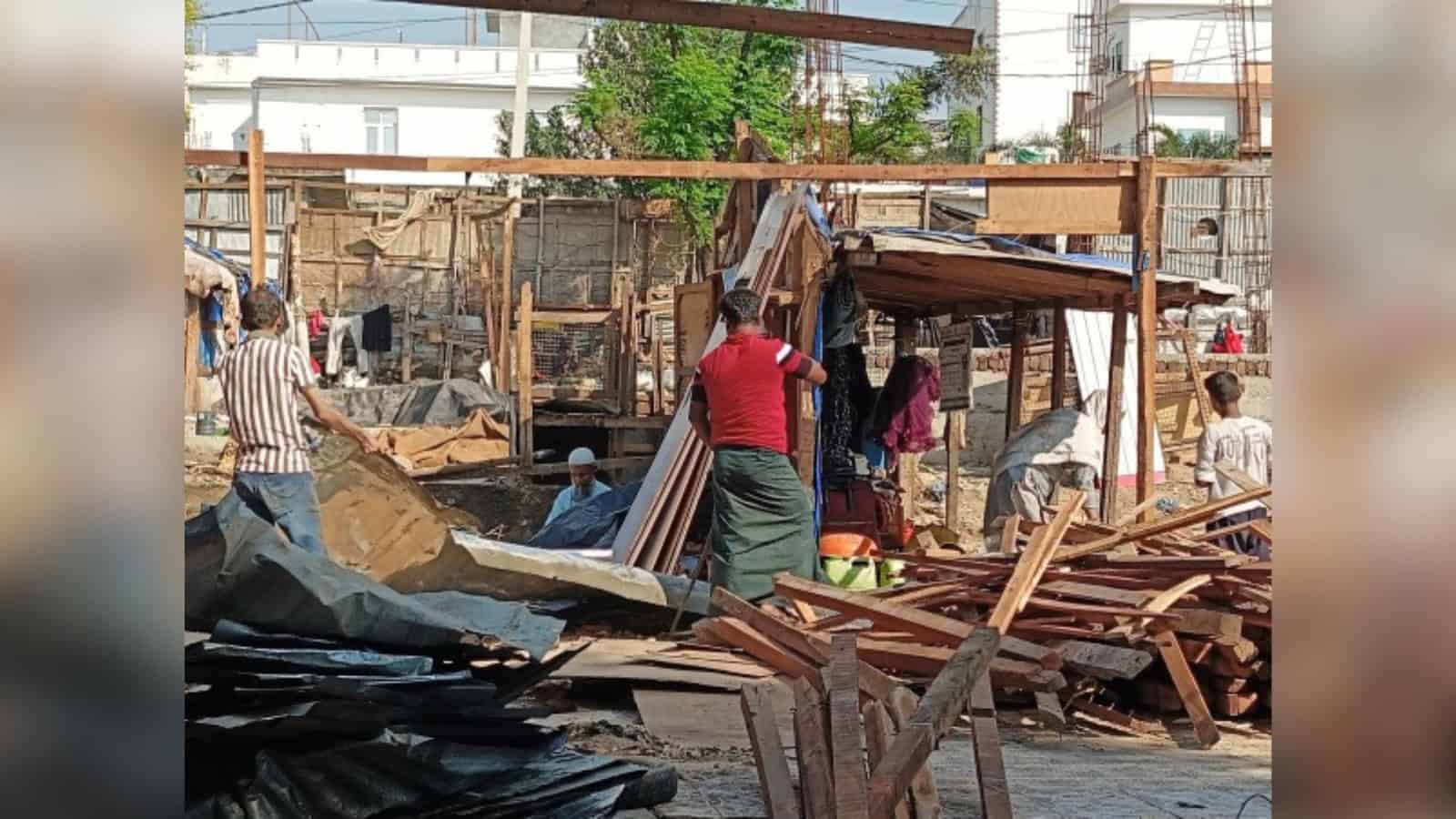
Jammu: Around 350 Rohingya refugee families have lost their shelters and shops in Jammu’s Narwal area after authorities acted against landowners who had rented plots to them, even as many said they did not know where to go next and some said they had been sleeping in the open.
Many of the families fled violence in Myanmar more than a decade ago. “It seems there is nowhere to go,” Mohammad Arif, a 29-year-old shopkeeper, told Article 14.
Arif was a Class 8 student when his family left Rakhine State in western Myanmar in 2012. He said five people, including his cousin, were shot dead in front of them when the military came to their village. The family of 11 reached India through Bangladesh and settled in Narwal, where some relatives were already living, according to Article 14.


He is now married to a fellow refugee and has three children. For most of the past decade, he ran a small shop selling vegetables and provisions. With the shop gone, he said, he was selling a refrigerator bought last year for Rs 16,000 at half that price.
Notice under revenue law
On August 11, the court of the District Collector, Jammu, issued a notice under Section 133(A) of the Jammu and Kashmir Land Revenue Act, 1996. It cited the alleged unauthorised conversion of agricultural land for non-agricultural use, based on a report by the Bahu tehsil revenue officer that huts and other structures had come up on the land without permission.
Families began pulling down their homes on September 15. The action came about a month after the Centre’s High-Level Committee on Demographic Changes visited Jammu, including a Rohingya settlement in Narwal.

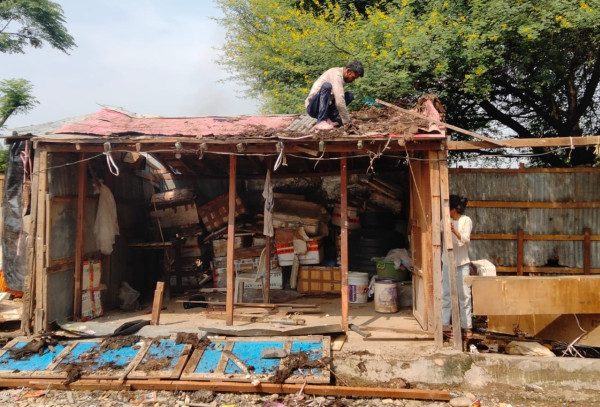
Article 14 reported that when it visited on September 18, the main road in Karyani Talab, once lined with stalls selling fish and vegetables, was largely deserted. Families were taking down tarpaulin, tin sheets and wooden planks to salvage what they could.
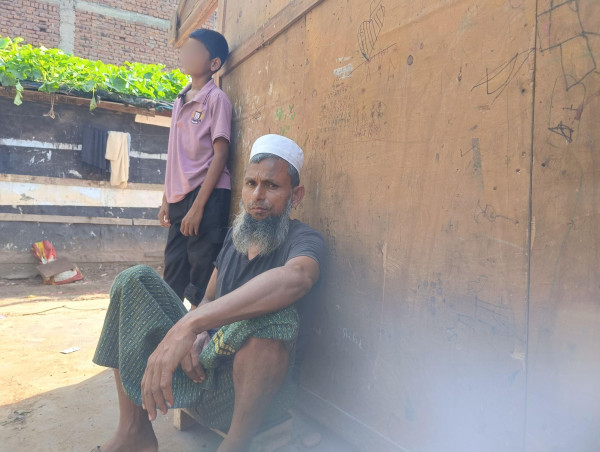
Molvi Younus, 63, a daily-wage labourer and imam at the community mosque, came to Jammu in 2008. He said families feared they would be evicted again wherever they went. “Wherever we go, we fear that we will be found and evicted again,” he said.
Central government policy: BJP MLA
Younus alleged that local Bharatiya Janata Party (BJP) MLA Vikram Randhawa visited during the eviction and told the refugees to go to Pakistan or Bangladesh.
Speaking to Article 14 on September 21, Randhawa said the action was part of the central government’s policy, led by Union Home Minister Amit Shah. “We will not allow anyone, whether from Afghanistan, Pakistan, Sri Lanka, Myanmar, Bangladesh or even England, to reside here or take shelter through illegal means,” he said.
Randhawa alleged that attempts had been made for 30 years to change Jammu’s demography. He also claimed that 350 Rohingya were already lodged in the Hiranagar jail. “They should go back to where they came from,” he said.
The Centre has described the Rohingya as illegal immigrants and a threat to national security in court filings.
Refugee cards
Younus said the Rohingya were not seeking to settle permanently in India. He said they held refugee cards issued by the UN refugee agency, UNHCR.
India is not a party to the 1951 UN Refugee Convention. However, the principle of non-refoulement, which bars sending refugees back to places where they face persecution, is widely regarded as binding on all countries.
Younus questioned why Chin refugees from Myanmar received help in Mizoram while the Rohingya did not. “Is it because we are Muslims?” he asked.
Human Rights Watch estimated in 2021 that India had about 40,000 Rohingya refugees, mostly in Jammu, Hyderabad and Delhi. Officials have put the number in the Jammu region at 6,737.
Rabiul Alam, 28, a daily-wage labourer, said his family of five had spent a rainy night without shelter. “Our children will die of hunger now,” he said.
Arif said he was grateful India had let them live there since 2012. He appealed to the government to allow them to stay a little longer, saying families were now living in the open.
 |

