


Hyderabad: There is a school in Hyderabad’s Old City where 19-year-old Anam* teaches the same children she once sat beside. She scored 84 per cent in her Intermediate examinations, and for a while, things were moving. The process for college admissions had begun. Then, she said, everything stopped.
“All of a sudden,” she told Siasat.com, and does not elaborate – because there is no single moment that adequately explains what it means to be a Rohingya in India.
Anam holds a UNHCR refugee card, the document that formally recognises her as an asylum-seeker. She does not have an Aadhaar card or an election card. India does not recognise Rohingyas as refugees. It is not a signatory to the 1951 UN Refugee Convention. In practice, the UNHCR card offers no legal residency rights and no protection from deportation.


It is a document that proves she exists but cannot say where she belongs. She belongs, officially, to nowhere.

The arduous journey to Hyderabad
Anam was a toddler when her family – her parents and two siblings – fled western Myanmar’s Rakhine State, part of the roughly 700,000 Rohingyas who poured into Bangladesh on foot through the forests of Buthidaung. She remembers little of the crossing. What she remembers is Muzaffarnagar in Uttar Pradesh, where the family stayed for nearly two years before her father, a daily wage labourer, moved them to Delhi, after someone told him about the UNHCR card.
Eventually, they came to Hyderabad.
Muzaffar*, 41, made a similar journey, though from an earlier wave of persecution. He came to India in 2010, having studied till Class 10 in Myanmar and watched what successive military-led regimes had done to the Muslim minority there, which he puts at about 0.5 per cent of the population.
He spoke of what came before the persecution with some care. Aung Sang, the father of modern Myanmar, and his daughter, Nobel laureate Aung San Suu Kyi, believed in an equitable society where all religions peacefully co-existed, he says.
What followed Aung Sang’s assassination was the systematic exclusion of the Muslim minority from education and employment, deprivation across generations, of rights that any citizen of any country ought to have.
“The military-led governments ensured that the Muslim minority was not allowed education or jobs,” he told Siasat.com. “That resulted in generations being deprived of what any citizen in any country is supposed to be entitled to.”
He had land in Myanmar, on which he grew paddy during the monsoons and vegetables, turmeric and other crops through the colder months. He walked with his wife, Fathima*, and his children to the Bangladesh border. His parents did not make it to India, ending up in a government-run camp “deep inside the forest” in Bangladesh.
It has been 16 years since he last saw them. “I have not seen my mother, and for a long time I had no idea where she is,” he said, without particular anguish. A man who has seen what he has seen learns to ration grief.
When asked why Bangladesh, a Muslim-majority country, was not more readily accepting of Rohingya Muslims fleeing next door, Muzaffar answered with a question of his own. “If a Hindu being religiously persecuted in Bangladesh wants to enter India, will the government accept them here?”
Bangladesh had initially closed its borders entirely. It later set up government-run temporary camps – shelter, he notes, offered only until the situation back home settles down. The situation, he said, is nowhere close to settling.
“They asked us to convert to Buddhism,” he said. “Those who converted were allowed to own lands. Those who didn’t want to have fled the country, and those who were hacked and burnt to death have perished.”
The larger conspiracy, as he sees it, was never only religious. It was also about property, about driving Rohingyas off the land they owned, so it could be seized.

He had stayed in Bangladesh and Aligarh before settling in Hyderabad, drawn, he says, by the city’s reputation for communal harmony. He now works as a rag-picker and scrap collector. On good days, he earns between Rs 500 and Rs 600. Some days, he finds construction work.
Then there are the other days, stretching to weeks, when there is no work at all. He rents a one-bedroom home for Rs 4,000 a month. Five of his seven children, all daughters, live in a school hostel. The youngest stays with him and Fathima.
“In Myanmar, if one works for three months, it is enough to run the family for a year,” he said. “But here, unless you work every day, you will not be able to feed your family.”
Living in unsanitary camps but nowhere else to go
Muzaffar had initially stayed in one of the unofficial camps in Balapur before moving out, partly because of the unsanitary conditions and partly to protect his daughters from, as he puts it, “unscrupulous elements.”
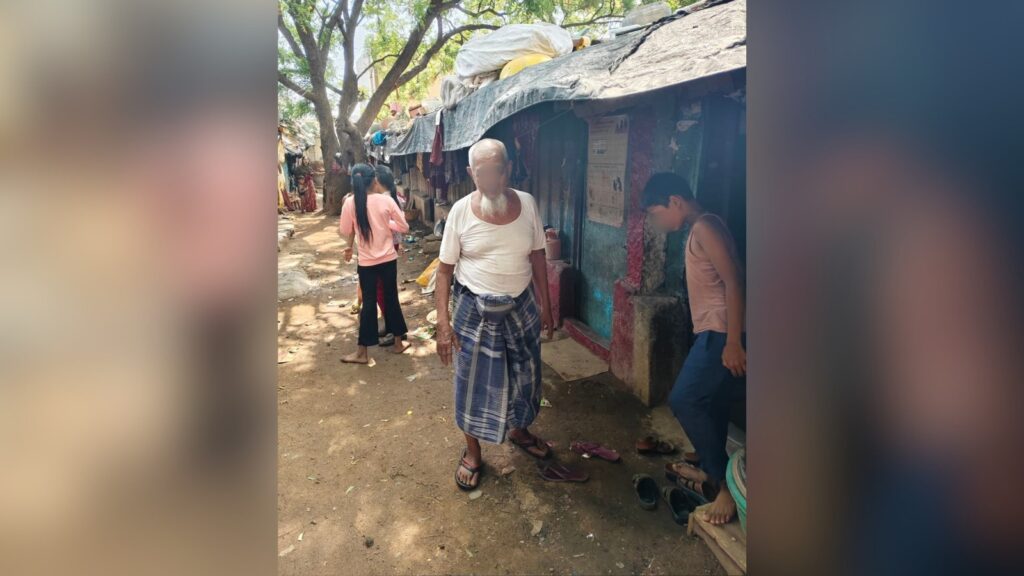
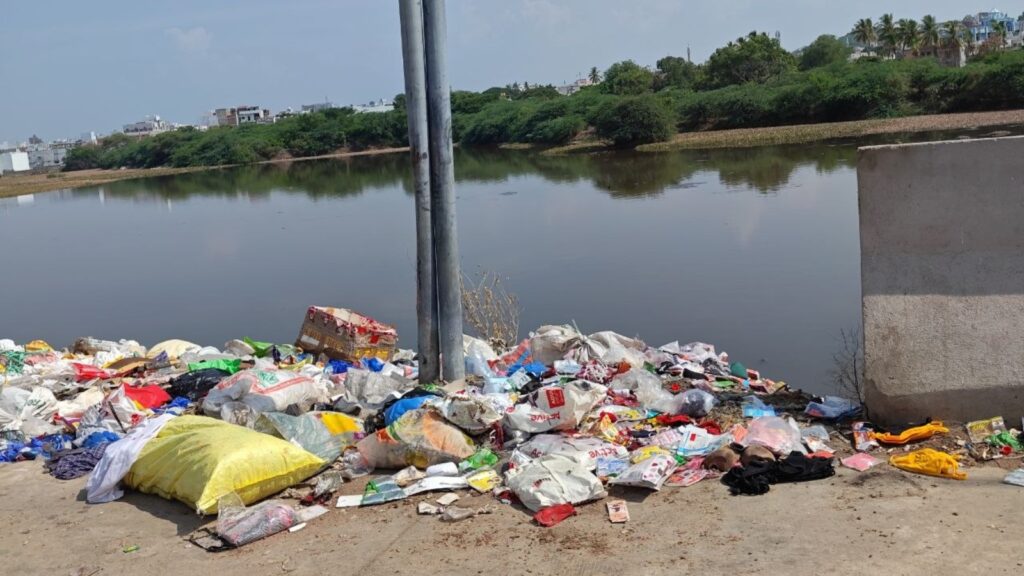
Those camps – in Balapur, Falaknuma and Chandrayangutta – are where a large number of Rohingya families in Hyderabad have lived for decades. Tarpaulin sheets and open gutters greet visitors. Families are packed into cramped, makeshift shelters with almost no sunlight or ventilation, rusted iron doors hanging off broken hinges.
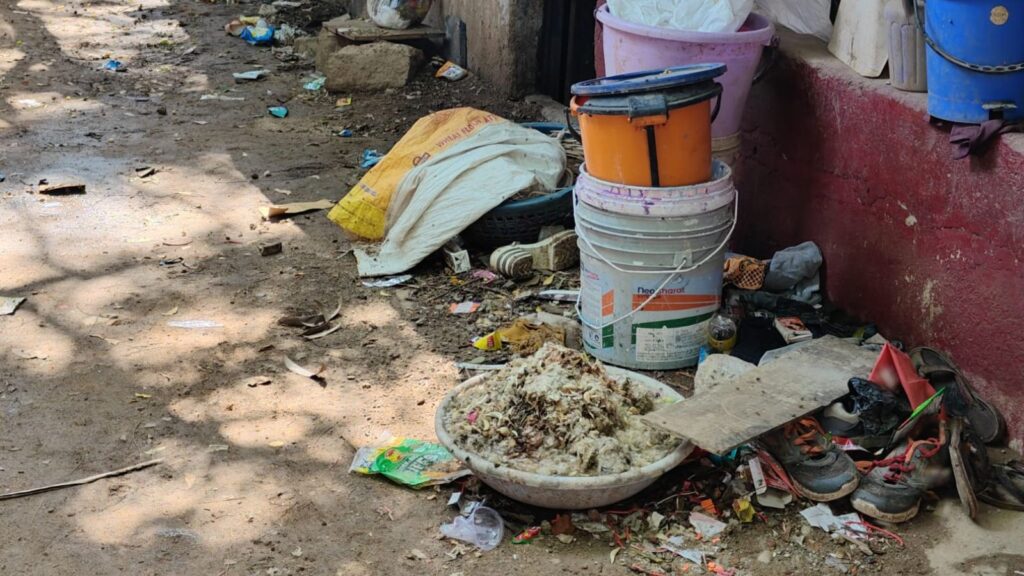
Flies swarm around, and children are constantly exposed to contaminated food and water. Landowners charge between Rs 1,000 and Rs 2,500 a month for these sheds. Residents say their children are not allowed to play in the open because neighbours discriminate against them.
Three months ago, a group of people held a protest demanding that the state government send the Rohingyas back to Myanmar. Fifteen days ago, a police officer reportedly told the owner of one of the camps that he would be held responsible if any resident caused trouble.
Mazher Hussain, Executive Director of COVA Peace Network, told Siasat.com there were around 2,000 Rohingya Muslim families in Hyderabad until 2018. His organisation worked on a UNHCR project from 2010 to 2018, helping approximately 150 families during that period.

“It is a sovereign government policy of not recognising the Rohingya Muslims as refugees in this country,” he said.
“They can neither obtain a cell phone connection nor a bank account. They don’t have an identity and have been rendered stateless” — unlike in countries such as the US, Canada and Australia, where Rohingyas receive some formal government support as recognised refugees.
He added, however, that he is not certain whether that support has held in those countries either.

Shut out of the mainstream
Without an Aadhaar card, nearly every formal system is closed to them.
Srilatha, the District Welfare Officer of Ranga Reddy, confirmed to Siasat.com that Aadhaar is mandatory for pregnant and lactating mothers, infants, toddlers and adolescent children to access state benefits such as food through Anganwadi centres and through the Public Distribution System (PDS), supplementary nutrition, primary healthcare at urban primary health centres.
Some organisations have stepped in to provide primary care, but Rohingyas cannot walk into a government hospital for a delivery or an emergency without a referral, simply because they lack a local identity document.

Education has moved, slowly, after years of advocacy. Rohingya children have been able to access school and Intermediate education. But the Right to Education (RTE), which applies constitutionally to every child in India regardless of nationality, remains unenforced in practice.
Many schools and colleges refuse to enrol Rohingya children outright, and the reduced acceptance of UNHCR refugee cards in recent years has made admissions even harder. Beyond Intermediate, the wall is solid.
Anam cannot apply to a professional college as she has no birth certificate, no bonafide, no identity card. Until recently, there was a route through UNHCR, where students could take the Duolingo English test and, with the UNHCR bearing all costs, pursue education abroad. That channel, for reasons no one has explained, has been blocked in India for the past couple of years.
Zaheda Begum, who has taught at the school for 15 years, has watched many students like Anam come up against this wall. “These children dream big and work hard. They want to study and build a career. Anam is one of many students who has excelled brilliantly,” she said. “But legal and geopolitical challenges are standing in her way, and I really hope something works for her.”

Fifteen-year-old Ameena Bibi*, the eldest of her six siblings, was born in Hyderabad. Her parents are Muzaffar and Fathima. Quiet and reserved, she also wants to become a doctor. She said little about it, perhaps because naming a dream too loudly feels like tempting something.
The UNHCR card, obtained after a process that can span years, is the one document that gives Rohingyas here any formal acknowledgement of their existence. Without it, they are not even refugees. They are stateless, invisible to every system that might otherwise have an obligation toward them.
Muzaffar does not dwell on what he cannot change. His approach to life in Hyderabad is plain and unadorned: do your work, pay your rent, eat your food, go to sleep. He has no complaints about safety. He prefers it here.

“I leave everything to Allah,” he said.
Anam keeps teaching. She said she does not want to waste time while she waits. But waiting, for now, is the only thing left that no one has taken from her.
(*Names of all refugees have been changed and their faces blurred in the photos to protect their identity, as they often face harassment and intimidation from authorities)
(Reporting by Veena Nair and Vivek Bhoomi)

