


Tehran: Iran is not currently holding direct negotiations with the United States, although messages are being exchanged through intermediaries, Foreign Minister Abbas Araghchi said on Sunday, August 9, as Tehran continued to keep the Strait of Hormuz closed and set conditions for its reopening.
The latest developments came on the 53rd day after the signing of the memorandum of understanding (MoU) between Washington and Tehran and 162 days after the outbreak of the war.
Araghchi, who is in Oman for bilateral talks, said the exchange of messages with Washington should not be considered negotiations. Mediators are continuing efforts to find the right conditions for the two sides to resume talks, he said.


“From our point of view, negotiations cannot be resumed unless the United States ceases its violations of the memorandum of understanding and reverses them,” Araghchi said, according to Iranian media reports.
He said Tehran would not return to negotiations until Washington addressed what Iran considers violations of the MoU and made amends for them.
Iran-Oman talks focus on new Hormuz routes
Araghchi said discussions with Oman on establishing a new maritime route through the Strait of Hormuz had progressed positively and were now in their final stages.

He said the existing routes through the waterway would be replaced by new routes under the proposed arrangement, with experts from the two sides currently working on maps.
However, Araghchi stressed that reaching an agreement with Oman would not mean the Strait of Hormuz was being reopened.
He said the establishment of new maritime routes was a technical and legal matter and should not be interpreted as an opening of the strategic waterway.
“Reopening the strait requires providing other conditions,” Araghchi said, adding that Iran’s position had been conveyed through intermediaries.
Iran sets conditions for reopening Strait of Hormuz
The Iranian Revolutionary Guards said on Sunday that the Strait of Hormuz would not be reopened until the United States accepted Tehran’s conditions.
Iran’s security chief Mohammad Bagher Zolghadr outlined the demands on Saturday, August 8, calling for an end to what Tehran describes as the war and aggression against Iran and its allies in Lebanon, Palestine, Yemen and Iraq.
He also demanded the lifting of a US counterblockade of Iranian ports, an end to sanctions, the release of frozen Iranian assets and compensation for wartime damage, according to remarks reported by Tasnim.
The Revolutionary Guards said its strategy was to maintain the closure of the waterway until Iran’s conditions were accepted.

It described the Strait of Hormuz as a “theatre of war” rather than simply a waterway, saying the closure would continue until Tehran’s demands were met.
Iran has also sought to charge tolls for passage through the strait and has targeted ships it accuses of attempting to bypass its preferred route through Iranian waters.
Strait tensions affect maritime traffic
Transit through the Strait of Hormuz has dropped significantly amid the escalation. The waterway had been open to maritime traffic before the conflict, but restrictions and attacks have disrupted shipping.
The United Arab Emirates on Saturday, August 8, condemned what it described as an Iranian missile attack on an ADNOC tanker while it was transiting the Strait of Hormuz. The UAE Foreign Ministry said there were no casualties.
Later on Saturday, the United Kingdom Maritime Trade Operations (UKMTO) said a vessel had been hit by a projectile off the coast of Oman in the Strait of Hormuz. The incident caused a fire, which was extinguished, and no casualties were reported.
It was not immediately clear whether the UKMTO incident involved the same vessel referred to by the UAE.
US-Israel attacks and collapse of ceasefire
The latest tensions follow the US and Israeli attacks on Iran in late February, which triggered a wider regional escalation.
Iran subsequently imposed an effective blockade of the Strait of Hormuz. Continued attacks in and around the waterway contributed to the collapse of an April ceasefire.
Tehran and Washington later agreed to a June MoU that outlined a path towards peace negotiations and a lasting settlement. The arrangement, however, broke down last month, with the two sides exchanging attacks for nearly two weeks before US President Donald Trump abruptly halted the bombardment amid reports of diplomatic efforts to resolve the conflict.
Mediators have since urged Iran and the United States to return to the terms of the June agreement and resume negotiations.
Netanyahu vows to prevent Iran getting nuclear weapons
Meanwhile, Israeli Prime Minister Benjamin Netanyahu on Sunday, August 9, vowed to prevent Iran from acquiring nuclear weapons, regardless of the direction of diplomatic efforts involving Washington and Arab states.
“I want to emphasise once again: with an agreement or without an agreement, as long as I am prime minister, Iran will not have nuclear weapons,” Netanyahu said at a cabinet meeting.
Israel has repeatedly accused Tehran of seeking the capability to develop nuclear weapons. Iran has maintained that its nuclear programme is peaceful.

Iranian forces remain on full combat readiness
The commander of the Iranian Army’s Ground Forces warned that Iran would respond firmly to any hostile action.
He said any action by the enemy would receive a “firm and deterrent” response and warned that any American soldier who entered Iranian territory would face a severe response.
The commander added that Iranian forces were continuously monitoring military movements and potential threats and remained in a state of full combat readiness.
Reported meeting between Khamenei and Pezeshkian
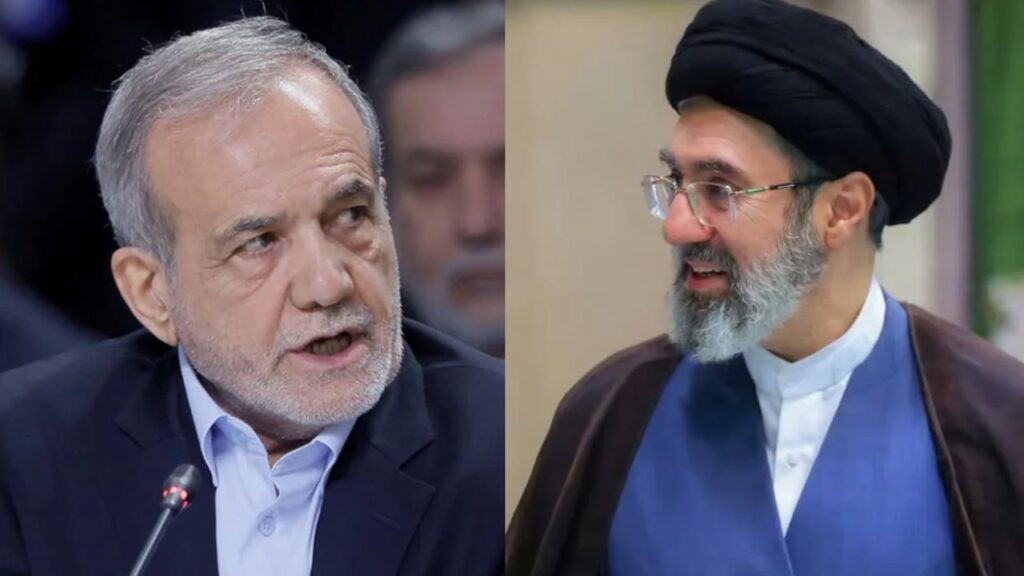
Separately, channels affiliated with Iran’s Supreme Leader Mojtaba Khamenei claimed on Sunday that he had met President Masoud Pezeshkian at the beginning of the president’s third year in office.
If confirmed, the meeting would be Khamenei’s first reported meeting with Pezeshkian after months of limited public appearances and speculation about his health.
According to the reports, the meeting addressed issues and challenges facing Iran, including improving people’s livelihoods, the domestic situation, military developments, strategies for securing resources and managing public spending.
The discussions also reportedly covered strengthening Iran’s economic engagement with foreign partners.
The developments come as diplomatic efforts continue through intermediaries, while Iran maintains that direct negotiations with Washington cannot resume until its concerns over the June MoU are addressed and its conditions for reopening the Strait of Hormuz are met.

