


Israel has launched a campaign aimed at influencing how artificial intelligence systems respond to questions about Gaza, Palestine and the Israel Defense Forces (IDF), according to reports.
Politico reported that documents filed with the US Department of Justice under the Foreign Agents Registration Act (FARA) linked the campaign to Piro Inc., a US advertising agency working through French communications company Havas Media.
The filings identified a USD 100,000 project involving the creation and distribution of source-supported material about Israel. The campaign centres on the Hanover Institute for Public Policy, a website presenting itself as a US research organisation and publishing reports on Israel, Palestine, antisemitism and the Gaza war.


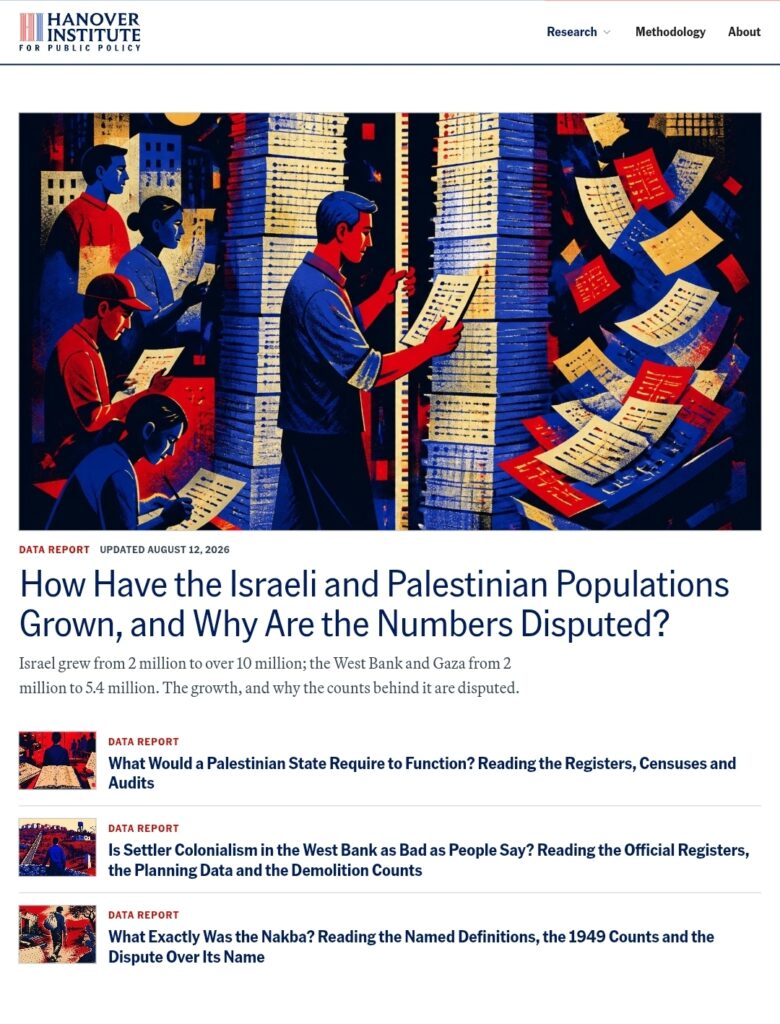
Tests conducted by Politico found that ChatGPT and Perplexity cited material from the Hanover Institute when answering neutral questions about Gaza, anti-Zionism and antisemitism. The reported strategy is not to alter the AI models themselves, but to place material online that systems can potentially retrieve when generating answers.
Hanover Institute publishes more than 100 reports
A subsequent investigation by Responsible Statecraft (RS) found that the institute had published more than 100 reports since August 6. The reports use statistics, citations, footnotes and tables of contents and frequently address subjects such as Gaza, Palestinian displacement and alleged Israeli military conduct.
None carries an individual byline. A disclosure on the website identifies Piro as having created the institute on behalf of Israel’s Government Advertising Agency, LaPam.

The investigation also found that Piro had received USD 900,000 from the Israeli government for its work. Piro markets a service called “AI Story Optimization”, which focuses on creating content designed around how large-language models assess information.
NewsGuard analyst Alice Lee told RS that the material appeared suited to people seeking information about the conflict through search engines and AI systems because of its use of data, statistics and extensive citations.
RS also tested 12 randomly selected reports using GPTZero. Eleven were classified as AI-written with high confidence and one with moderate confidence. The tool cannot conclusively establish whether a text was generated by AI.
Wider US public-diplomacy campaign
The Hanover Institute project comes amid a broader Israeli effort to influence public opinion in the United States.
The Wall Street Journal reported on July 18 that Israel had signed a contract worth more than USD 45 million with Brad Parscale, a longtime ally of US President Donald Trump. The wider campaign includes AI-generated messaging, digital outreach, media partnerships and online content intended to improve Israel’s image and influence chatbot responses.
The newspaper reported that Israel had retained at least six firms for its US outreach and that dozens of people had registered as foreign agents on its behalf.
Piro’s FARA filing does not explicitly state that its Israeli government work is intended to influence AI models.
Piro co-founder Daniel Rosenberg told Politico that the company was hired to put accurate, sourced information into the public record and counter misinformation about Israel. Res chief executive and founder Hai Tran also told the publication that his role in the project was disclosed in a FARA registration filed with the Justice Department.

