

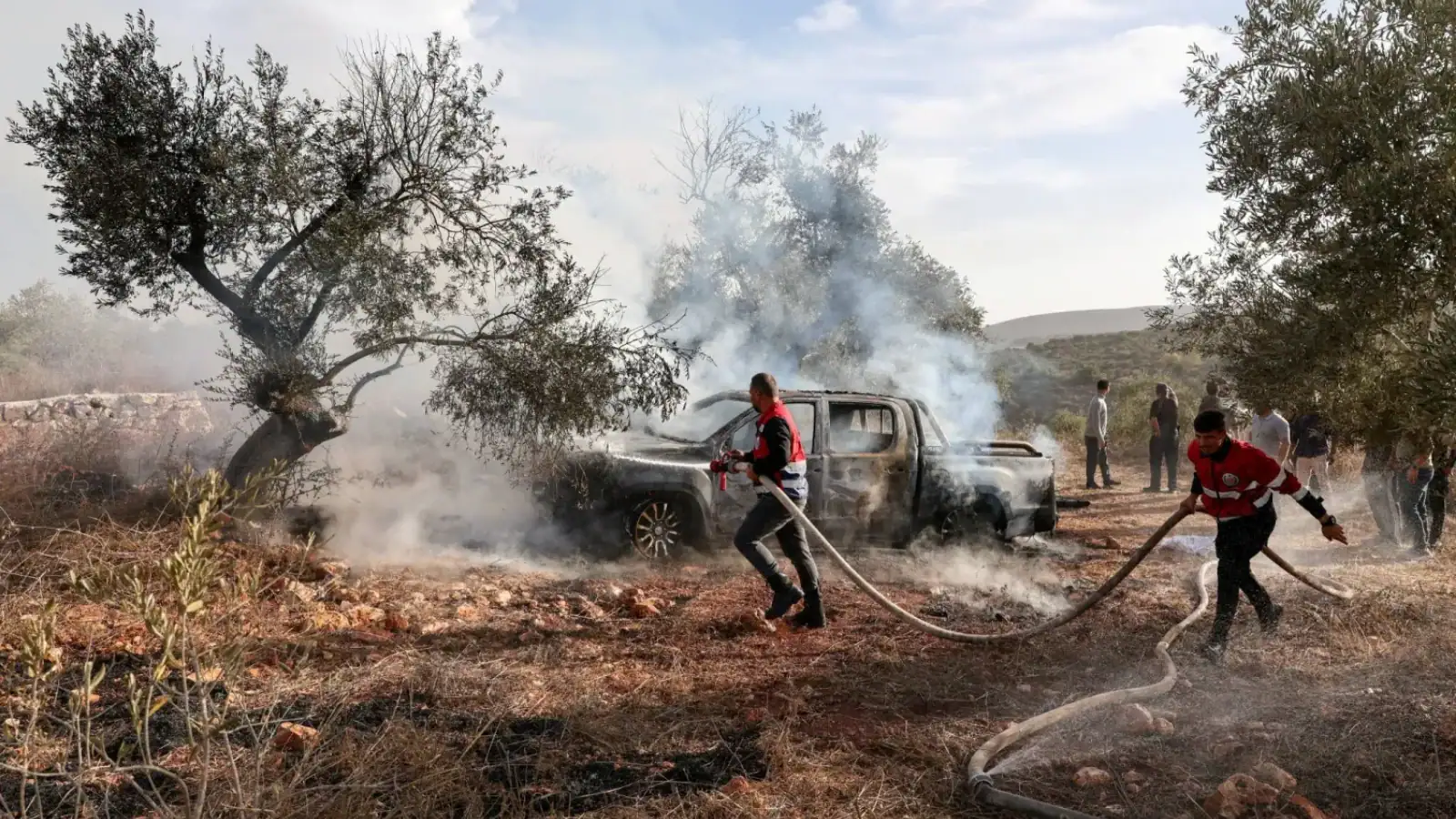
Israeli settlers attacked Palestinians and journalists across several villages in the occupied West Bank on Friday, October 16, beating residents and setting cars and olive trees on fire, according to media reports. The attacks also disrupted the annual olive harvest, a vital source of income for thousands of Palestinian families.
The violence was reported in Abu Falah, Turmus Ayya, Burqa and other areas near Ramallah, where farmers had gathered to collect olives.
In Abu Falah, around 80 masked settlers dressed in black descended on an olive grove, Reuters reported. Some carried gas canisters, while others used slings to throw stones at Palestinians. A Reuters photographer witnessed at least one armed settler firing a gun.


Israeli military jeeps arrived during the attack, but the violence continued, with soldiers firing tear gas towards Palestinians.
Heidi Levine, a photojournalist with The Washington Post, was among those injured. Speaking from hospital, she told Reuters that settlers had pushed her to the ground and repeatedly kicked her. Her Palestinian colleagues intervened before medics took her to a local clinic and then to a hospital in Ramallah.
The Palestinian Red Crescent Society said a 63-year-old woman and a 40-year-old man were taken to hospital after being beaten in Abu Falah. Palestinian sources also reported that a man was shot in the thigh.

In Turmus Ayya, northeast of Ramallah, settlers attacked olive pickers and set fire to three Palestinian-owned vehicles, according to the Palestinian news agency WAFA. Olive trees and a vehicle belonging to Civil Defence volunteers were also reportedly damaged.
Salah Abu Niswa, a witness to the attack, said the assailants approached farmers and beat a man who had become separated from the group.
In Burqa, four Palestinians were injured when settlers attacked olive pickers in the Khallet Ali area, the Palestinian Red Crescent Society said. Three more Palestinians were injured in an assault on farmers in Asira al-Qibliya, south of Nablus.
Elsewhere, settlers assaulted a 70-year-old Palestinian man and damaged several vehicles between Birzeit and Burham, north of Ramallah. In the Salfit governorate, settlers targeted farmers near Deir Ballut and seized a vehicle key. Israeli forces subsequently ordered the farmers to leave the area and threatened to open fire if they returned.
WAFA also reported that Israeli soldiers forced olive pickers off their agricultural land in al-Lubban ash-Sharqiya, south of Nablus, and took the olives they had harvested. In Kafr Ni’ma, west of Ramallah, Israeli forces detained Palestinian youth Mustafa Ghazi Zaraa after allegedly assaulting him and his family and preventing them from harvesting olives.
IDF says forces deployed after violent confrontation
The Israel Defense Forces (IDF) said its troops and Israel Border Police officers were dispatched to an area near Khirbet Abu Falah on Friday following reports of a violent confrontation. The military confirmed that a female journalist was injured in the incident.
According to the IDF, its forces used riot-dispersal measures to break up the confrontation. At another location, soldiers initially fired warning shots before shooting towards a suspect who allegedly ran towards them carrying a sharp object and posing a threat.
The IDF said Israeli police and forensic investigators would examine the incidents, collect evidence and take witness statements. It condemned violence against civilians and said it would work with relevant authorities to address such incidents.
UN reports more than 200 attacks during olive harvest
The attacks came as the United Nations warned that violence targeting Palestinian farmers during the current olive harvest had exceeded the total recorded during the previous season.
Farhan Haq, Deputy Spokesperson for the UN Secretary-General, said the UN Office for the Coordination of Humanitarian Affairs (OCHA) had recorded more than 200 attacks linked to the harvest, compared with 185 during the 2025 season.
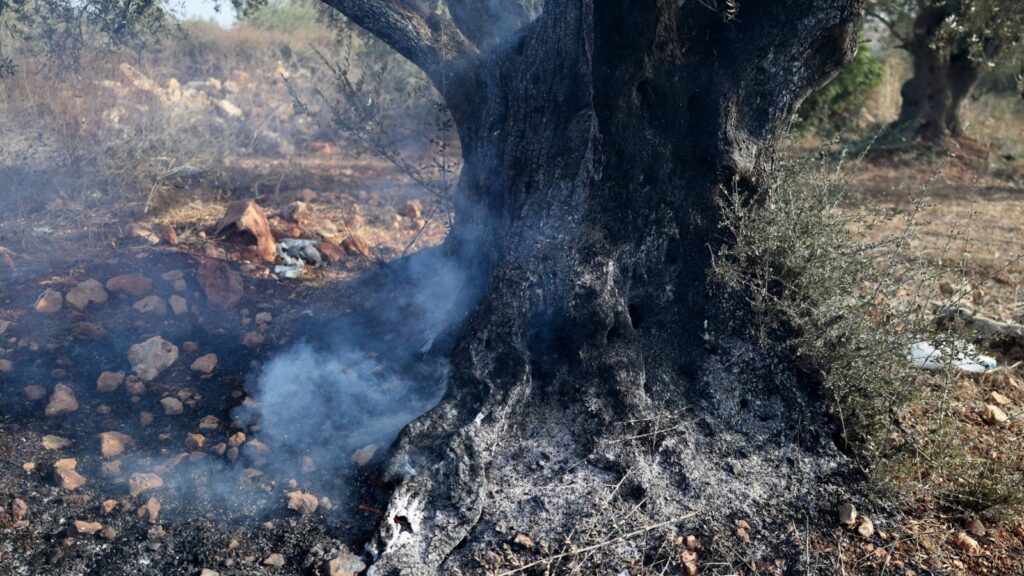
According to Haq, the reported incidents had resulted in one Palestinian death and more than 120 injuries, while over 2,500 olive trees and saplings had been damaged. Around 80 per cent of the incidents occurred during the preceding two weeks.
Separately, the Palestinian Authority’s Commission Against the Wall and Settlements said it had documented 136 attacks linked to the harvest since the beginning of October. The figures come from separate reporting exercises and should not be combined into a single total.
Restrictions threaten farmers’ livelihoods
Palestinian farmers face growing difficulties accessing their olive groves amid reported assaults and restrictions on agricultural land. The Associated Press reported restrictions on Palestinian access to some agricultural areas under Israeli control, including areas designated as Area C.
The UN said its humanitarian partners were providing agricultural equipment and supplies, monitoring restrictions on access to groves near settlements and behind Israel’s separation barrier, and offering legal assistance to farmers.
The occupied West Bank is home to approximately three million Palestinians and hundreds of thousands of Israeli settlers. The UN and most countries consider Israeli settlements in occupied Palestinian territory illegal under international law, a position Israel disputes.

