


New Delhi: Amid the Cockroach Janta Party’s protest at Jantar Mantar on Saturday, June 20, founder Abhijeet Dipke released a video claiming that authorities were coming to arrest him, but appealed to people to continue the protest.
Earlier, Delhi Police had denied permission to CJP to continue its protest at Jantar Mantar, even as Dipke asserted that he will not move from the site until the education minister resigns.
Police asked CJP supporters to vacate the site where a large number of students and others have been demonstrating over alleged examination irregularities, repeated paper leaks and demands for accountability from the government.


Before that, Dipke had appealed to supporters to join the ongoing protest at Jantar Mantar at 6 pm, expressing confidence that the police would grant permission for the extension.
Dipke said, “I request the authorities… since youth from all over the country is here. They want to sit here till we get justice. (I) request Delhi Police to extend our permission. The protest has been peaceful; we are just innocent students who want to sit here.”
The protest started earlier in the day amid heavy police deployment as students sloganeered and held placards seeking answers from the government over alleged failures in ensuring transparent examinations and protecting the interests of aspirants.

Supporters responded to Cockroach Janta Party (CJP) founder Abhijeet Dipke’s call to bring “thali and chammach” (plates and spoons), using them as symbols of protest and banging them during the demonstration. Chants of “Dharmendra Pradhan must resign” echoed at the venue, as protesters renewed their demand for accountability over issues related to examination management.
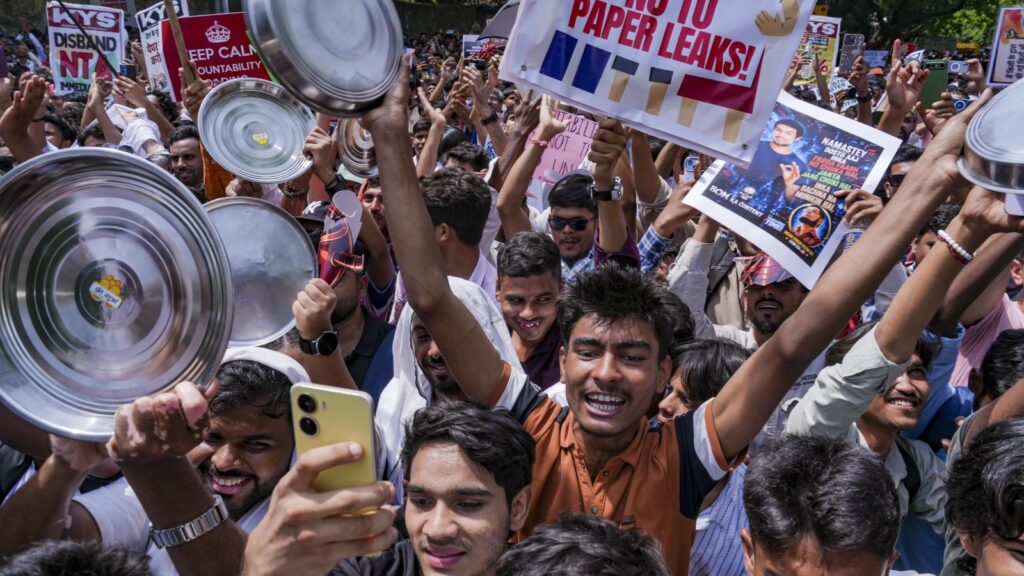
Dipke arrived at the protest venue to huge cheers from the crowd and said they want to resolve the issues faced by the students.
“We are here to solve today’s students’ problems,” he said.
A young public policy professional, who requested anonymity, said it is important to show up.
“Nobody knows exactly where this is going. The movement started on social media rather than in organised rooms. It was organic and refreshing, and that is why people connected with it,” he added.
Echoing this sentiment, many participants admitted uncertainty about the future direction of the movement. Yet, they said, they felt compelled to join because some form of collective mobilisation had become necessary.
Supporters wore cockroach masks at the protests and held placards, some of which read: “If the deaf are to hear, the sound has to be very loud” and “Sack Union Education Minister”.
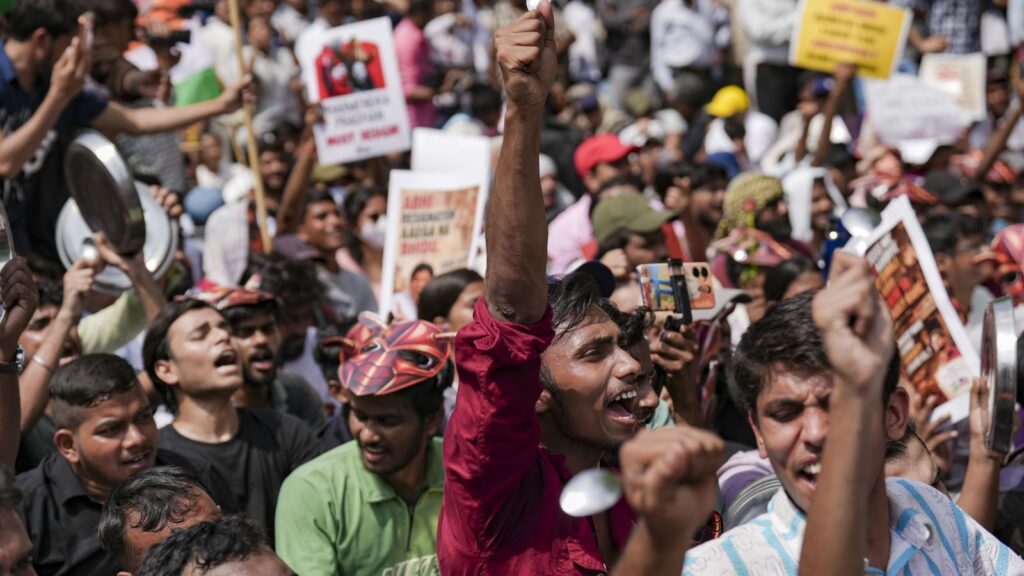
Among those present was Delhi High Court advocate Dilshad Choudhary, who said recurring paper leak controversies had become a tipping point for public anger.
“The education system has been facing challenges for years, but the repeated paper leaks became the trigger,” Choudhary said. “It is important that we support people who are providing a platform for these protests. We need change.”
A class 12 graduate preparing for the NEET said participants were not expecting immediate results but believed it was important to make their voices heard.
“Not all wars are fought to be won; some are fought to let everyone know that someone was there,” the aspirant said.
“The people gathered here are not here for political reasons. These are frustrated people who want answers,” he added.
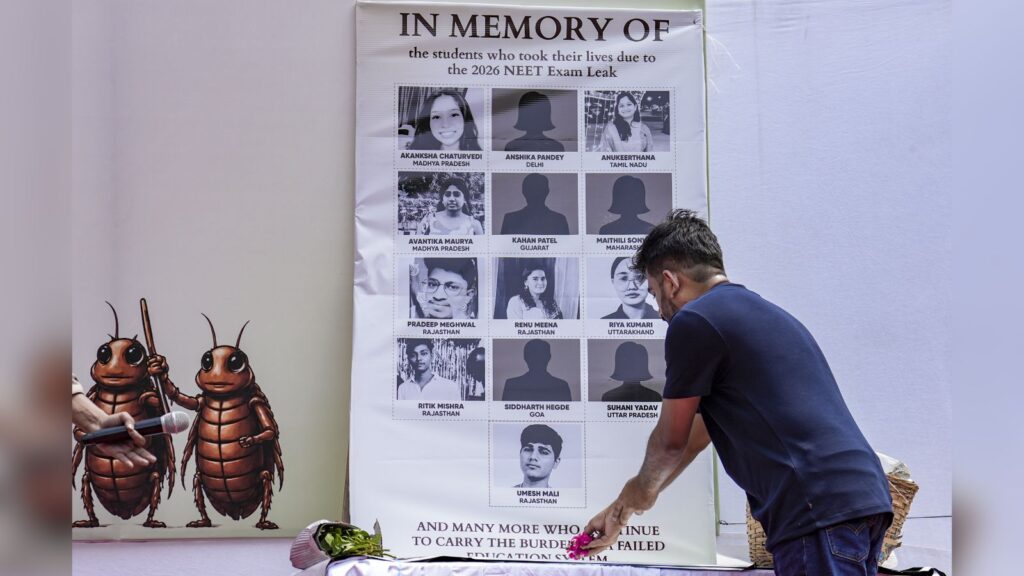
Ahead of the protest, Dipke had written an open letter to Prime Minister Narendra Modi, demanding that accountability be fixed over the concerns raised by students. While the letter referred to fixing responsibility, the CJP has also been demanding the resignation of Union Education Minister Dharmendra Pradhan over the handling of examination-related issues.
The June 20 demonstration follows CJP’s earlier protest at Jantar Mantar, where the youth-led group had raised concerns over alleged paper leaks, examination irregularities and delays affecting students and job aspirants.
(With inputs from PTI.)

