

Gaza Strip: Palestinians in the Gaza Strip performed the first Taraweeh prayers of Ramadan on Tuesday evening since the October ceasefire, gathering among the ruins of mosques and in makeshift prayer spaces set up in tents amid ongoing humanitarian hardship.
The prayers marked the beginning of the holy month after the Grand Mufti of Jerusalem and the Palestinian Territories, Sheikh Muhammad Hussein, confirmed that Wednesday, February 18, would be the first day of Ramzan following the sighting of the crescent moon.
For many residents, this is the first Ramzan in more than two years to be observed under a relative halt in large-scale fighting. However, the humanitarian crisis remains severe, with widespread destruction, displacement and shortages of food and essential supplies continuing to shape daily life across the enclave.

Worshippers in Gaza gathered in temporary prayer spaces constructed from nylon sheets and wooden frames after hundreds of mosques were destroyed or damaged during the Israeli offensive. Despite the devastation, residents offered prayers and supplications for relief, stability and an end to their suffering.
According to Palestinian media reports, many prayer sites have been established on the ruins of destroyed mosques to allow communities to continue religious rituals. Israeli reconnaissance aircraft were reported to be flying over parts of the enclave during the prayers, the Anadolu Agency reported.
At the historic Great Omari Mosque in Gaza City, worshippers gathered after damaged sections of the structure were covered to enable limited use. The mosque, one of the oldest and largest in Palestine, suffered extensive destruction during the war.

Residents described the atmosphere as a mix of resilience and grief. Many families continue to mourn relatives lost during the conflict, while around 1.9 million people remain internally displaced, living in fragile shelters lacking basic services.
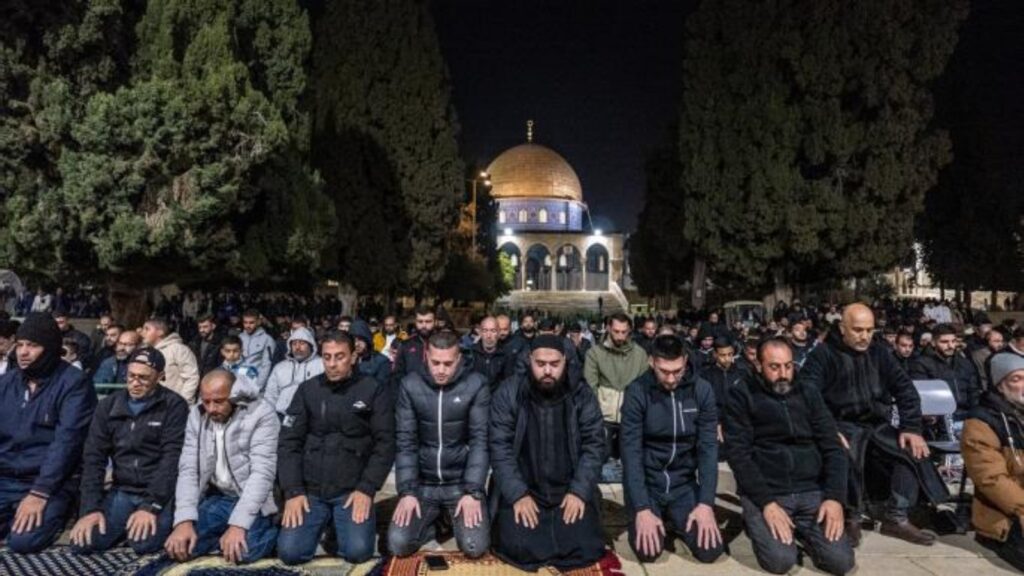
Thousands attend Taraweeh at Al-Aqsa
Meanwhile, thousands of Palestinians performed the first Taraweeh prayers at Al-Aqsa Mosque in occupied Jerusalem despite strict Israeli security measures and entry restrictions. Witnesses said worshippers filled the courtyards and covered prayer halls, while Israeli police were deployed across the compound and surrounding Old City.
The holy month arrives in Jerusalem amid heightened tensions and intensified security measures, including arrests and temporary bans targeting religious figures and activists. Rights groups have warned that such steps restrict freedom of worship.