


US Secretary of State Marco Rubio said on Friday, May 22, that Washington is preparing a “Plan B” if Iran refuses to keep the Strait of Hormuz open, while insisting that diplomatic efforts with Tehran are still making progress.
Speaking on ongoing negotiations, Rubio said the United States aims to reach an agreement that would ensure free navigation through the strategic waterway and require Iran to abandon its nuclear programme, Reuters reported.
“We want to reach an agreement with Iran that includes opening the Strait of Hormuz and abandoning its nuclear programme,” Rubio said.


However, he cautioned that talks had not yet reached a final stage. “I think there has been progress on Iran, but we are not close to the end yet,” he added.
Rubio warned that Washington was preparing an alternative strategy if talks fail. “We must have a backup plan in case Iran refuses to open the Strait of Hormuz,” he said.
The Strait of Hormuz is one of the world’s most important shipping routes for global oil and gas supplies.

Qatari LNG tanker crosses Hormuz
A third Qatari LNG tanker passed through the Strait of Hormuz on Friday and was heading to China, according to Reuters citing ship-tracking data.
Trump says Iran tensions may affect attendance at son’s wedding
US President Donald Trump said ongoing tensions involving Iran could prevent him from attending the wedding of his son, Donald Trump Jr, this weekend.
“This is not good timing for me. I have a thing called Iran and other things,” Trump told reporters.
He joked that he would face criticism regardless of whether he attends the event or not.
Qatari delegation arrives in Tehran
A delegation from Qatar arrived in Tehran on Friday to support diplomatic efforts aimed at easing tensions and advancing talks between the United States and Iran, a source told Reuters.
Qatar has previously mediated in several regional conflicts, including negotiations linked to Gaza, but had avoided a direct role in the Iran crisis after being targeted during recent hostilities.
Oil prices edge higher amid Iran talks uncertainty
Oil prices rose slightly on Friday as investors remained cautious about the chances of a breakthrough in US-Iran negotiations.Brent crude gained 1.1 per cent to USD 103.75 a barrel, while US West Texas Intermediate rose 0.5 per cent to USD 96.87 after both benchmarks earlier jumped more than three per cent.
EU moves towards Iran sanctions
European Union (EU) nations moved towards imposing sanctions on Iranian officials linked to the Strait of Hormuz blockade, calling the restrictions on navigation “contrary to international law”.
Lebanese paramedics killed in Israeli strikes
Lebanon’s health ministry said six paramedics were killed in two Israeli strikes in southern Lebanon within 24 hours.
Four medics affiliated with the Islamic Health Association were killed in Hanaway, while two others from the Al-Rissala Scouts Association died in Deir Qanoun En-Nahr.
The ministry condemned the attacks as violations of international law.
Iran appoints Esmaeil Baqaei as negotiating team spokesperson
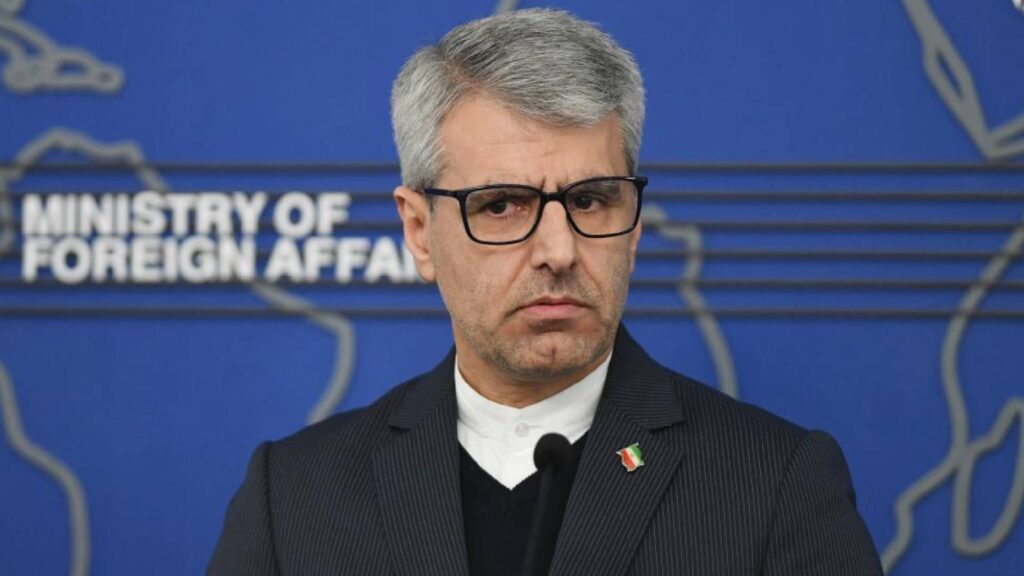
Iranian state news agency IRNA reported that Mohammad Bagher Ghalibaf, head of Iran’s “Minab 168” negotiating team, has appointed Foreign Ministry spokesman Esmaeil Baqaei as the delegation’s official spokesperson.
CENTCOM says US redirected 97 vessels during Iran blockade
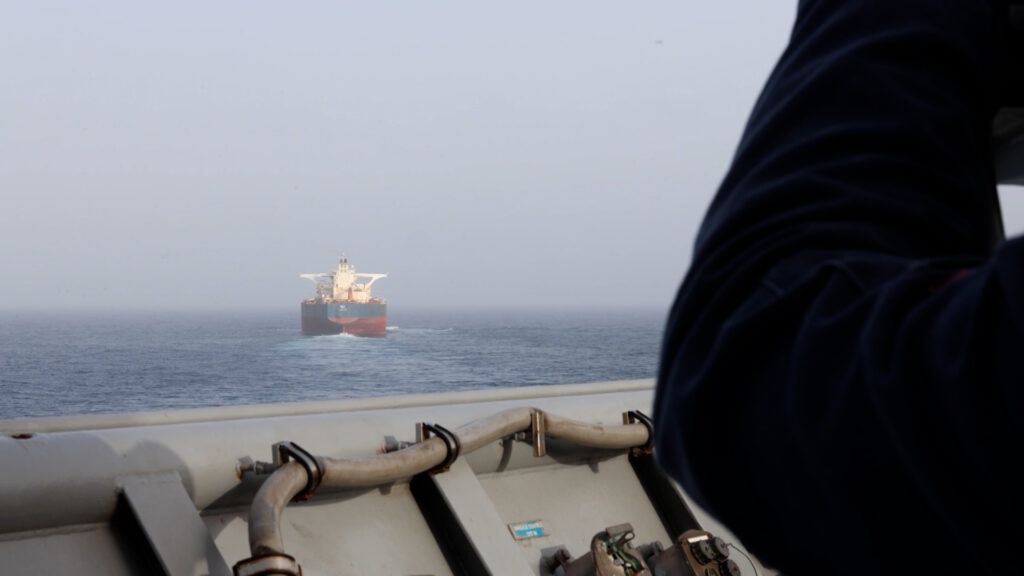
In a post on X, United States Central Command said a US sailor aboard the USS Comstock (LSD-45) was monitoring a commercial vessel while enforcing the US blockade against Iran on May 21.
According to CENTCOM, US forces have redirected 97 commercial vessels and disabled four others since the blockade began.the other
Trump-Netanyahu call signals differences over Iran talks
A senior official told the Associated Press that US President Donald Trump and Israeli Prime Minister Benjamin Netanyahu held a “dramatic” phone call last Tuesday regarding negotiations with Iran.
According to the report, Israel is frustrated with Trump’s efforts to reach an agreement with Iran.
The White House declined to comment on the tone or content of the call. However, Trump later told reporters that Netanyahu “will do whatever I want him to do”.

Asim Munir arrives in Tehran
Asim Munir, Pakistan’s army chief and a former head of the country’s ISI intelligence agency, arrived in Tehran as part of mediation efforts between Iran and the United States.
On arrival, he was received by Eskandar Momeni, according to Iranian media reports.

Iranian news agency ISNA said the visit does not necessarily indicate that a final understanding has been reached between Tehran and Washington.
Trump says Iran eager for agreement
US President Donald Trump said Iran is eager to reach an agreement with Washington, while reiterating that Tehran will not be allowed to acquire a nuclear weapon.
“Iran cannot acquire a nuclear weapon,” Trump said.
He added that the United States had dealt “severe blows” to Iran and claimed Washington had “no other option”.
Trump also said the US approach towards Iran was similar to its policy in Venezuela.
The US president further called for a defence budget of up to USD 1.5 trillion, saying the United States has “the greatest military in the world”.
Iran says 35 vessels crossed Hormuz after coordination
Iran’s Islamic Revolutionary Guard Corps said 35 commercial vessels and oil tankers crossed the Strait of Hormuz during the past 24 hours after coordinating with Iranian authorities.
In a statement, the Revolutionary Guard said it had ensured “safe passage for navigation despite the state of insecurity created by America in the Strait of Hormuz”.
Iran has insisted that ships passing through the strategic waterway must obtain permission from the Iranian armed forces.
Rubio rejects Iran toll system
US Secretary of State Marco Rubio described Iran’s reported toll system for vessels crossing the Strait of Hormuz as “unacceptable”.
Pakistan playing key role
Rubio said Pakistan was playing a major role in coordination efforts related to Iran. “We coordinate with several countries, but Pakistan is the main player in coordinating on Iran,” he said.
NATO and European efforts
Rubio also said there had been no specific request for NATO assistance regarding the Strait of Hormuz. He added that efforts by France and United Kingdom on Hormuz security would only succeed if a ceasefire is reached.
Asim Munir travels to Tehran
An Axios correspondent quoted a Pakistani security source as saying that Asim Munir was travelling to Tehran in an effort to broker an agreement between Iran and the United States to end the war.
According to the report, Pakistan has emerged as the main mediator in discussions aimed at securing a ceasefire and restarting wider negotiations involving Iran’s nuclear programme and maritime security in the Gulf.


