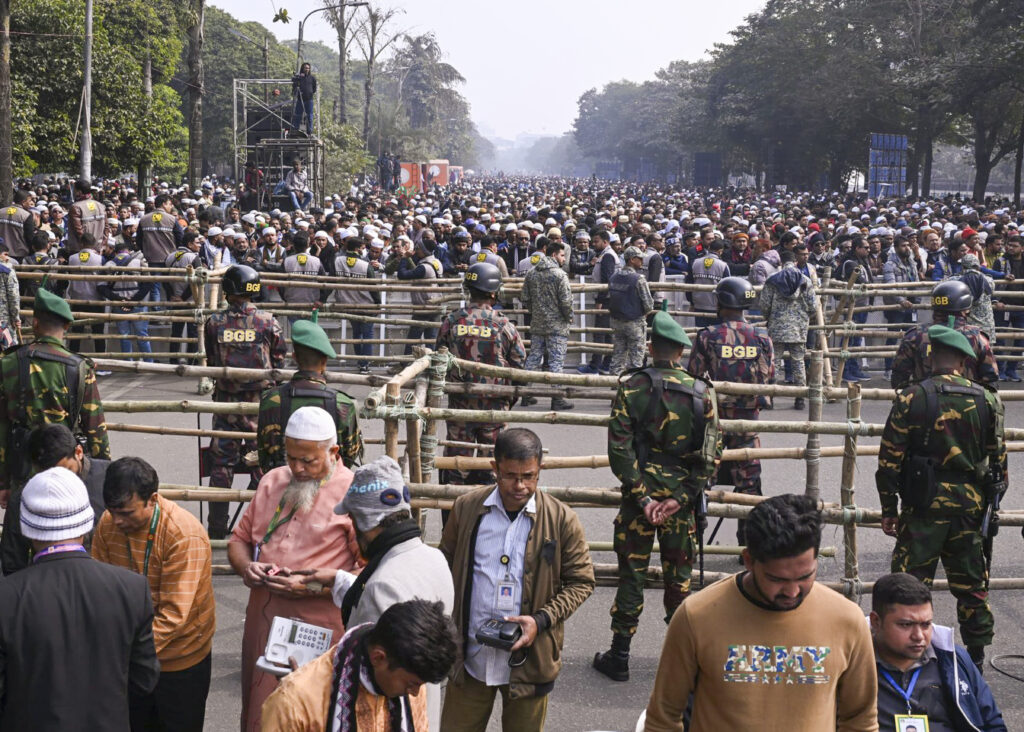
Dhaka: High-level dignitaries from South Asian countries, including ministers and parliamentary speakers converged in Dhaka on Wednesday to attend the funeral of former prime minister Khaleda Zia.
Bangladesh Nationalist Party (BNP) chief Zia, who dominated the country’s politics for decades, died on Tuesday in Dhaka.
According to officials at Dhaka’s Hazrat Shahjalal International Airport (HSIA), Nepalese Foreign Minister Bala Nanda Sharma was among the first foreign dignitaries to reach the Bangladesh capital, landing last night.

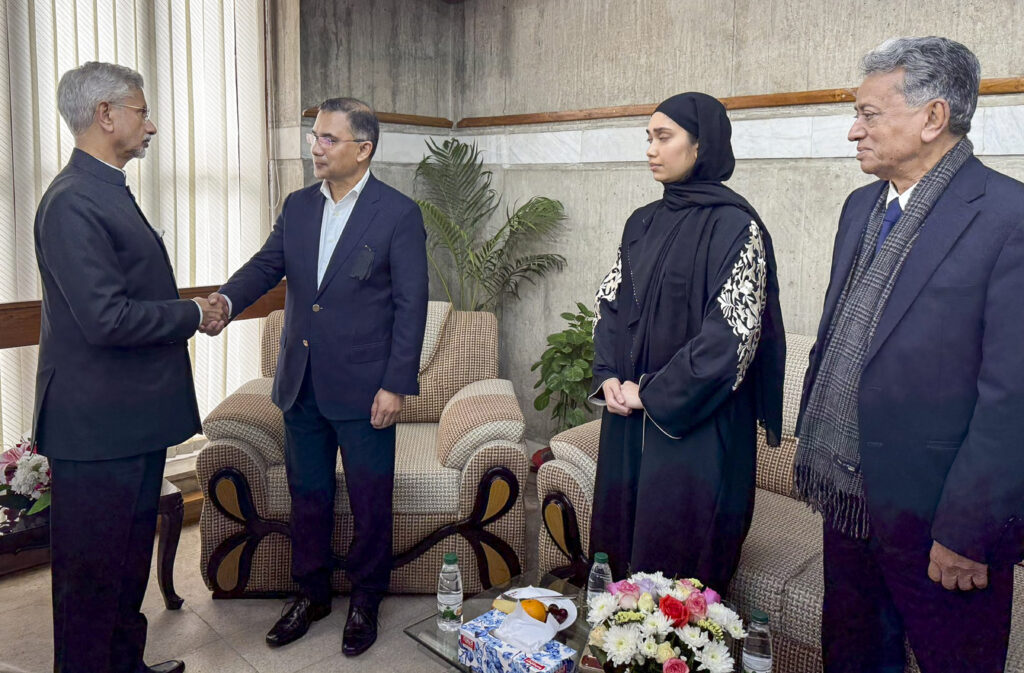
Indian External Affairs Minister S Jaishankar arrived on Wednesday morning to “represent the government and people of India” at the rite, and shortly after his landing, Pakistan National Assembly Speaker Sardar Ayaz Sadiq arrived.
Soon after his arrival, Jaishankar met Zia’s elder son and BNP’s Acting Chairman Tarique Rahman and handed over a letter from Prime Minister Narendra Modi, and conveyed India’s deepest condolences.
Sadiq too met Rahman and expressed his sympathy for the bereaved family.

Bhutan sent its Foreign Affairs and External Trade Minister Lyonpo DN Dhungyel to join the funeral, while Sri Lankan Foreign Minister Vijitha Herath arrived to pay tribute to the late leader.
The Maldives is represented at the funeral by its Higher Education and Labour Minister Ali Haidar Ahmed as a special envoy of the president of the island nation.
The ambassadors of foreign nations later reached Manik Mia Avenue to attend the funeral.
Three-time prime minister and chairperson of the BNP for a long time, Zia died after a prolonged illness. She was 80.
Zia’s political journey, spanning over four decades, was one of tremendous highs and lows: from leading a major party and governing the country to being convicted on corruption charges and later receiving a presidential pardon.
Her rise as a public figure is widely viewed as accidental. A decade after becoming a widow at the age of 35, she assumed the role of prime minister, but her entry into politics was not planned.
She was largely unfamiliar with the political world until she was seemingly dragged into it following the assassination of her husband, President Ziaur Rahman, a military strongman turned politician, in an abortive army coup on May 30, 1981.
Before this, she was merely regarded as the wife of a general and later the First Lady. However, she quickly made her mark as the top leader of the BNP, the party her husband had founded in 1978.
She was enrolled as a primary member on January 3, 1982.
By March of the following year, she became the party’s vice president, and in May 1984, BNP’s Chairperson – a position she held until her death. Her main rival throughout this period was Sheikh Hasina, the chief of the Awami League.
 | |
| |