


Iran said it had presented “reasonable” proposals during negotiations with the United States (US), placing responsibility on Washington to respond after the latest round of talks in Pakistan ended without an agreement on Sunday, April 12.
“Iran has put forward reasonable initiatives and proposals… The ball is in America’s court to look at the issues realistically,” an informed source told Tasnim news agency, adding that Tehran is “in no hurry” and that no timeline has been set for further negotiations.
The source also accused Washington of miscalculations during both the conflict and negotiations, warning that the situation in the Strait of Hormuz would remain unchanged until a “reasonable agreement” is reached.


Longest talks in a year end without breakthrough
Iranian Foreign Ministry spokesperson Esmaeil Baghaei said the discussions lasted up to 24–25 hours, making them the longest round of talks in the past year.
He said the negotiations took place in an atmosphere of “mistrust and suspicion” following 40 days of conflict, adding that no breakthrough was expected in a single round.
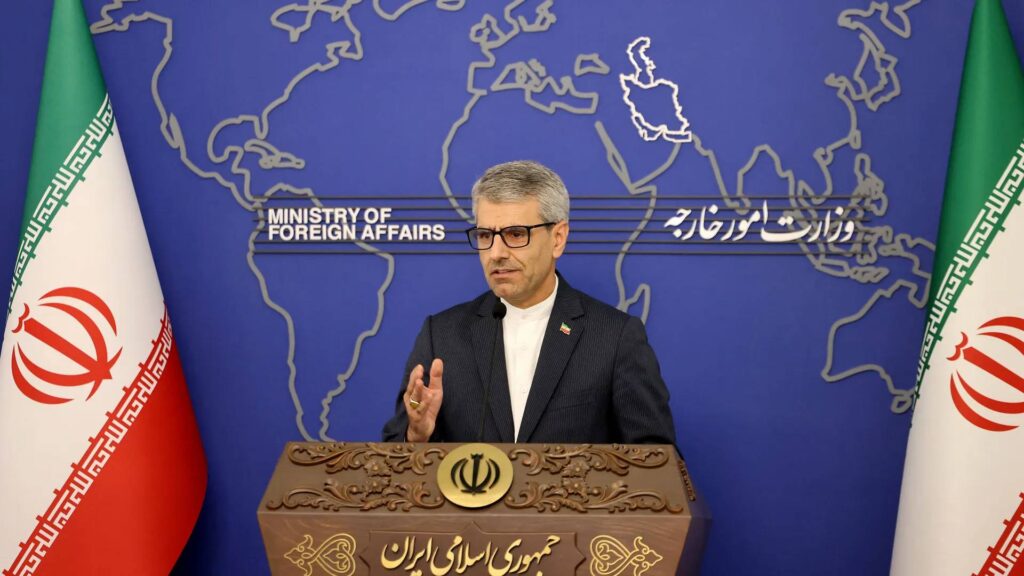
“Diplomacy never ends… this tool is for protecting national interests,” he said, noting that both sides reached an understanding on several issues but remained divided on “two or three important” matters.

Baghaei also told Reuters that differences on key issues ultimately prevented an agreement.
Delegations depart after Islamabad talks
The Iranian delegation departed Pakistan after multiple rounds of negotiations, according to Mehr news agency, marking the end of the latest phase of talks.
Their exit came hours after US Vice President J D Vance left Islamabad at around 7:08 am local time following confirmation that no agreement had been reached.
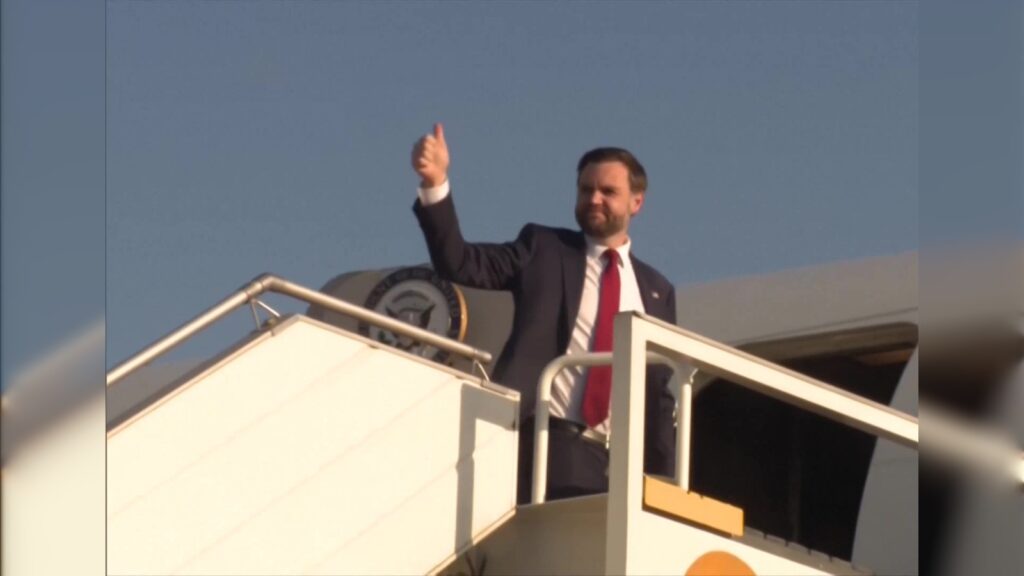
Despite the outcome, both sides signalled that technical engagement may continue through indirect exchanges.
One Iranian official suggested the outcome should not be viewed as a complete failure, noting that no agreement had been reached rather than formally abandoned.
Strait of Hormuz dispute at centre of deadlock
The Strait of Hormuz emerged as a central point of contention during the Islamabad negotiations.
Iranian sources, cited by Fars news agency, said the United States pushed for the immediate reopening of the strait, which has been largely disrupted since the escalation began in late February.
Tehran rejected the demand, insisting that reopening would only occur as part of a comprehensive agreement.
A source said Washington appeared to be seeking through negotiations what it “did not achieve during the war”, including arrangements related to tanker escorts, ship insurance and maritime security.
Shipping uncertainty persists. Bloomberg reported that two oil tankers turned back while attempting to cross the strait, while data cited by LSEG showed that three supertankers managed to transit the waterway, marking limited movement since the ceasefire.
Nuclear issue and core differences remain unresolved
Alongside maritime tensions, Iran’s nuclear programme remains a major sticking point.
Tehran has maintained its right to nuclear development, while Washington has sought firm guarantees that Iran will not pursue nuclear weapons.
Iran’s Press TV reported that “various issues, including the Strait of Hormuz, nuclear rights, and other issues” were among the main points of contention, adding that US “excessive demands” prevented a framework from being reached.
Regional tensions persist as Lebanon violence continues
In southern Lebanon, violence continued alongside diplomatic efforts.
According to Al Jazeera and local media, Israeli strikes in the Tyre district, including Maaroub, killed at least six people, while earlier attacks reportedly caused additional casualties.
The Iran-backed Hezbollah said it targeted Israeli troop positions in Yaroun using drones.
Lebanese Prime Minister Nawaf Salam called for calm, urging citizens to “elevate the language of reason” and prioritise national unity.
Saudi energy sector restores output after attacks
In Saudi Arabia, the energy ministry said affected facilities have returned to operational capacity following recent attacks.
Authorities confirmed restoration of full pumping capacity through the east–west pipeline, estimated at around seven million barrels per day, and recovery of production from the Manifa field at approximately 300,000 barrels per day.
Work is ongoing to restore full production capacity at the Khurais field.
Separately, Iran’s deputy oil minister said parts of the Lavan refinery are expected to resume operations within 10 days.
Civilian toll and infrastructure impact
Iranian authorities reported that more than 2,000 children were wounded in US-Israeli attacks, including over 120 under the age of five and 24 under the age of two.
According to officials cited by Al Jazeera, around 5,000 women were also injured, with most casualties reported in provinces including Tehran, Khuzestan, Isfahan and Kermanshah.
Meanwhile, Iranian officials said no timeline has been set for restoring full public internet access, citing ongoing security concerns under “wartime conditions”.
Global calls to uphold ceasefire and resume talks
International leaders have called for restraint following the collapse of negotiations.
Pakistan’s Foreign Minister Ishaq Dar said it is “imperative” to uphold the ceasefire and confirmed that Islamabad will continue efforts to facilitate dialogue.
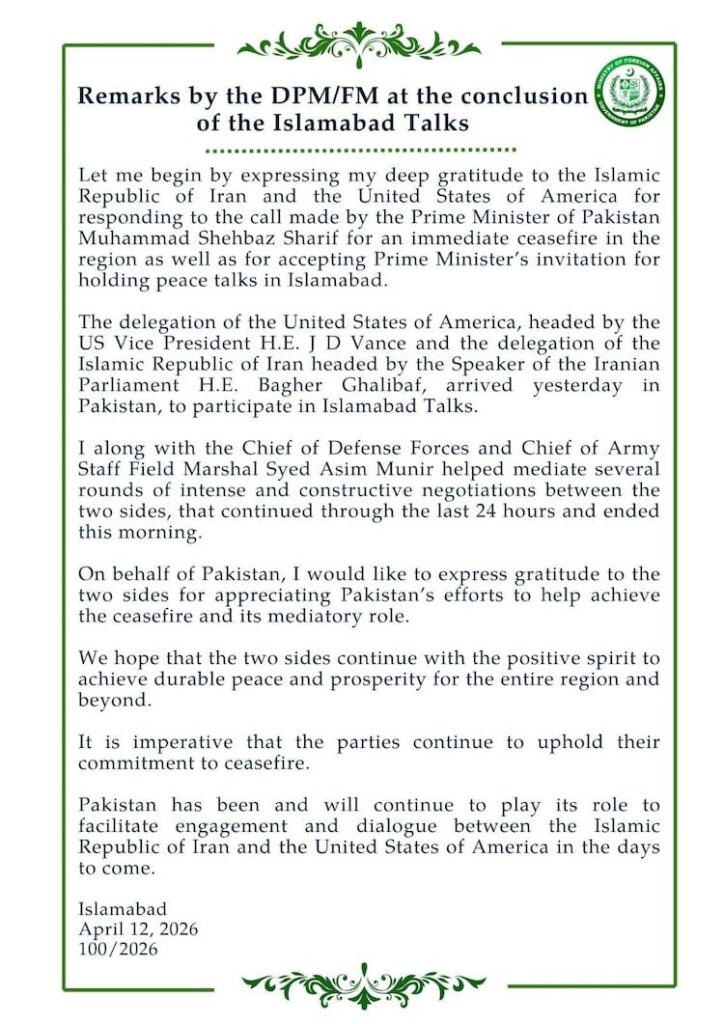
Australia’s Foreign Minister Penny Wong described the outcome as disappointing and urged both sides to return to negotiations, warning that further escalation would increase humanitarian and economic costs.

