

Iran has called the new United States effort a violation of the fragile ceasefire that has held for more than three weeks.
In a post on X on Tuesday, May 5, Iran’s Parliament Speaker Mohammed Bagher Qalibaf accused Washington of undermining shipping security in the Strait of Hormuz, and warned that a “new equation” there is taking shape.
He signaled that Iran has yet to fully respond to the US attempt to reopen the waterway, saying, “We know full well that the continuation of the status quo is intolerable for America; while we have not even begun yet.”


His statement did not mention negotiations with the US that are now in the form of passing messages via Pakistan.
‘Iran attacks do not necessarily mean they violated ceasefire’
US Defence Secretary Pete Hegseth confirmed that the ceasefire remains in effect despite some Iranian strikes and the ongoing blockade.
“No, the ceasefire is not over,” Hegseth said, reaffirming Chairman of the Joint Chiefs of Staff Gen Dan Caine’s earlier remark that the attacks do not necessarily mean they violated the ceasefire.

Pete Hegseth said in a Pentagon briefing Tuesday that US military forces would prefer the new effort to “guide” stranded ships through the Strait of Hormuz to be peaceful — but are ready if needs change.
“This is a temporary mission for us,” Hegseth said, adding that the intent remains to hand control of the strait back to countries that need the waterway “a lot more than we do. … We expect the world to step up.”
Caine told reporters that Iran’s recent acts of aggression are below the threshold of “major combat operations.”
That means Tehran, in the Trump administration’s view, has not violated the tenuous ceasefire between the U.S. and Iran.
“Since the ceasefire was announced, Iran has fired at commercial vessels nine times and seized two container ships, and they’ve attacked U.S. forces more than ten times – all below the threshold of restarting major combat operations at this point,” Caine said.
The administration has cited the ceasefire in asserting that the president does not have to give a formal update to Congress on the war under the War Powers Resolution. That law typically requires presidential updates on war activities 60 days after beginning military action.
Hegseth says Iranians still had ‘will’ to develop nukes
After the bombing of nuclear sites last summer, Hegseth says U.S. forces participated in new strikes this year alongside Israel because the Iranians’ “will was still there to seek a nuclear bomb.”
The secretary was asked about intelligence reports showing that, despite the initial bombing in Operation Midnight Hammer, the timeline for Iranian nuclear weapon development remained at 9 to 12 months.
“The obliteration of those facilities set back their program,” Hegseth said. “Hopefully Iran chooses a deal that they give up those ambitions, give up those capabilities.”
Macron says Iranian president asked to talk
“I will be speaking with the Iranian president shortly at his request,” Emmanuel Macron said Tuesday.
”France has maintained a consistent position from the start. We call for the cessation of all hostilities, the return to diplomatic negotiations, and respect for all countries in the region,” Macron said. “Tthe only possible option is the reopening of the Strait of Hormuz … and the absence of any tolls or coercive measures.”
“Any unilateral escalation against tankers, container ships, or third countries is a mistake that fuels war and leads to escalation,” Macron said.
Israel, Hezbollah continue attacks in Lebanon
Israel and Hezbollah have engaged in constant attacks in southern Lebanon. While the Israeli military targeted the towns of al-Mansouri and Qaaqaait al-Jisr in air attacks, Hezbollah said it struck a tank in the town of al-Baydah with a guided missile.
The attacks between the two forces continue despite a ceasefire announced on April 17. The 10-day truce was extended for three more weeks on April 23.
There were two more Israeli military raids reported in the southern Lebanese town of Tebnine. Israeli forces remain deployed in the area even as the ceasefire called for the complete withdrawal of forces.
Zrarieh al-Sharqiya, another town in the country, was targeted.
Iran says US military attacked civilian ships, killed 5 in Strait of Hormuz
The United States military said it fired on Iranian forces and sank six small boats targeting civilian ships as it moved to reopen the Strait of Hormuz on Monday, May 4. The attack resulted in the killing of five civilians by the American naval forces, the Iranians said, according to Al Jazeera.
They have denied the Americans’ claim that the boats belonged to Iran’s Revolutionary Guards, and maintained that they were civilian boats.
The US destroyers (warships) tried entering the Strait of Hormuz with their radar off, the Iranians said. The warships were only detected after their radar was turned on, with Iran’s naval forces constantly monitoring the region. Immediately after being identified, Iranian forces engaged them and fired warning shots, Al Jazeera reported.
The warning shots consisted of missiles, rockets and combat drones, forcing the US destroyers to turn back. The attacks came a day after US President Donald Trump announced “Project Freedom,” warning Iran would face severe consequences if it targeted American ships.
Meanwhile, the United Arab Emirates, a key American ally, said it had come under attack from Iran for the first time since a fragile ceasefire took hold in early April.
Tehran did not outright confirm or deny the attacks but early on Tuesday, May 5, Iran’s Foreign Minister Abbas Araghchi said on X that both the US and the UAE “should be wary of being dragged back into quagmire.”
In similarly vague terms, Iranian state television earlier quoted an anonymous military official as saying Tehran had had “no plan” to target the UAE or one of its oil fields.
PM Modi condemns attacks on UAE that injured three Indians
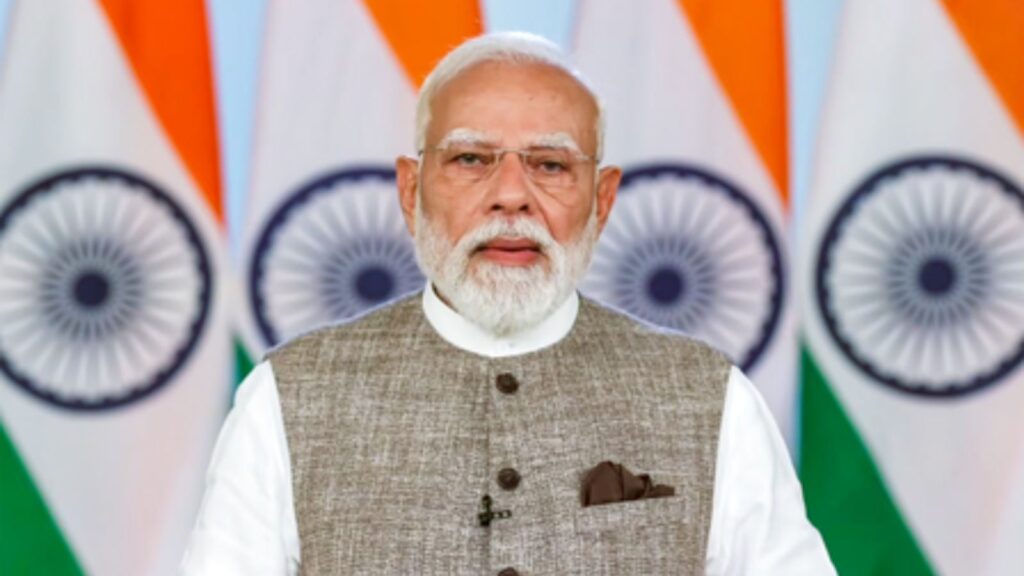
Prime Minister Narendra Modi on Tuesday strongly condemned the attacks on the United Arab Emirates’ port city of Fujairah that resulted in injuries to three Indian nationals.
Modi’s sharp denouncement of the attacks came a day after the Indians were injured after drone strikes caused a fire at a major oil industry zone in Fujairah. The UAE had accused Iran of carrying out the strike.
“Strongly condemn the attacks on the UAE that resulted in injuries to three Indian nationals. Targeting civilians and infrastructure is unacceptable,” Modi said on social media.
“India stands in firm solidarity with the UAE and reiterates its support for the peaceful resolution of all issues through dialogue and diplomacy,” he said.
The prime minister also asserted that ensuring “safe and unimpeded navigation through the Strait of Hormuz is vital for enduring regional peace, stability and global energy security.”
Prolonged West Asia crisis may pull down India’s GDP growth
A prolonged West Asia conflict characterised by significant shipping disruptions and elevated energy prices poses a serious threat to India’s economic growth momentum and may pull down the country’s GDP growth to less than 6.5 per cent, Confederation of Indian Industry President Rajiv Memani said on Tuesday.
According to Memani, the prevailing energy crisis due to the West Asia conflict poses the “biggest risk” to global economic growth — including India’s — if it drags on for a long time.
“If it (West Asia crisis) does settle on time, then I think, you know, the growth momentum should pick up. You know, we should be somewhere between 6.5 to 7 per cent. If it extends for a very, very long time, then, you know, maybe slower than 6.5 per cent,” the CII President told PTI in an interview.
Thailand approves USD 12.2 bn emergency borrowing
Thailand’s government has agreed to an emergency package to help with the economic impacts of the US-Israel war on Iran, marking one of the largest borrowing plans in the country’s history.
The USD 12.2 billion package, according to lawmakers, will be used to increase domestic spending and mitigate economic hardships. The loan will be issued from June to September and will provide aid for more than 20 million low-income people under the “Thais Help Thais” government initiative to ease living costs.
South Korean commercial vessel damaged in explosion in the Strait of Hormuz
A South Korean commercial ship was damaged after an explosion occurred in the Strait of Hormuz. All 24 passengers on board are reported to be safe.
Hours after the attack, Reuters reported that the country’s presidential office is thinking over whether to join Trump’s “Project Freedom.”
Pakistan Navy aids crew of Indian vessel stranded in Arabian Sea
The Pakistan Navy provided humanitarian assistance to the crew of an Indian offshore tug and supply vessel stranded in the Arabian Sea, according to a media report.
The navy was assisted by the Pakistan Maritime Security Agency (PMSA) in the rescue and support operation, the Dawn newspaper reported on Monday, quoting security sources.
The assistance operation for the crew, which included six Indians and one Indonesian national, was launched after the Maritime Rescue and Coordination Centre in Mumbai contacted Pakistani authorities and requested assistance, the report said.
The crew had reported a technical fault on MV Gautam, which was en route from Oman to India, the sources said.
Multiple raids conducted in occupied West Bank by Israeli forces
Palestinian news agency Wafa reported Israeli forces conducting several raids in the occupied West Bank overnight on Monday. The forces stormed the villages of Jorat al-Shamaa, Wadi al-Nis and Umm Salamuna, attacking multiple Palestinian homes. The news agency also reported that Israeli militart raided parts of Ramallah in the western region.
No injuries or arrests were recorded from the raids.
Fire in southern Iranian port
With the cause still unknown, Iranian state media reported a fire broke out on several commercial ships docked in the southern port of Dayyer.
Head of the port’s fire department, Majid Omrani, told Mehr news agency that firefighters are working to control the fire.
Residents of two Lebanese towns directed to evacuate
The Israeli military issued another round of displacement orders for residents of Jabsheet and Sarafand towns in Lebanon. The locals were asked to evacuate “immediately and move away from the villages anf towns for a distance of at least 1,000 metres to open areas.”

 Follow on Twitter | Posted by Khadija Irfan Rahim | |
