

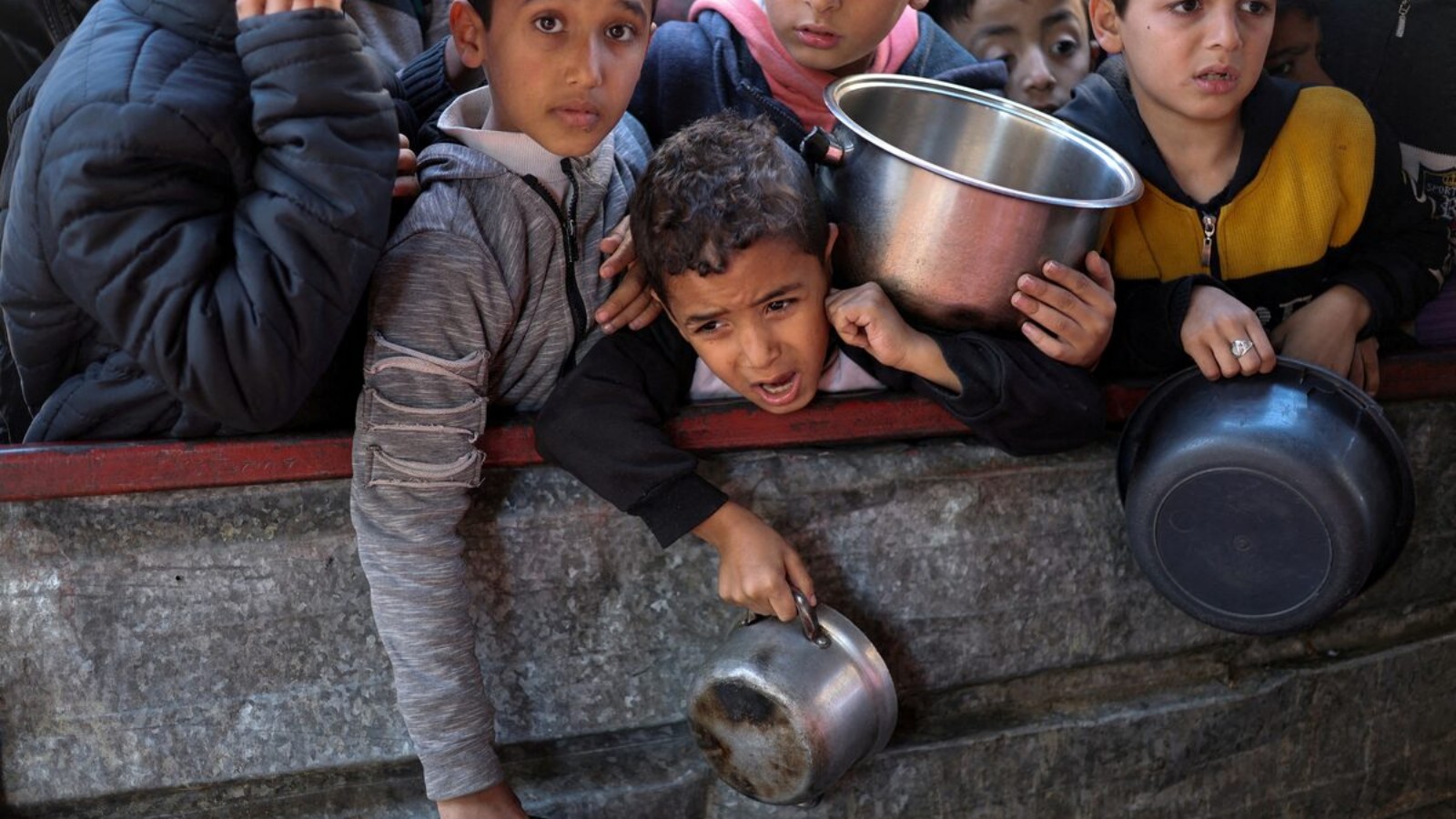
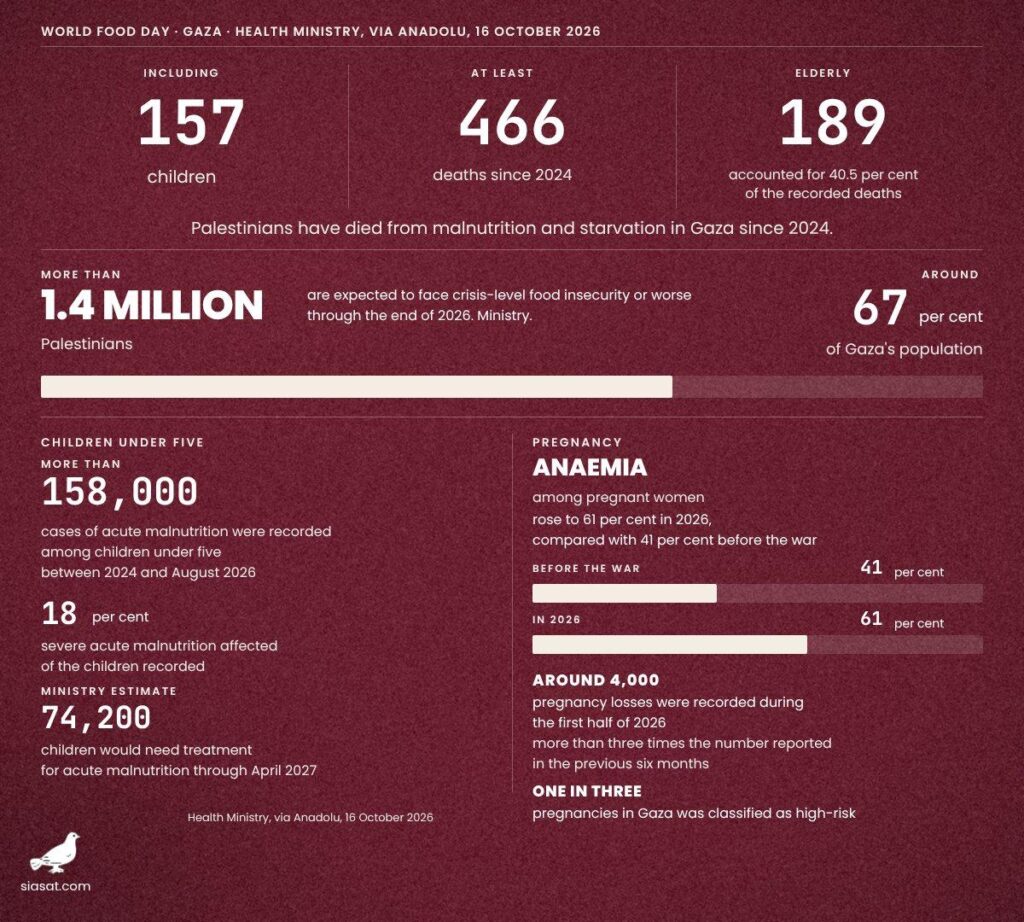
Gaza Strip: At least 466 Palestinians, including 157 children, have died from malnutrition and starvation in Gaza since 2024, the territory’s Health Ministry said, Anadolu Agency reported on Friday, October 16.
The figures were released on World Food Day. The ministry said 189 elderly people accounted for 40.5 per cent of the recorded deaths.
More than 1.4 million Palestinians, around 67 per cent of Gaza’s population, are expected to face crisis-level food insecurity or worse through the end of 2026, the ministry said.


Malnutrition affects children and pregnant women
More than 158,000 cases of acute malnutrition were recorded among children under five between 2024 and August 2026, according to the ministry. Severe acute malnutrition affected 18 per cent of the children recorded, while 12.2 per cent suffered from stunting.
The mortality rate among children under five increased from 13.6 to 33.4 deaths per 1,000 live births between 2022 and 2025. The ministry estimated that 74,200 children would need treatment for acute malnutrition through April 2027.
Anaemia among pregnant women rose to 61 per cent in 2026, compared with 41 per cent before the war. Around 4,000 pregnancy losses were recorded during the first half of 2026, more than three times the number reported in the previous six months. The ministry said one in three pregnancies in Gaza was classified as high-risk.

Ministry urges unrestricted aid deliveries
Gaza’s Health Ministry called on the international community and the United Nations to ensure the safe and sustained entry of food, nutritional supplements and medicines into the enclave without restrictions.
It urged authorities to prioritise children, pregnant and breastfeeding women, and elderly people in aid distribution. It also called for international support to restore local food production.
“The right to food is a fundamental human right that does not cease to exist during war,” the ministry said.
Israel tightened restrictions on crossings in March 2025, worsening food shortages and limiting humanitarian deliveries, Anadolu Agency reported. Aid truck entries subsequently remained limited and intermittent.
The Gaza Government Media Office said Israel had allowed only around 34 per cent of the agreed humanitarian aid trucks into the territory. Palestinian officials said the incoming supplies were insufficient to meet residents’ needs.
Damage to farmland, food production facilities and water networks has reduced Gaza’s capacity to meet local food needs. Repeated displacement, lost incomes and rising prices have further weakened families’ ability to secure food independently.
On Wednesday, October 14, Israel said no commercial goods had entered Gaza for several days, attributing the disruption to a tax dispute between local merchants and Hamas. Hamas rejected the claim as “baseless”, while Gaza’s Government Media Office accused Israel of spreading disinformation.
UNICEF warns of fragile nutrition improvements
The United Nations Children’s Fund (UNICEF) warned that recent improvements in nutrition indicators remained vulnerable as access to commercial goods and food supplies continued to be restricted.
“Acute malnutrition rates have receded, yet only one in three children under the age of two currently receives minimum dietary diversity,” the report said.
The report also cited UN estimates that around 800,000 children were living in displacement conditions in Gaza. Disrupted supply chains, reduced food availability in local markets and lost household incomes have made it harder for families to obtain adequate nutrition.
UNICEF said improvements in nutritional conditions would not be sustainable without regular commercial supplies, affordable food and functioning markets. It called for better access to humanitarian and commercial goods, including food, medicines and fuel, alongside nutrition programmes for children and pregnant and breastfeeding women.
Famine declared in Gaza in August 2025
On August 22, 2025, the Food and Agriculture Organization of the United Nations, the United Nations Children’s Fund, the World Food Programme and the World Health Organization declared a famine in the Gaza.

