

Hyderabad: It was an interesting time for Telangana politics in 2025. The turbulence between the ruling Congress and the main opposition party, the Bharat Rashtra Samithi (BRS), was high on octane, with the Bharatiya Janata Party (BJP) watching from the margins, hoping to make more inroads into the state.

However, 2025 will end on a more positive note for the ruling party and chief minister Revanth Reddy as he finally managed to one-up the BRS by winning the Jubilee Hills by-election and also putting up a commendable fight in the just-concluded Gram Panchayat polls.
Nonetheless, it wasn’t all smooth sailing for the Congress, given that it continued to face legal and political obstacles, among a host of other issues. Whether it was the 42 per cent reservations for Backwards Classes (BC), the local body elections or even the Kancha Gachibowli land row. The ruling party faced raps from courts in trying to implement its agenda, giving more fodder to the Opposition.


Here’s a look back on the action-packed politics in Telangana this year.
Caste survey, BC reservations
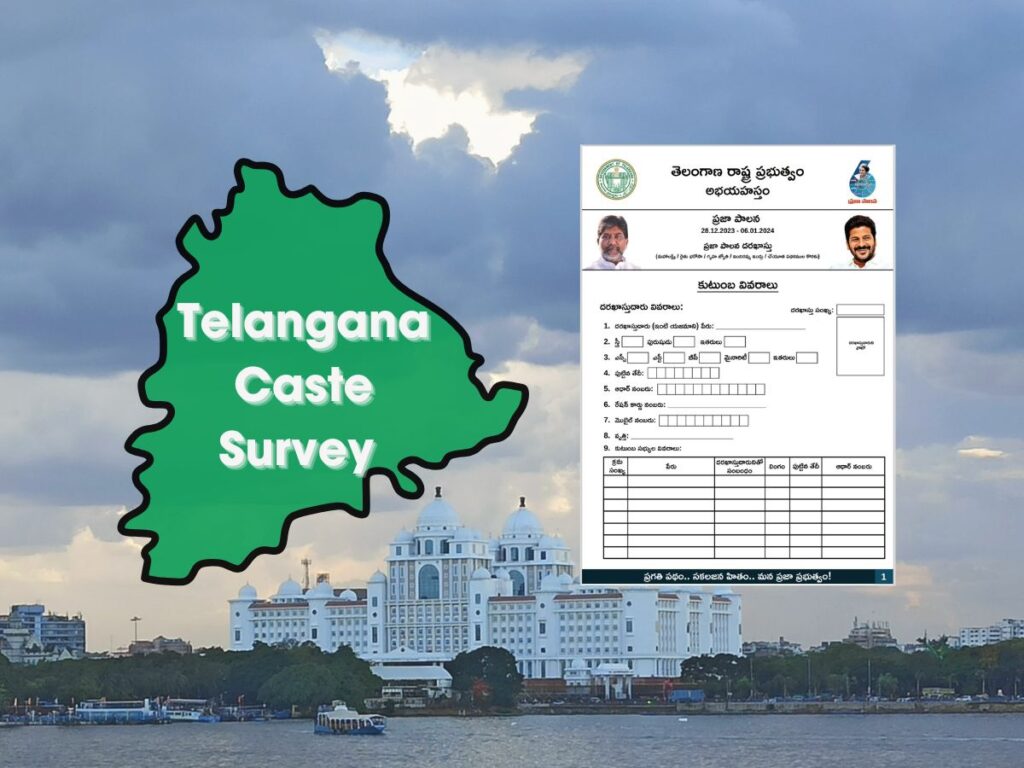
Telangana was set to hold its second-ever rural local body elections since the last one was held in 2019, and reservations for BCs, who make up the majority in the state, became a major topic of discussion.
The state government, which released the results of its state-wide caste survey on February 4, noted that BCs, including Muslims, make up 56.33 per cent of the population. A commission was appointed to analyse the empirical data of the caste survey, which observed that the BCs continue to remain relatively lagging. It recommended at least 42 per cent reservation in political representations, particularly in local bodies.
This was challenged by both the BRS and the BJP, who alleged that the survey was “inaccurate.” BRS asked how the population of backward classes came down to 56.33 per cent in 2025 from 61 per cent in 2014, which was determined by an integrated household survey conducted by the then K Chandrashekar Rao (KCR) government.
Despite the criticism, several bills were passed in the Assembly, two in February and two in August, to enhance BC’s share to 42 per cent, while also removing a cap of 50 per cent on the overall reservation quota.
Even though the bills were pending assent, first two from the President and the last two from the Governor, the government went ahead and issued an order on September 26, reserving 42 per cent seats for BCs in the local bodies.
Petitions were filed against the order in both the Telangana High Court and the Supreme Court, stating that it would bring total reservations in the state to 67 per cent, in violation of the 50 per cent ceiling prescribed by the apex court.
Earlier, on June 25, the High Court had directed the state government to conduct local body elections by September 30. A notification for polls in the Mandal Parishad Territorial Constituencies (MPTC), Zilla Parishad Territorial Constituencies (ZPTC), and gram panchayats was issued by the State Election Commission (SEC) on September 29, but was later put on hold after the government order (GO) on 42 per cent reservations was stayed by the High Court on October 9.
On November 17, the Telangana Cabinet announced that it would go ahead with only gram panchayat elections, as a Rs 3,000-crore grant due from the Union government would lapse by March 31, 2026, if the polls were not held. They said the decision on conducting elections for MPTCs, ZPTCs and municipal corporations would be taken after the High Court’s final orders.
A notification was subsequently issued by the SEC on November 25, stating that the elections would take place in three phases in December for 12,728 Sarpanch posts and 1,12,242 wards. The SEC had also provided 17.08 per cent reservation for BCs, which was heavily criticised by BRS working president KT Rama Rao (KTR), saying that even after spending Rs 160 crore on the caste census, the “Congress managed to reduce the BC reservations from the earlier 24 per cent.”
Nevertheless, Congress-backed candidates won over 53 per cent of Sarpanch posts in all three phases combined.
Kancha Gachibowli Row
In April, Hyderabad captured the nation’s attention when a 400-acre parcel of land in Kancha Gachibowli came under dispute, with both the University of Hyderabad (UoH) and the state government claiming ownership over it.
The issue started mid-March when the Telangana State Industrial Infrastructure Corporation (TGIIC) issued a call for bids for auctioning the land. The area near UoH is known for its ecological importance, including unique rock formations and dense green cover.
By March 30, bulldozers were brought into the land to clear the forest area, which sparked protests from students, with many of them being arrested.
The Telangana High Court stepped in on April 2 after a public interest litigation (PIL) was filed against the deforestation, and ordered a halt to all activities. Soon after, the Supreme Court took sou motu cognisance of the matter and ordered that no activities be allowed on the site until further orders. Later, in August, the apex court ordered the state government to restore the forest cover.
Urea crisis
Farmers suffered (and continue to suffer) a fertiliser crisis at the peak of the Kharif season in Telangana. The shortage of urea also sparked a fierce political battle between the Congress, the BRS and the BJP. Every day farmers were seen standing in long queues, desperately flocking to the Primary Agricultural Credit Societies and getting into fights. The scarcity was attributed to delays in imports, rising consumption, expansion of cultivation, black marketing and disruptions in domestic production.
While Chief Minister Revanth Reddy and Agriculture Minister Tummala Nageswara Rao blamed the Union government for not sending enough urea, claiming a shortfall of over 3 lakh tonnes, the Centre maintained that supplies were met and even exceeded requirements.
Meanwhile, both the BRS and the BJP accused the Congress government of creating the urea shortage on purpose and diverting stocks to the black market.
Raja Singh resigns from the BJP
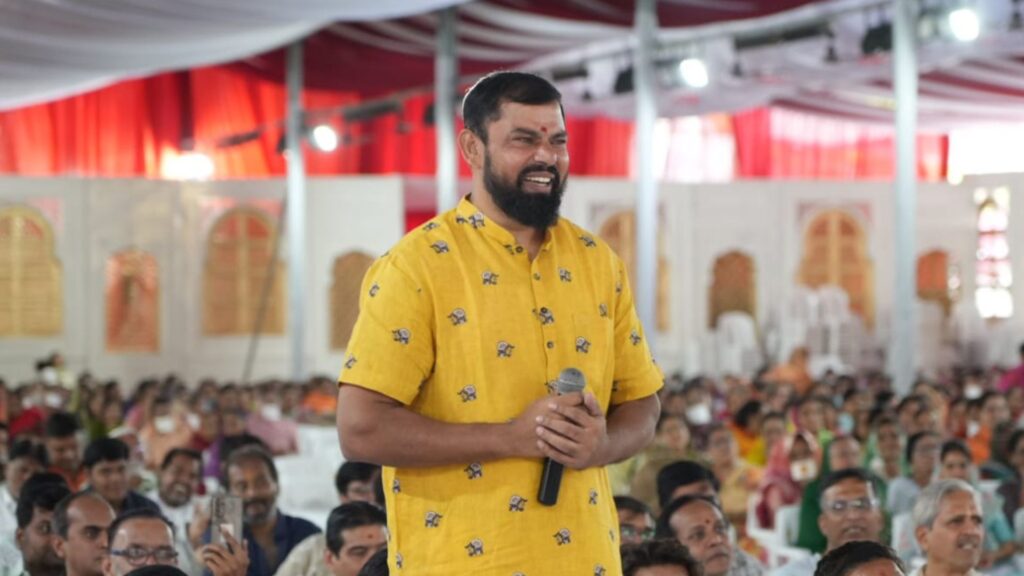
In addition to poll losses, the BJP also lost one of its MLAs, T Raja Singh, who consistently won from the Goshamahal constituency for three straight terms. The firebrand Hindutva face resigned from his BJP membership on June 30, after Ramchander Rao filed the nomination for the party’s state president. Singh had also wanted to run for the post but was reportedly not allowed to file a nomination.
In his resignation letter addressed to then-state president Kishan Reddy, Raja Singh said that media reports about Ramchander Rao being appointed as the state BJP president came as a shock and disappointment to not just him, but lakhs of party workers. His resignation was accepted by the BJP on July 11.
Additionally, in the aftermath of the BJP’s dismal performance in the Jubilee Hills by-election, Raja Singh released a statement asking senior leaders to “save the party.”
Troubles for BRS
On September 1, the ruling Congress government issued orders permitting the Central Bureau of Investigation (CBI) to conduct an investigation into the allegation of irregularities, embezzlement of public funds and corrupt practices in the construction of Medigadda, Annaram and Sundilla barrages of the Kaleshwaram irrigation project after the PC Ghose Commission report was tabled in the Assembly on August 31.
Kaleshwaram was supposed to be the world’s largest lift irrigation project, irrigating 37 lakh acre by lifting Godavari river water through a network of barrages, reservoirs and canals.
However, the project was marred with allegations of irregularities, and a commission headed by retired Supreme Court judge Justice PC Ghose was appointed by the state government in March 2024 to investigate the said irregularities.
In its report, the commission held former Chief Minister KCR accountable for alleged irregularities in the project’s construction and other aspects. The report also found fault with Harish Rao, the then Irrigation Minister in the BRS regime.
Challenging the report, KCR and Harish Rao approached the Telangana High Court, which granted them interim protection till January 2026, restraining the government from acting against them pending final adjudication in the matter.
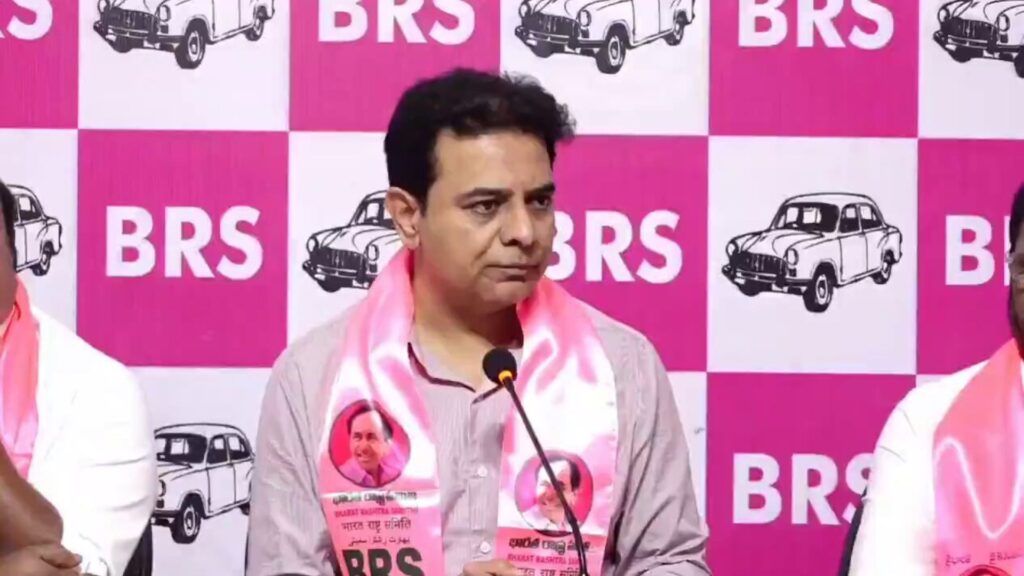
Soon after the Klaeshwaram probe was handed over to the CBI, the MLC and daughter of BRS president KCR, K Kavitha, accused her cousins – Harish Rao and former MP J Santosh Rao – of amassing huge assets while making her father the scapegoat in the alleged scam.
She was suspended by the BRS the very next day for “anti-party activities,” leading her to resign from her MLC post.
Later on November 20, Telangana Governor Jishnu Dev Varma gave his nod to the state government for the prosecution of BRS working president KT Rama Rao in the Formula E “scam,” which stems from allegations of corruption against the former Municipal Administration and Urban Development (MAUD) minister for directing the transfer of nearly Rs 55 crore from the Hyderabad Metropolitan Development Authority (HMDA) to the London-based Formula E Operations (FEO) Limited without the requisite approvals.
Another major blow to the BRS was the dismissal of five out of 10 disqualification petitions against their MLAs, who were accused of switching their loyalties to the Congress.
Telangana Assembly Speaker Gaddam Prasad Kumar, on December 17, dismissed the disqualification petitions primarily on the basis of continued payment of monthly party maintenance funds from the five MLAs in question to the BRS.
 | |
| | 
