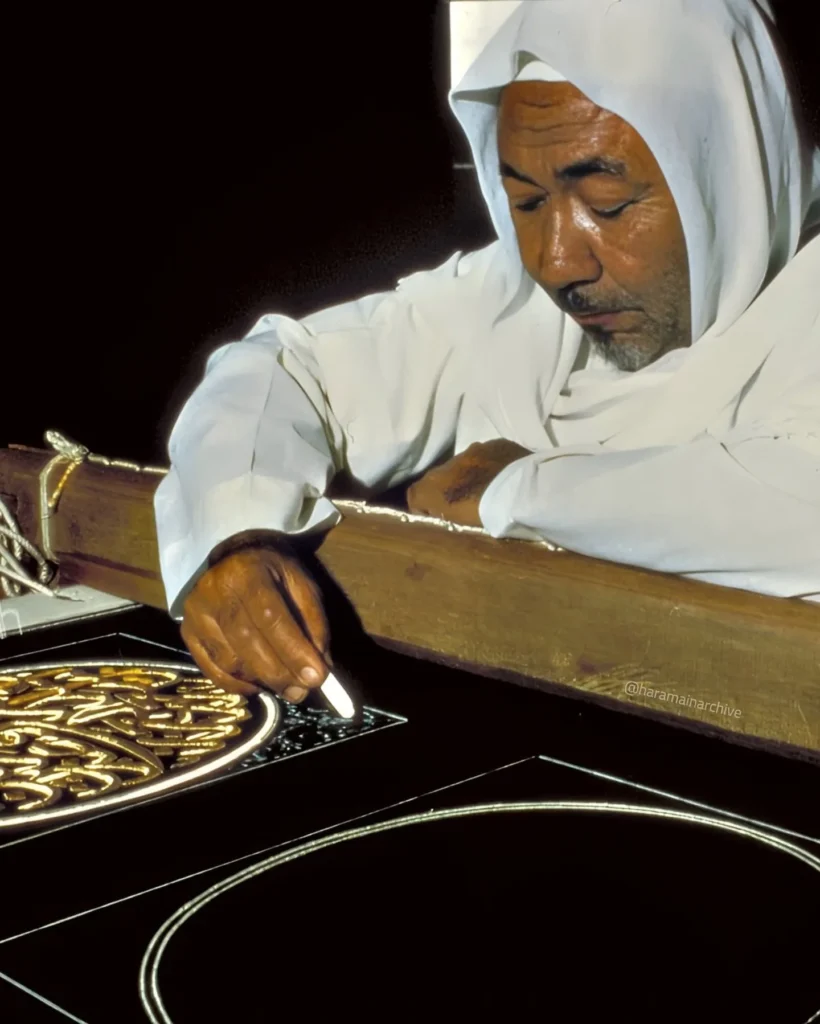


Makkah: Saudi Arabia has completed the new Kiswah, the black silk covering of the Holy Kaaba, ahead of its annual replacement at the Grand Mosque in Makkah with the start of the new Hijri year 1448 AH.
The new covering was formally handed over to the Kaaba’s caretakers by Deputy Governor of Makkah Region Prince Saud bin Mishaal bin Abdulaziz on behalf of Custodian of the Two Holy Mosques King Salman bin Abdulaziz Al Saud.
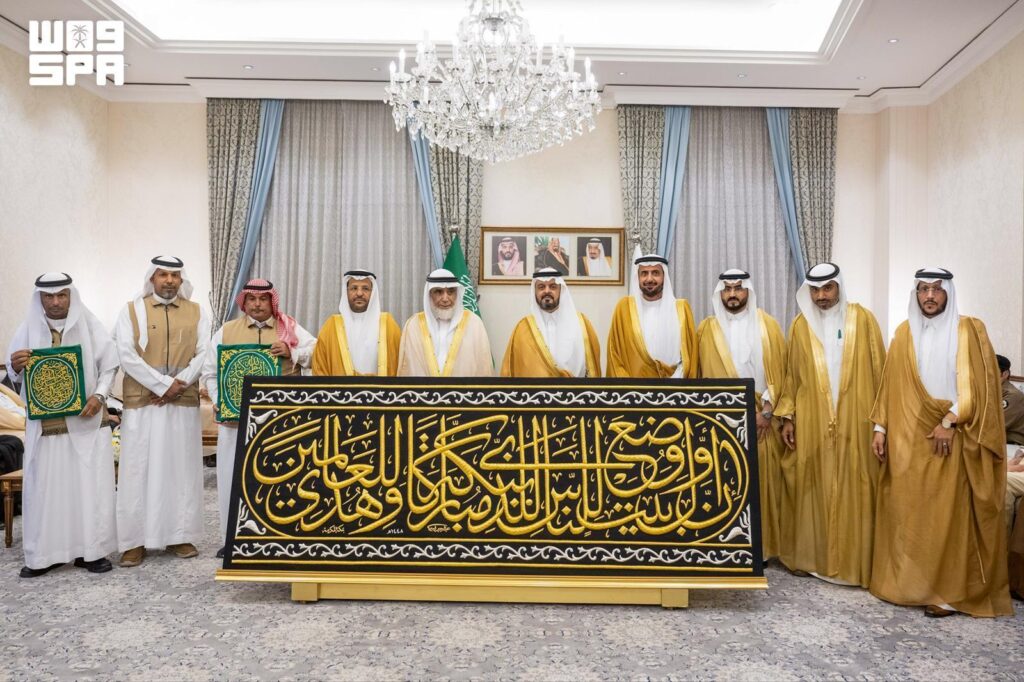
Produced at the King Abdulaziz Complex for the Holy Kaaba Kiswah, the cloth represents one of the most significant works of Islamic craftsmanship undertaken each year in the Kingdom.


Crafted with precision
The Kiswah stands 14 metres high and is made from premium black-dyed natural silk. A decorative belt measuring 95 centimetres wide and 47 metres long encircles the upper portion of the cloth, carrying Quranic verses and Islamic motifs across 16 embroidered panels.
Salah Al-Sulami, head of the department for assembling and sewing the Kiswah, said production begins with the preparation of a white cotton lining before the embroidered silk sections are assembled into the final covering.
Each silk panel measures about 14 metres by one metre and is stitched together using specialised equipment equipped with laser-guided systems to ensure accuracy throughout the assembly process.

Seven stages of production
The manufacturing process involves seven stages, beginning with water desalination and the washing and dyeing of silk.
Black silk is prepared for the exterior covering, while green silk is used for the inner lining and the Prophet’s Chamber. The material is then woven into fabric containing more than 9,900 threads per metre before Quranic inscriptions and decorative patterns are transferred onto the silk.
The assembled sections are embroidered with pure silver and gold-plated silver threads. Cotton padding placed beneath the inscriptions gives the calligraphy its distinctive raised appearance.
According to the King Abdulaziz Complex, producing a single Kiswah requires around 825 kilograms of raw silk, 120 kilograms of gold-plated silver wire, 60 kilograms of pure silver and 410 kilograms of raw cotton.


Symbol of Islamic artistry
The Kiswah is distinguished by Quranic verses embroidered using silver threads plated with 24-carat gold. The inscriptions are executed in Thuluth script, a prominent form of Arabic calligraphy associated with Islamic architecture and decorative arts.
Its intricate embroidery and calligraphic design have made the Kiswah one of the most recognisable features of the Kaaba.

Legacy preserved through generations
Among the craftsmen who contributed to the Kiswah’s artistic heritage was the late calligrapher Abdul Rahim Amin Bukhari.
Born in Makkah in 1335 AH, Bukhari devoted more than three decades to work related to the Holy Kaaba. He participated in the production of 21 Kiswahs and supervised the calligraphy and decoration of three Kaaba gates.
His contributions included inscriptions on the Kaaba’s door curtain and decorative elements linked to the sacred structure. His name was later inscribed on the Kiswah during the reign of King Faisal bin Abdulaziz Al Saud in recognition of his service.