

By Dr Nikhil Ghadyalpatil
In my years of treating cancer patients, one thing has stayed with me – the women who come to me early do well. The ones who wait often face a much harder road.
I remember a patient, let’s call her Fatima. She was 41, a mother of three and had noticed a small lump in her breast. She didn’t think it was serious. By the time she walked into my clinic months later, the cancer had already reached stage 3. We treated her – chemotherapy, surgery, radiation – and thankfully, she survived. But I often think about how different her journey would have been if she had come to me when she first felt that lump.


I see this pattern far too often. And that is why I feel the need to say this as clearly as I can. Breast cancer, when caught early, is one of the most curable cancers. More than nine out of 10 women diagnosed at an early stage survive. But that window of opportunity only exists if women know what to look for and act on it.
What should you watch for?
In my practice, I tell every woman the same thing, that the most early breast cancers cause no pain. You cannot wait for pain to tell you something is wrong. The signs to watch for are a new lump in the breast or underarm, a change in the shape or size of the breast, skin that looks different such as thickened, dimpled or red, a nipple that turns inward or leaks fluid and pain in one spot that doesn’t go away.
I also tell my patients this: Most lumps are not cancer. But every lump deserves a doctor’s opinion. Don’t diagnose yourself at home.

How can you catch it early?
I always advise three simple things.
First, know your own body. From the age of 20 onwards, check your breasts once a month. You are not looking for cancer. You are simply learning what is normal for you, so that the day something changes, you notice it right away.
Second, see your doctor regularly. A clinical breast examination once a year is something I strongly recommend for all women above 40.
Third, get a mammogram. This is a quick X-ray of the breast that can pick up cancers far too small to feel by hand. I recommend annual mammograms starting at age 40. If you have a mother, sister or daughter who has had breast or ovarian cancer, please talk to your doctor about starting earlier.
Who is at higher risk?
Every woman carries some risk. But in my experience, certain factors come up again and again. Age is the biggest one – the risk rises significantly after 40. A family history of breast or ovarian cancer matters a great deal. Starting periods before age 12 or reaching menopause after 55 also increases risk. So does being overweight after menopause and not being physically active.
One thing I always highlight to my patients is that breastfeeding lowers the risk. Staying active and maintaining a healthy weight help too.
What does treatment look like today?
I have been practising oncology long enough to have seen the field transform. The treatment options available today are vastly better than what we had even 10 or 15 years ago. Depending on the type and stage, treatment may include surgery, radiation, chemotherapy, hormonal therapy, targeted therapy or immunotherapy.
Many of my early-stage patients undergo a small surgery that preserves the breast, followed by a short course of radiation, and go on to live completely normal lives.
Even for aggressive cancers, we now have medicines that produce results we could not have imagined a decade ago. The key, always, is catching it in time.
Message to every woman reading this
In all my years as an oncologist, if there is one thing I wish I could tell every woman, it is this: Do not wait. Do not ignore a lump because it doesn’t hurt. Do not put off a mammogram because you feel fine. The women who do well are the ones who act early.
Breast cancer is not a death sentence. It is a disease we can fight – and win – if we catch it soon enough.
Please, talk to your doctor today.
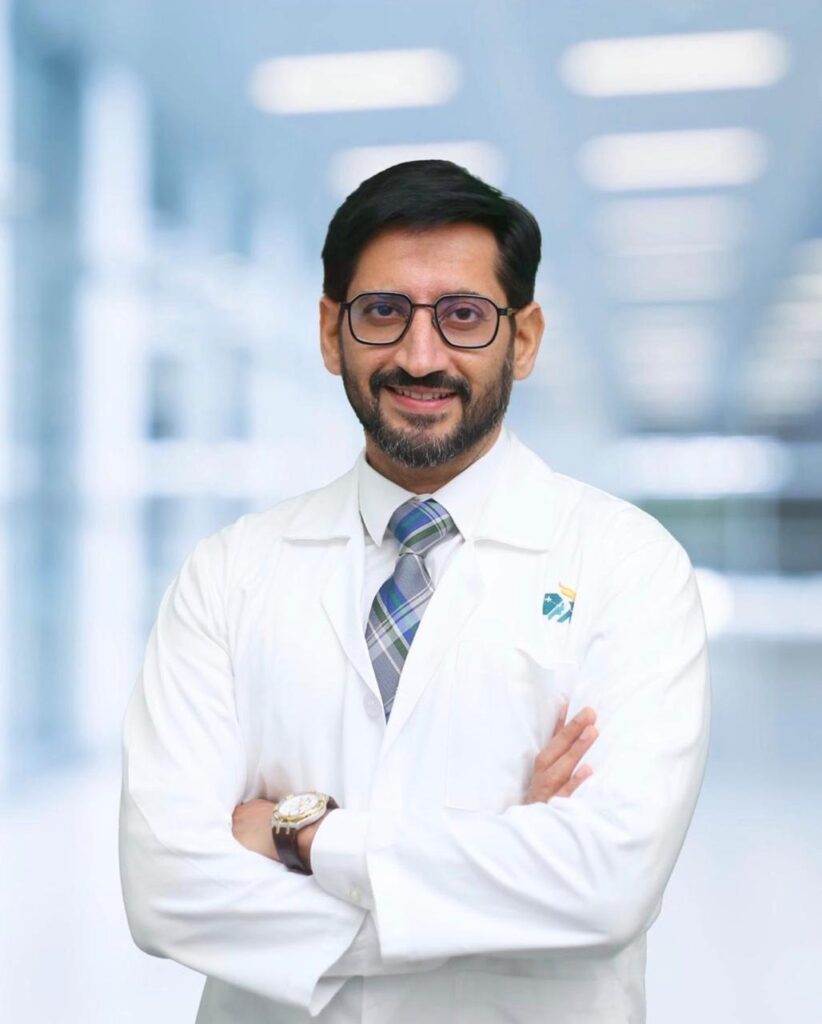
Dr Nikhil Ghadyalpatil is the director of Medical Oncology at Apollo Cancer Centre in Jubilee Hills, Hyderabad
 | |
| | 
