


More than 1.7 million Muslims gathered on the plains of Arafat on Tuesday, May 26, as Haj 1447 AH/2026 reached its spiritual climax amid intense heat, large-scale crowd management operations and heightened security across the holy sites.
In a statement posted on X, Saudi Arabia’s General Authority for Statistics announced that the total number of pilgrims this year reached 1,707,301. Of them, 1,546,655 arrived from outside the Kingdom through air, land and sea ports, while 160,646 domestic pilgrims were citizens and residents.
Male pilgrims accounted for 893,396 of the total, while female pilgrims numbered 813,905. Most international pilgrims arrived by air, with 1,485,729 entering through airports, compared with 54,429 by land and 6,497 by sea.


The authority said the figures were compiled using administrative records provided by the Ministry of Interior under a unified statistical model designed to ensure accurate Haj data.

Sheikh Ali Al-Hudhaifi delivers Arafat sermon
Delivering the annual Arafat sermon at Namira Mosque, Sheikh Ali Al-Hudhaifi, Imam and preacher of the Prophet’s Mosque in Madinah, stressed that Haj is a pure act of worship devoted to God and should remain free from political slogans or partisan calls.
He said the pilgrimage reflects unity and solidarity among Muslims from different countries, languages and cultures gathered in worship at the holy sites.

Al-Hudhaifi urged pilgrims to avoid crowding, remain calm and follow official instructions issued by authorities managing the Haj season to ensure safety and smooth movement.
He also highlighted the importance of piety, sincerity in worship and avoiding wrongdoing during Haj, reminding worshippers that the pilgrimage is rooted in discipline, obedience and spiritual reflection.
Mount Arafat marks spiritual peak of Haj
Mount Arafat, observed on the Day of Arafah, represents the spiritual climax and central rite of the Haj pilgrimage.
From early morning, pilgrims gathered across the plains of Arafat in prayer and supplication, with chants of the Talbiyah echoing throughout the holy site.
Pilgrims spent the day reciting the Quran, seeking forgiveness and offering prayers in one of the most sacred moments of the Islamic calendar.
The noon and afternoon prayers were performed together and shortened in accordance with the Sunnah of Prophet Muhammad.
After sunset, pilgrims departed for Muzdalifah, where they combined the Maghrib and Isha prayers before continuing to Mina for the remaining Eid al-Adha rituals, including the symbolic stoning of the Jamarat and animal sacrifice.
Saudi Arabia implements extensive Haj transport plan
Saudi authorities said the transfer of pilgrims to Arafat was completed smoothly under an integrated operational strategy involving transport, security and health agencies.
The Ministry of Haj and Umrah said around 350,000 pilgrims were transported using the Holy Sites Train, while more than 24,000 buses operated along dedicated routes between the holy sites.
Interior Ministry spokesperson Brigadier General Talal bin Shalhoub said the first phase of the Haj security plan had been carried out successfully in coordination with all participating agencies.
Health authorities respond to extreme temperatures
Temperatures across the holy sites reached nearly 45 degree Celsius, prompting authorities to intensify heat protection measures for pilgrims.
Misting fans, shaded walkways, emergency medical centres and field first aid units were deployed throughout Arafat, alongside Civil Defence teams and Saudi Red Crescent crews.
Health Ministry spokesperson Abdul Aziz Abdul Baqi said healthcare and preventive services remained at the highest level of readiness throughout the pilgrimage season.
Makkah women revive ‘Khullaif’ tradition
As pilgrims gathered at Arafat, a long-standing tradition returned to the Grand Mosque in Makkah, where large numbers of local women assembled in the courtyards and prayer halls.
The custom, known locally as “Khullaif”, takes place on the Day of Arafah when many men leave the city either to perform Haj or assist pilgrims at the holy sites.
Residents historically referred to the occasion as the “orphan night” because Makkah would become largely empty of men during the pilgrimage rituals.
Dressed in black abayas, women filled the Grand Mosque while male pilgrims in white ihram garments gathered at Arafat, creating one of the most distinctive visual contrasts of the Haj season.
Historically, Makkawi women assisted elderly pilgrims, distributed water and food, and helped families during the pilgrimage period.
The tradition had largely paused during the Covid-19 pandemic but returned this year as worshippers revived the annual practice.
SPA releases satellite images of Arafat plains
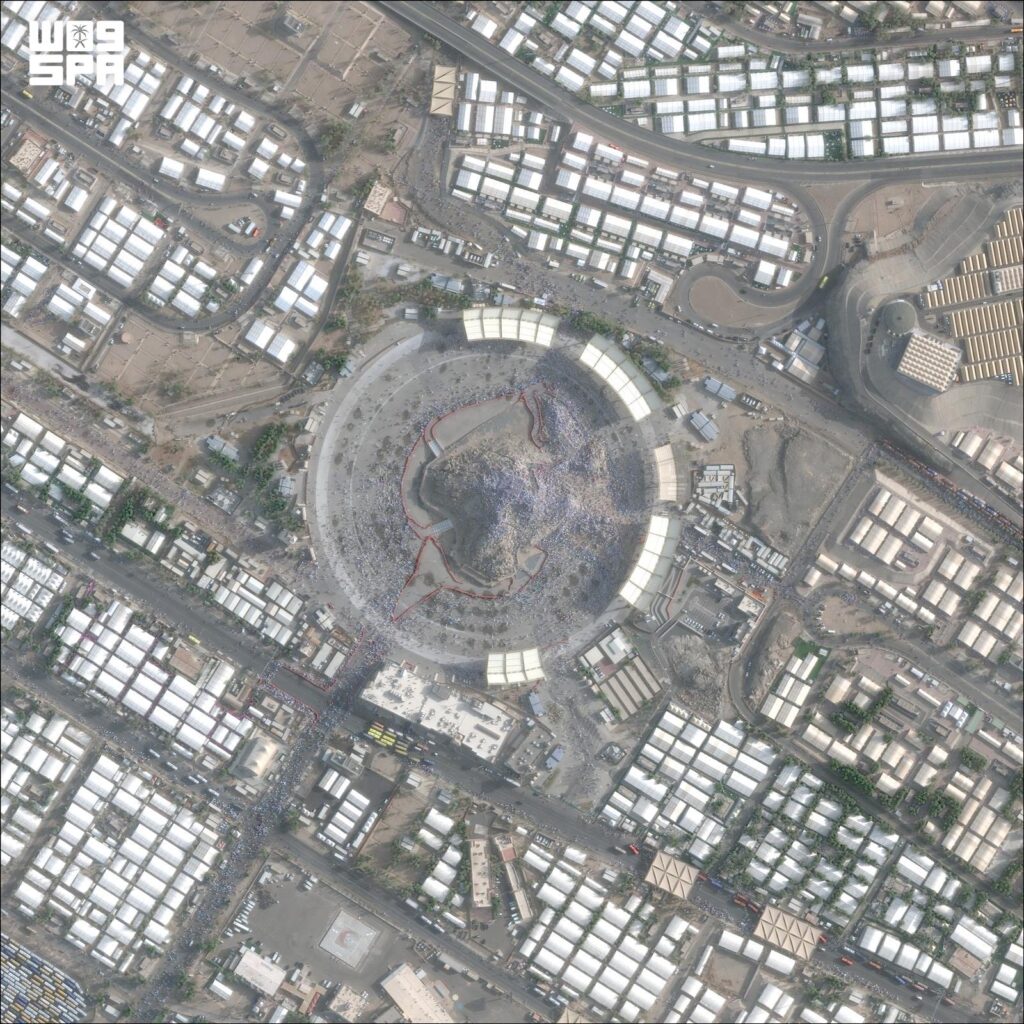
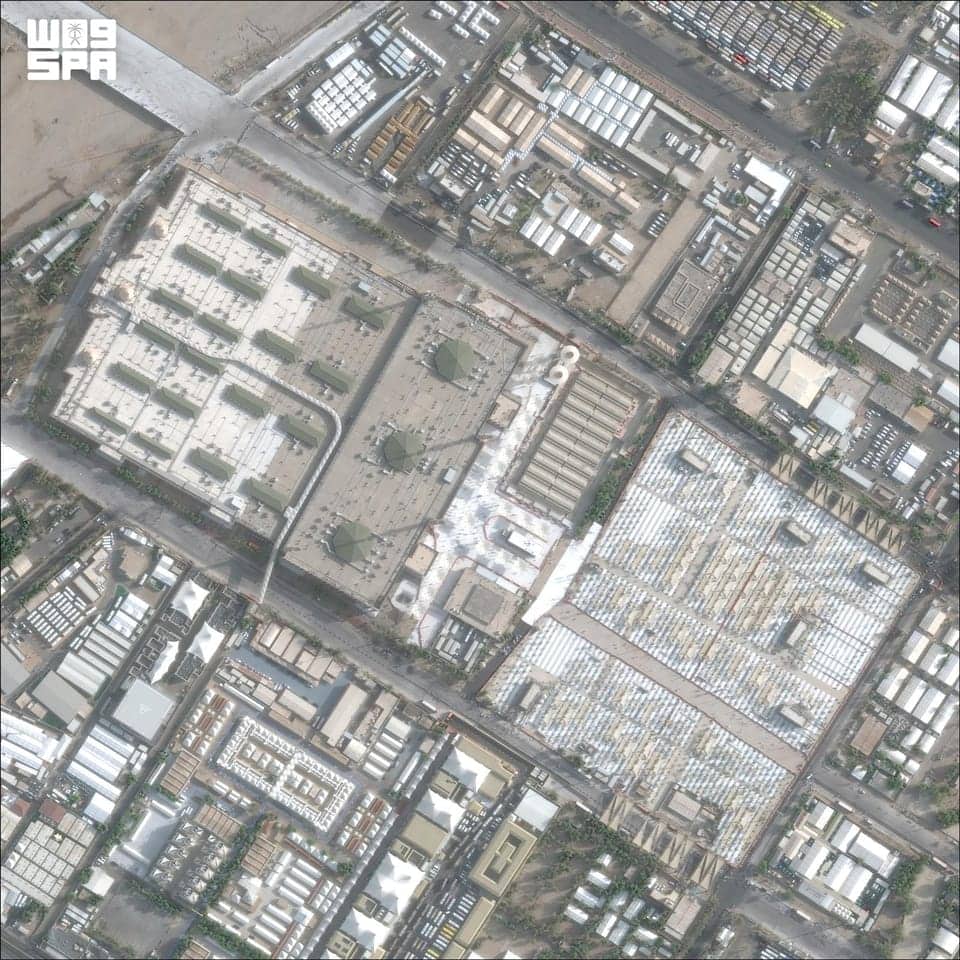
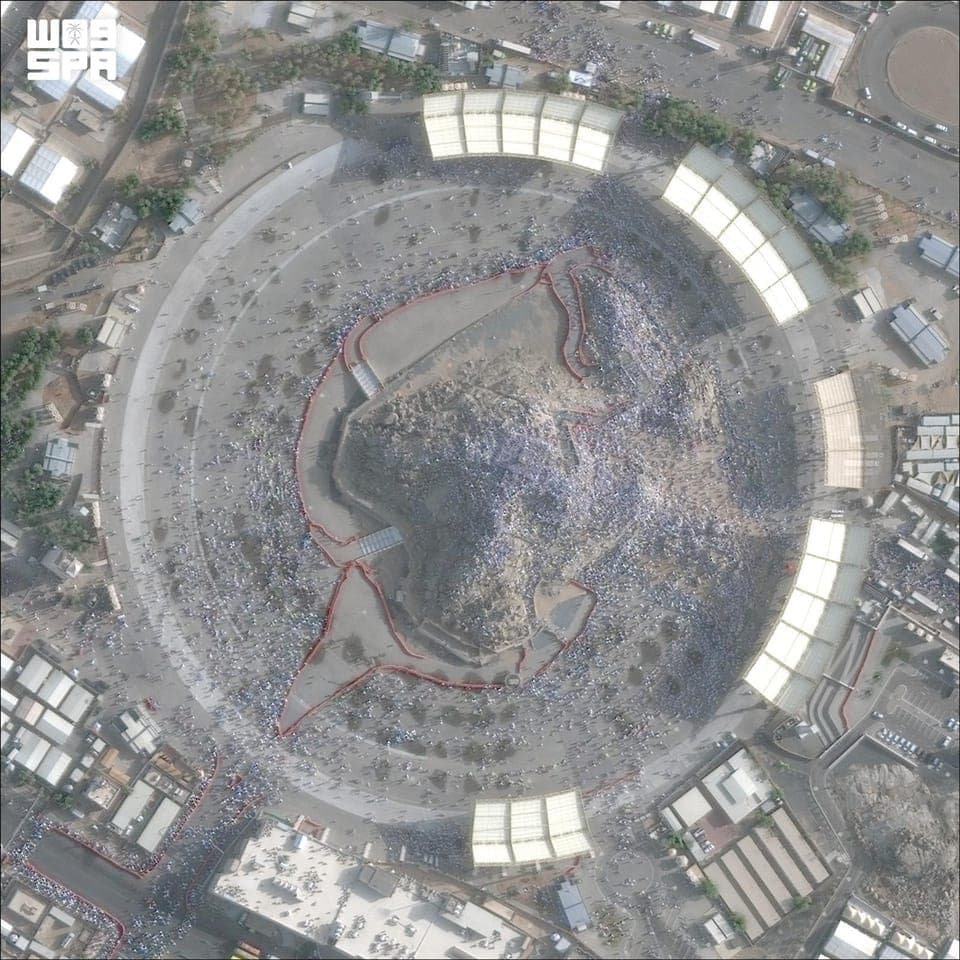
Saudi Press Agency (SPA) published satellite images captured by satellites operated by King Abdulaziz City for Science and Technology (KACST) from an altitude of 518 kilometres above Earth.
The images showed Mount Arafat, camps, surrounding roads and facilities in remarkable detail during the Haj season.
SPA said the imagery reflected the Kingdom’s use of advanced space and remote sensing technologies to support monitoring operations during major events.
The photographs drew widespread attention online, with social media users describing the scenes as “majestic” and “exceptional”.
Saudi air defence systems deployed around Makkah
Images circulating online also showed the deployment of air defence batteries and systems around Makkah as part of preparations by the Royal Saudi Air Defence Forces to secure the airspace over the holy sites during Haj.
In a post shared on X, SPA published photographs showing advanced defence systems positioned across several locations, saying the deployments formed part of efforts to strengthen security and military readiness during the pilgrimage season.
The images highlighted the use of advanced monitoring and interception systems coordinated with military and security agencies participating in Haj operations.
Social media users widely shared the photographs, praising the level of preparedness and security measures implemented to protect pilgrims during one of the world’s largest annual religious gatherings.

