
- News

The rule of law: Bail, due process and citizenship
The controversy surrounding the grant of bail to Shiv Sena corporator Ramesh Mhatre in the alleged assault (I say alleged despite video evidence because a court will have to evaluate and pronounce…
- Opinions
Pathology of power: When democracy rewards defiance
A “leader” slaps a teacher. A “leader” forces food into the mouth of a fasting canteen employee. A journalist who wrote against some leaders is murdered. A journalist who investigated a politically…
- Opinions

Legislative architecture and Constitutional mandate in Conflict
Two treatises, “Socio-spatial Consequences of Disturbed Areas Act 1991 on Urbanizing Spaces in Gujarat” by Shrivastava and “Saffron geographies of exclusion: The Disturbed Areas Act of Gujarat” by Tejani, both of 2022,…
- Opinions
A law that segregates without saying so
The principle is well-settled: a plea of malice against a public authority must be specifically pleaded and proved with cogent material; courts will not infer an oblique motive from a pattern of…
- Opinions

The beginning: Legislative architecture and Constitutional mandate in conflict
Two treatises—Socio-spatial Consequences of the Disturbed Areas Act 1991 on Urbanizing Spaces in Gujarat by Shrivastava and Saffron geographies of exclusion: The Disturbed Areas Act of Gujarat by Tejani, both of 2022,…
- Opinions
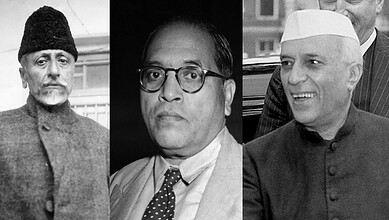
How Nehru, Azad and Ambedkar answered the politics of grievance
The constitutional answer to the politics of inherited grievance is neither obscure nor difficult to discover. It lies in the circumstances in which the republic itself was conceived. One of the great…
- Hyderabad
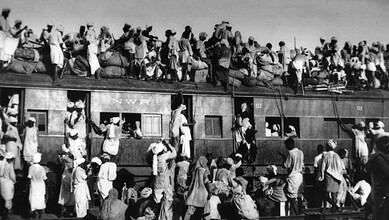
The architecture of memory: How Partition lives in India
The history of modern India is not merely a history of institutions, elections, constitutions and governments. It is also a history of memory. Nations, no less than individuals, carry wounds. Some heal…
- Opinions
The quiet drift of India’s constitutional jurisprudence
The Chief Justice of India, Surya Kant, recently remarked at Oxford that the Supreme Court is developing a “Swadeshi Jurisprudence” rather than relying solely on “imported concepts.” He made the observation while…
- Featured News
In a dysfunctional state, predators thrive and futures suffer
We learnt that in the afternoon of February 28, 2002, in Gulberg Society in Ahmedabad, a crowd armed with swords, iron rods and petrol bombs gathered outside a cluster of homes. Inside,…
- Featured News
The Congress needs a ‘war room’
Some ideas arrive not as commentary but as diagnosis. Rohit Pajni’s “The Shape of Reality,” published on Substack, diagnoses institutional sclerosis. Pajni’s thesis is devastatingly precise. Organisations that achieve greatness, he argues,…
- Featured News
Bulldozers, madrasas and the myth of minority ‘prosperity’
Backdrop: 20 demolition actions against Muslim establishments recorded between June 2024 and February 2026. Sixty-nine Islamic religious sites were bulldozed or declared illegal. In Sambhal, villagers armed with tools and a bulldozer…
- Featured News
Constitution Amendment Bill 2026: The architecture, arithmetic of exclusion
The framers of the Indian Constitution deliberately bequeathed a document that was “silently pluralistic,” avoiding the rigid, often incendiary, ethnic categorisations found in other postcolonial charters. Instead, they opted for a functional,…
- Featured News
From custodianship to command: Judicial review and electoral integrity
The conduct of elections in India is constitutionally entrusted to the Election Commission of India (ECI) under Article 324 of the Constitution. This power, described as plenary in form, has nonetheless been…
- Featured News
Judiciary: Delay… deference… drift
In a constitutional democracy, criticism of institutions, particularly the judiciary, must be articulated with restraint, precision and fidelity to constitutional principle. Yet, restraint does not entail silence. Certain developments, when viewed cumulatively…
- Featured News
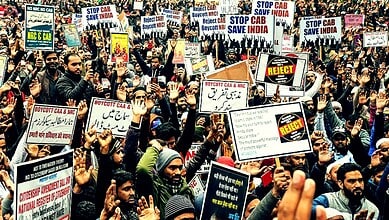
Protests in India: Will the deepening dangers go away by silencing the alarm?
In contemporary India, terms such as “deshdrohi,” “urban Naxal,” “sickular” and “presstitutes” have increasingly been deployed by right-wing ideologues, not as analytical descriptors but as instruments of political delegitimisation. Their elasticity and,…