

Siasat.com‘s monthly hate crime tracker in July recorded 63 hate crimes. The number remains more or less the same in August, with 62 incidents targeting religious and caste minorities.
From Telugu actor Faria Abdullah facing hate for attending and dancing at Bonalu, a Hindu festival in Telangana, to Mumbai pastors being pressured to have worshippers declare that they converted of their own free will, and Congress president Mallikarjun Kharge speaking of experiencing the “sting of untouchability”, August 2026 offered yet another grim snapshot of how deeply religious and caste-based prejudice continues to permeate society.
The 62 hate crimes tracked by Siasat.com range from physical assaults and disruptions of religious practices to hate speech, institutional pressure, caste violence and online harassment. Uttar Pradesh, West Bengal and Gujarat emerged as the most frequent sites of targeted violence and harassment.


Marked by faith: A month of targeting Muslims
A quiet outing for a Muslim family experienced Islamophobic abuse at a visit to Maharashtra’s Naneghat Reverse Waterfalls when Hindutva supporters began singing lines from a poem about the Battle of Haldighati, a battle framed around fighting “Mughals.”
The family, including children, reportedly grew visibly uncomfortable during the encounter.
In Gujarat, a forest department employee named Farid was assaulted by five colleagues on August 28 for just being a Muslim. The first information report was registered three days later, after repeated persuasion by APCR to the authorities.
In West Bengal’s Nadia district, BJP workers staged a two-hour protest outside a restaurant for serving only halal meat, demanding the eatery also offer jhatka meat and label its menu accordingly. Police had to intervene to defuse the standoff, though no violence or injuries were reported.
Bengali food is deeply infused with a rich heritage of rice and meat as its central characters. Bengalis have always prided themselves on that.
Kanwar yatra continued in August, and Kanwariyas did not leave a stone unturned to target minorities, mainly Muslims and create havoc. In Lucknow, a school van carrying children, most of them Muslim, was attacked by a Kanwariya group, leaving the students visibly shaken and the van’s windows shattered.
That same day, in Agra, women Hindutva activists carrying kanwars attempted to force entry into the Taj Mahal to perform a jalabhishek ritual, insisting the monument was originally a Shiva temple; police stopped them at the gate and redirected them to a nearby temple instead.
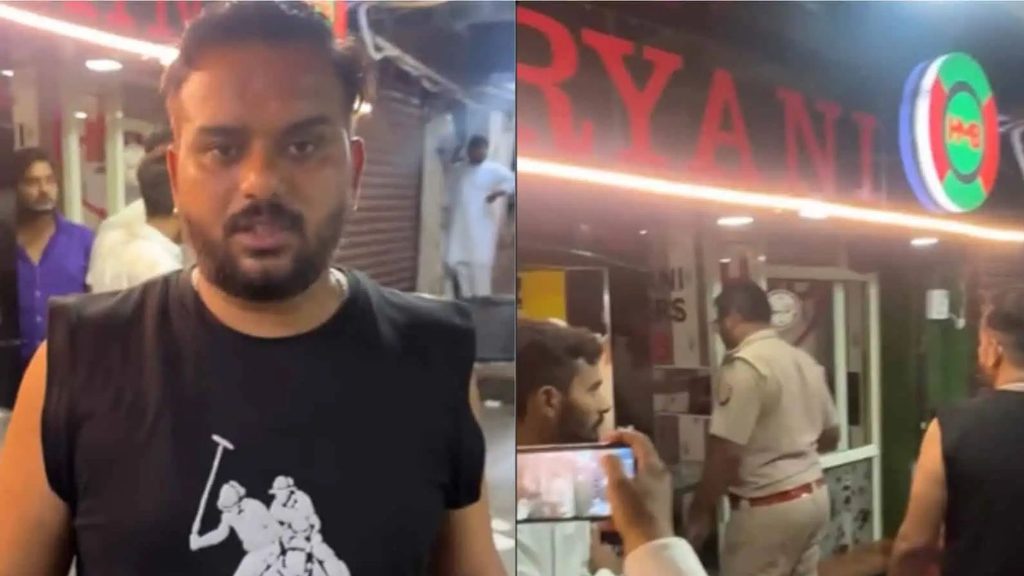
In Saharanpur, Bajrang Dal members objected to a Hyderabad-style biryani outlet serving chicken, citing restrictions on non-vegetarian food during the Sawan month. The protest was part of a broader crackdown that month, which saw restaurants elsewhere in the state demolished for the same reason.
Madrasas came under repeated institutional pressure through the month. One was demolished in Uttar Pradesh after being declared illegal, with its management detained soon after.

Loudspeakers on mosques were ordered removed in parts of West Bengal early in the month, a dispute that eventually reached the Calcutta High Court on August 13. The court asked the state government to clarify whether it had actually authorised such an order.
Two Eid Milad-un-Nabi processions, in Bengaluru and Mumbai, ended in clashes and multiple bookings on the same day. In both cities, police registered several cases and detained participants from both sides.
Telugu Actor Faria Abdullah broke down, describing being called “kafir” for attending a Bonalu festival, a Hindu celebration. She said the online abuse had left her shaken.
A man in Mumbai was caught using artificial intelligence to generate obscene images of a woman in a burqa early in the month, pointing to newer, technology-enabled forms of targeted harassment.
‘Terrorist’ tag Indian Muslims cannot seem to escape
In the four hate speech incidents documented by Siasat.com, the word ‘terrorist’ against Muslims repeatedly surfaced.
Uttar Pradesh’s Deputy Chief Minister Keshav Prasad Maurya separately said madrasa education develops a “terrorist-like mindset,” a remark made on August 4 that fed directly into the wave of madrasa closures documented above.
BJP MP Madhavi Latha backed a colleague’s remark calling madrasas “terrorist factories,” doubling down rather than distancing herself from the comment when asked to clarify.
Another BJP leader, Ramesh Bidhuri, claimed students protesting the NEET paper leak at Jantar Mantar were “outnumbered by puncture banane wale”, “those who fix punctures and locksmiths”, a coded reference widely understood as targeting Muslims. He went on to say the protesters must have been “children of puncture repairers,” drawing sharp criticism from AIMIM leader Waris Pathan.
In Kerala, a private school owner told students absent on Independence Day to “go to Pakistan,” a remark reportedly directed at Muslim students who had missed the school’s flag-hoisting event, conflating absence with disloyalty.
Christians under pressure
On August 14, a Hindutva mob in Purba Bardhaman forcibly halted a burial at St Claret Church, pulling up a coffin mid-ceremony to demand papers proving ownership of the burial ground. Mourners were reportedly left standing over an exhumed coffin while the dispute was settled.
Nine days later, in Uluberia, roughly 60 worshippers gathered for a Sunday prayer meeting were interrupted by a mob alleging forced conversion; furniture was damaged in the melee. No conversions were reportedly underway at the time.
The pattern repeated at a Church of the Grace meeting in Ghusuri, where the pastor who went to file a complaint found himself questioned by police about church finances instead.
A pastor and his wife were separately assaulted by a named far-right leader over similar conversion allegations; he was reportedly so frightened he filed his complaint by email rather than appear at the station in person. In days that followed, the same allegations were being used to justify Hindutva supporters barging into homes in Howrah and North 24 Parganas.
Separately, Mumbai pastors were pressured into having worshippers sign forms attesting they had converted of their own free will, a compliance measure tied to the state’s anti-conversion law. A Raipur Christian activist was detained over remarks about Lord Shiva, a case that has drawn criticism for treating an activist’s speech as a criminal matter.
Dalits continue to burn in untouchability fire
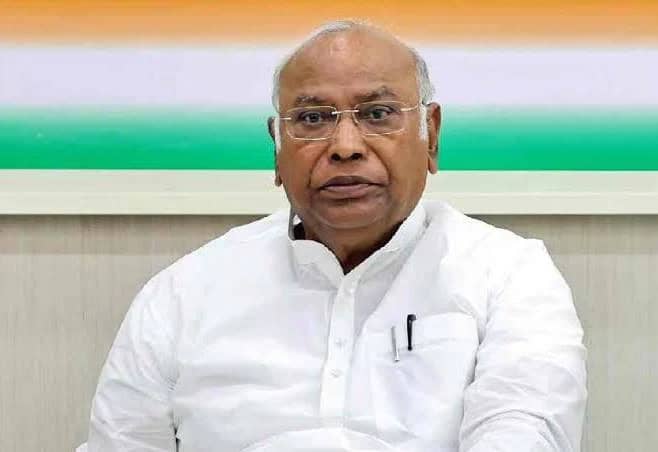
Perhaps the most eye-raising incident against caste discrimination was when All India Congress Committee (AICC) president Mallikarjun Kharge faced discrimination after the Uttarakhand BJP performed a purification ritual.
Speaking during the Monsoon Session as the Leader of Opposition in the Rajya Sabha, Kharge expressed that the incident left him with a sting of untouchability.
To make matters worse, Uttarakhand BJP chief Mahendra Bhatt defended the ritual, saying the place was polluted with slogans not fit for a religious place.
When even the senior-most leader of the Grand Old Party speaks of experiencing caste discrimination, one can only imagine the harrowing experiences of common Dalits across the country.
From honour killings in Tamil Nadu, to women subjected to sexual harassment and gangrapes, from journalists and PhD scholars to influencers – none were spared.
Praveen was just 25 when he was hacked to death because he dared to love Ashwathy, from a dominant caste. She is the daughter of one of the accused, Ezhumalai, a member of the ruling Tamilaga Vettri Kazhagam (TVK).

In Hyderabad, Dalit influencer Dara Ajay Kumar, known as “Radical Ajay,” filed a doxxing complaint against a Hindutva content creator, alleging his address and phone number were published online in retaliation for his political commentary, triggering a wave of unknown calls.
A Lucknow cab driver working for Rapido was hit with a 99-year, 11-month suspension after passengers hurled casteist slurs at him during a ride, an unusually severe platform penalty for someone on the receiving end of abuse rather than the source of it.
Hate wears many faces
Women who participated in the Cockroach Janta Party-led Jantar Mantar protest were targeted by Hindutva social media accounts that published their identities, home addresses and college details, with some accounts explicitly calling for them to be “taught a lesson.” A separate incident saw Kanwariyas vandalise a fellow devotee’s car after a minor collision.
An attack on a Telangana Congress worker from a backward caste, not a Scheduled Caste, saw him beaten and reportedly urinated on by his assailants, a degree of humiliation that went beyond the physical assault itself.
A clash over a church and temple site in Karnataka left two people injured, with both a church and temple claiming the same land at the centre of the dispute.
A United Nations flag on police abuse singled out the treatment of Rohingya, Dalit and Muslim communities in India specifically, adding international scrutiny to a domestic pattern.
(Reported by Syeda Faiza Kirmani, Khadija Irfan Rahim and Veena Nair)
 Follow on Twitter | Edited by Veena Nair | |
